How big can a galaxy get?
Galactic size is hard to define due to fuzzy edges and dark matter. IC 1101, at over 4 million light-years, is one of the largest known.
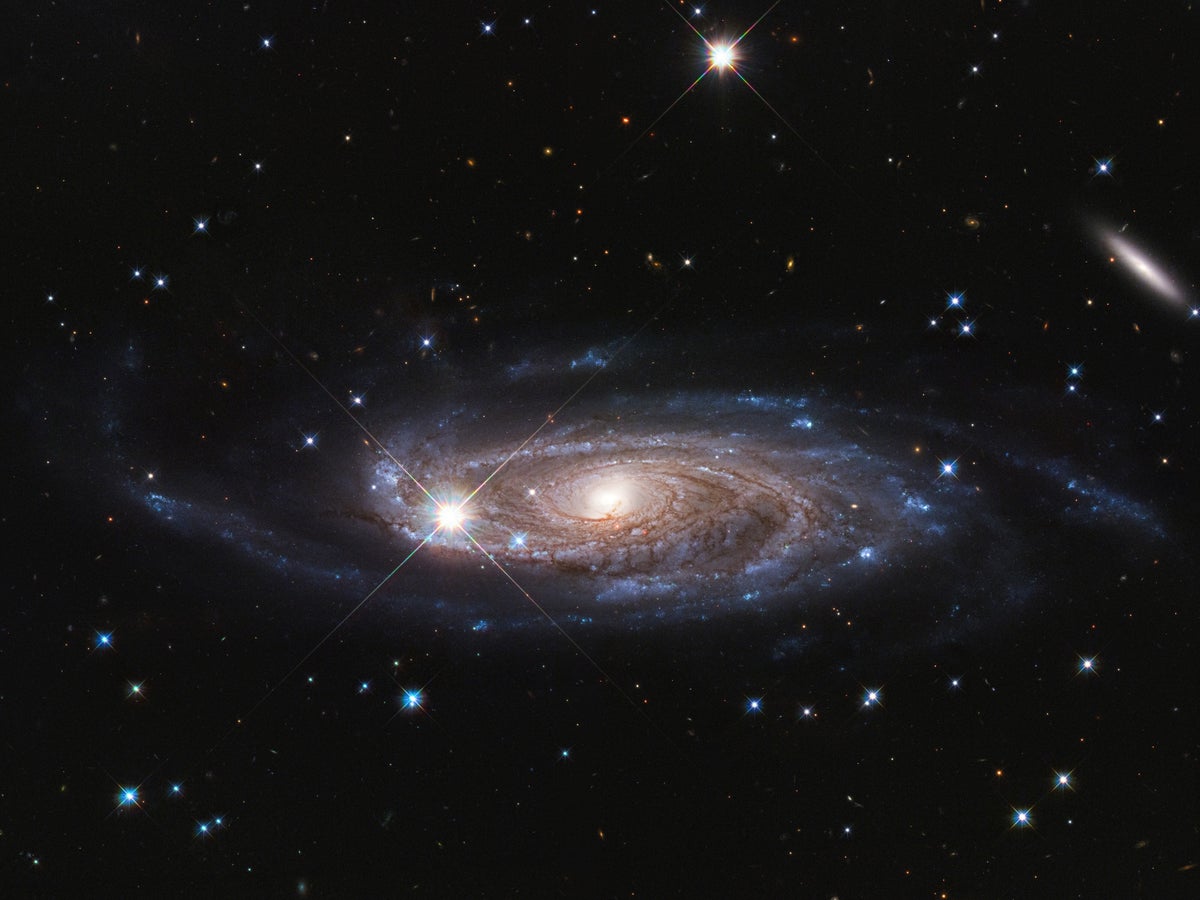
Determining the true upper limit of galactic size remains one of astronomy’s most elusive challenges, as the very definition of a galaxy blurs at the extremes of scale. While galaxies are broadly understood to be gravitationally bound systems of stars, gas, dust, and dark matter, exceptions complicate the picture—some galaxies lack dark matter entirely, others are nearly devoid of gas and dust, and a few are so sparsely populated with stars that they challenge the distinction between a galaxy and a dense star cluster. The Milky Way, with its sprawling disk spanning at least 100,000 light-years, is among the larger spiral galaxies, but even its boundaries are difficult to pin down. The universe, it seems, is not bound by human conventions of measurement.
The core difficulty lies in the absence of clear edges in galactic structures. Unlike rocky planets or moons, galaxies fade gradually into the void, their stellar densities thinning imperceptibly with distance. This makes defining a galaxy’s size as arbitrary as selecting where a coastline ends at low tide. Astronomers often rely on proxies such as surface brightness—the amount of light per square arcsecond—to estimate a galaxy’s extent, yet even this method is imprecise. The problem is exacerbated by our vantage point within the Milky Way, where foreground stars obscure distant galaxies’ outer regions, particularly in elliptical galaxies that appear as diffuse, cotton-like blobs in the sky. These uncertainties mean that the largest observed galaxies, such as IC 1101, which stretches over 4 million light-years, may not hold the record for long.
Further complicating the search for cosmic giants is the role of dark matter, which dominates the mass of most galaxies but is invisible to current instruments. Without a precise map of dark matter halos—some of which extend far beyond a galaxy’s visible stars—astronomers risk underestimating true galactic dimensions. Surveys like the Sloan Digital Sky Survey have revealed galaxies so vast that their outer reaches defy conventional models, yet these discoveries raise as many questions as they answer. Could even larger galaxies lurk unseen in the depths of space, hidden by their own faintness or obscured by cosmic dust? The answer may lie in future telescopes like the Vera C. Rubin Observatory, which promises to peer deeper into the universe’s structure than ever before.
Until then, the quest to define the universe’s largest galaxy remains a work in progress, shaped as much by technological limits as by the boundless creativity of cosmic evolution. What is clear is that galaxies, like the universe itself, resist neat categorisation. Their sizes are not fixed but rather a continuum of possibilities, expanding our understanding of what it means to be a galaxy—and challenging us to rethink the very fabric of the cosmos.