How cellphone carriers prepare for hurricane season with AI, drones and 'cows'
Residents make phone calls in their neighborhood after heavy rains from hurricane Helene caused record flooding and damage on September 28, 2024 in Asheville, North Carolina. Melissa Sue Gerrits/Getty Images North America hide caption Anthony Leone and his wife, Corinne Saunders
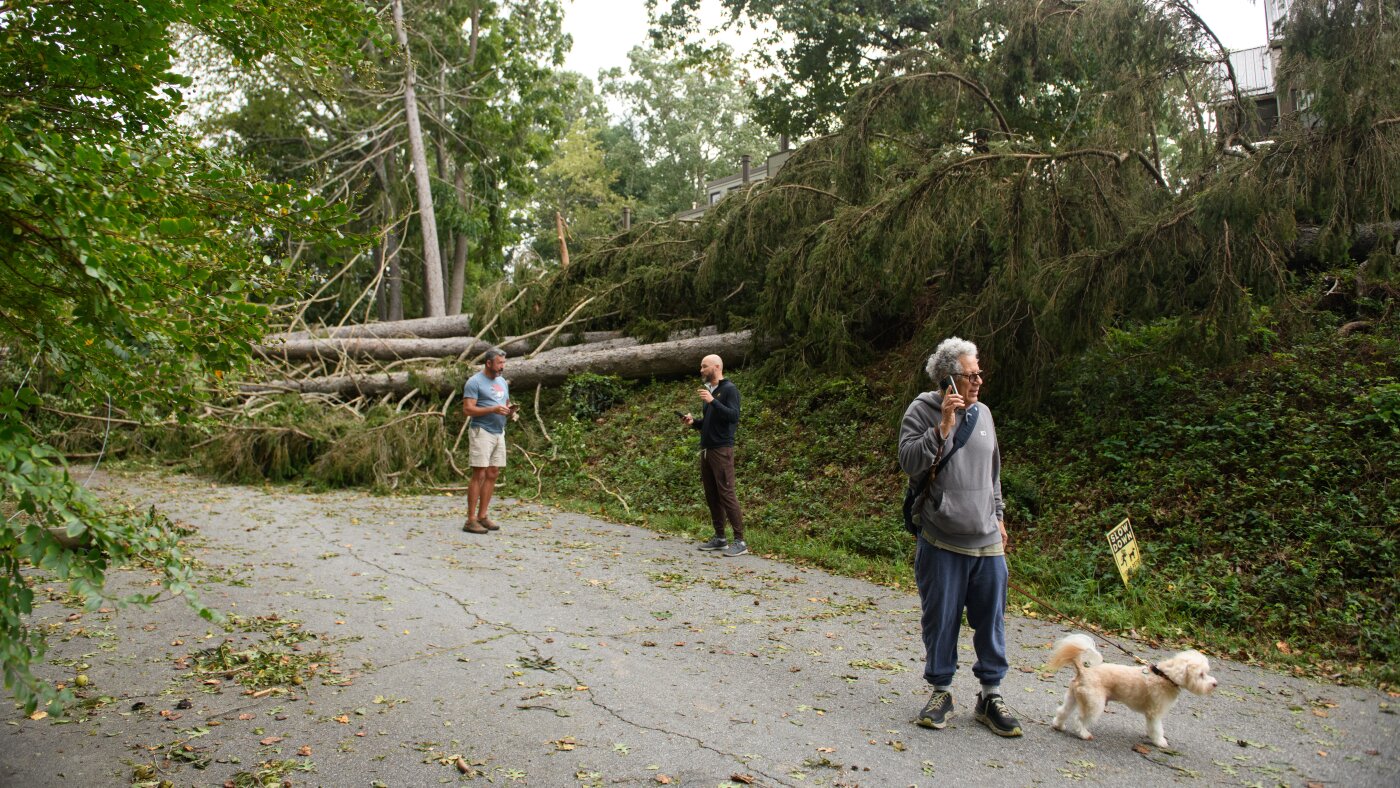
Residents make phone calls in their neighborhood after heavy rains from hurricane Helene caused record flooding and damage on September 28, 2024 in Asheville, North Carolina. Melissa Sue Gerrits/Getty Images North America hide caption
Anthony Leone and his wife, Corinne Saunders, have already started watching the weather. In a few weeks, they'll be filling coolers and plugging in generators. He has lived in North Carolina's Outer Banks for more than 20 years. So he's familiar with this routine that precedes the inevitable — hurricane season.
As for their cell phones? "We just plan ahead to not use [them]."
Hurricane season runs from June to November, and the National Weather Service said in May it's predicting below-normal activity in the Atlantic region for the first time since 2015. But the chance for at least one very powerful storm remains .
Even though there may be slightly less hurricane activity this year, high winds and rain can still interrupt the power supply stationary cell towers rely on. As a result, cellphone carriers are fortifying their preparations with newer tools such as artificial intelligence and drones, so customers in the path of a hurricane can continue to communicate with loved ones, work from home and render aid.
Anthony Leone and his wife, Corinne Saunders, kayak in Kitty Hawk Bay, in North Carolina's Outer Banks. Anthony Leone/Anthony Leone hide caption
Verizon Wireless starts its hurricane response plans about a week before one is forecasted in an area, according to Srini Kalapala, Verizon's senior vice president of wireless engineering and operations. Before a storm, Verizon uses drones to take pictures of a coverage area. It then takes more pictures after a storm to assess the damage. AI sends a precise location of the damage to engineers and technicians as they start their repairs.
"Hurricanes, especially — you don't understand the damage until it's fully done," Kalapala said.




