How disinformation in Congo is worsening Ebola epidemic
Three weeks since the start of the latest Ebola epidemic in the Democratic Republic of Congo , the facts are: 397 confirmed cases, including 63 confirmed deaths, according to the latest figures reported by the African Union's Africa Centres for Disease Control and Prevention. An
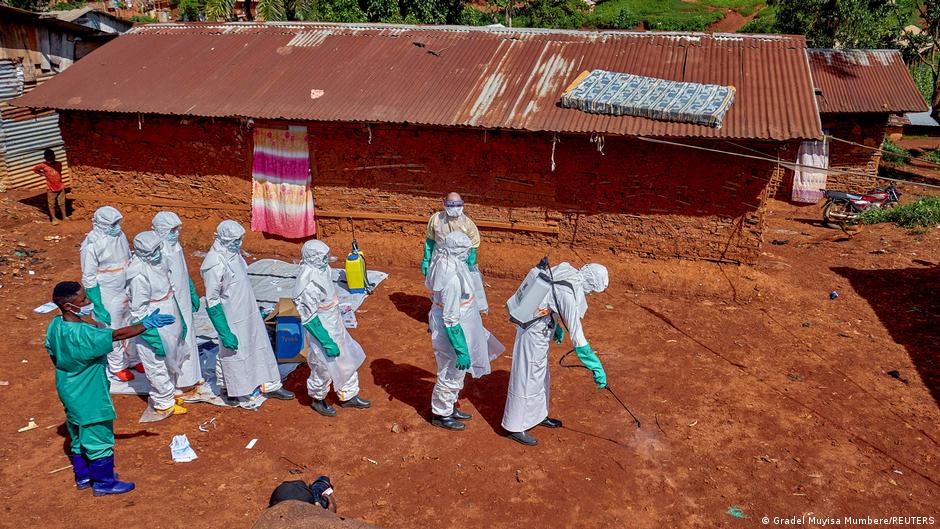
Three weeks since the start of the latest Ebola epidemic in the Democratic Republic of Congo , the facts are: 397 confirmed cases, including 63 confirmed deaths, according to the latest figures reported by the African Union's Africa Centres for Disease Control and Prevention.
And yet: "The community does not believe in this disease. Despite the deaths, people don't believe in it," said John Tumujimbe, head of a team for dignified and safe burials in the small town of Mongbwalu. It's one of the epicenters of the Ebola epidemic in the Congo's northeastern Ituri province.
"We initially thought of malaria , typhoid or diarrheal diseases. But after so many deaths, we sent samples to the INRB," Tumujimbe told DW.
The INRB — Congo's National Institute for Biomedical Research in the capital, Kinshasa — confirmed that these were indeed cases of Ebola. This led health officials to announce the 17th Ebola epidemic to be recorded in Congo since the virus was first discovered in 1976.
But health officials say many residents in Mongbwalu rejected this scientific answer.
"When there were the first deaths, there was talk that the coffins were a problem, that it spread from there," said one Mongbwalu resident, who did not want to be named.
Tumujimbe also heard this rumor. "That's how it started: people talked about a coffin that kills people. And then more people died."
Another rumor: Aid workers and paramedics were spreading the virus via the antennas of their vehicles.






