How FIFA is engineering natural grass for the 2026 World Cup
Inside the 2026 World Cup’s push to engineer the perfect pitch FIFA is building temporary natural-grass fields meant to play consistently across 16 stadiums in three countries By Chris Stokel-Walker edited by Eric Sullivan Drop a soccer ball onto a dead patch of grass, and the
Inside the 2026 World Cup’s push to engineer the perfect pitch
FIFA is building temporary natural-grass fields meant to play consistently across 16 stadiums in three countries
Drop a soccer ball onto a dead patch of grass, and the problem is immediately obvious: the ball rebounds strangely or just dies at a player’s feet. In the run-up to the FIFA World Cup across the U.S., Mexico and Canada, videos and photographs of soccer pitches have already drawn scrutiny, including a viral clip from a Senegal training session at a New Jersey stadium and British coverage of a patchy field in Tampa, Fla., used for an England warm-up match.
That is the nightmare FIFA has spent years trying to avoid. It got a preview at the 2024 Copa América, during the tournament opener in Atlanta, where players said the ball sprang off the field like a trampoline . FIFA’s challenge this year is to make living grass behave consistently across 16 match venues in three countries. Conditions range from open-air heat and rain to roofed venues with managed airflow. If the surface fails at any one of them, it could become part of the game, altering footing, bounce, how quickly the field recovers and, potentially, competitive fairness.
The last time the men’s World Cup was played in the U.S., in 1994 , natural grass had to be moved into places never built for it. Inside the Pontiac Silverdome in Michigan, grass arrived in hexagonal modules and “was just in survival mode until the end [of the tournament],” says John Sorochan, a distinguished professor of turfgrass science at the University of Tennessee. This time, FIFA is trying to remove as much improvisation as possible.
If you're enjoying this article, consider supporting our award-winning journalism by subscribing . By purchasing a subscription you are helping to ensure the future of impactful stories about the discoveries and ideas shaping our world today.
John Trey Rogers III, a professor of turfgrass research at Michigan State University, built that Silverdome field with Sorochan, then his student, on the crew. Rogers and Sorochan were hired by FIFA five years ago to help turn World Cup fields into a science-based system designed to make the ball and the player’s foot meet the ground the same way from one venue to the next.
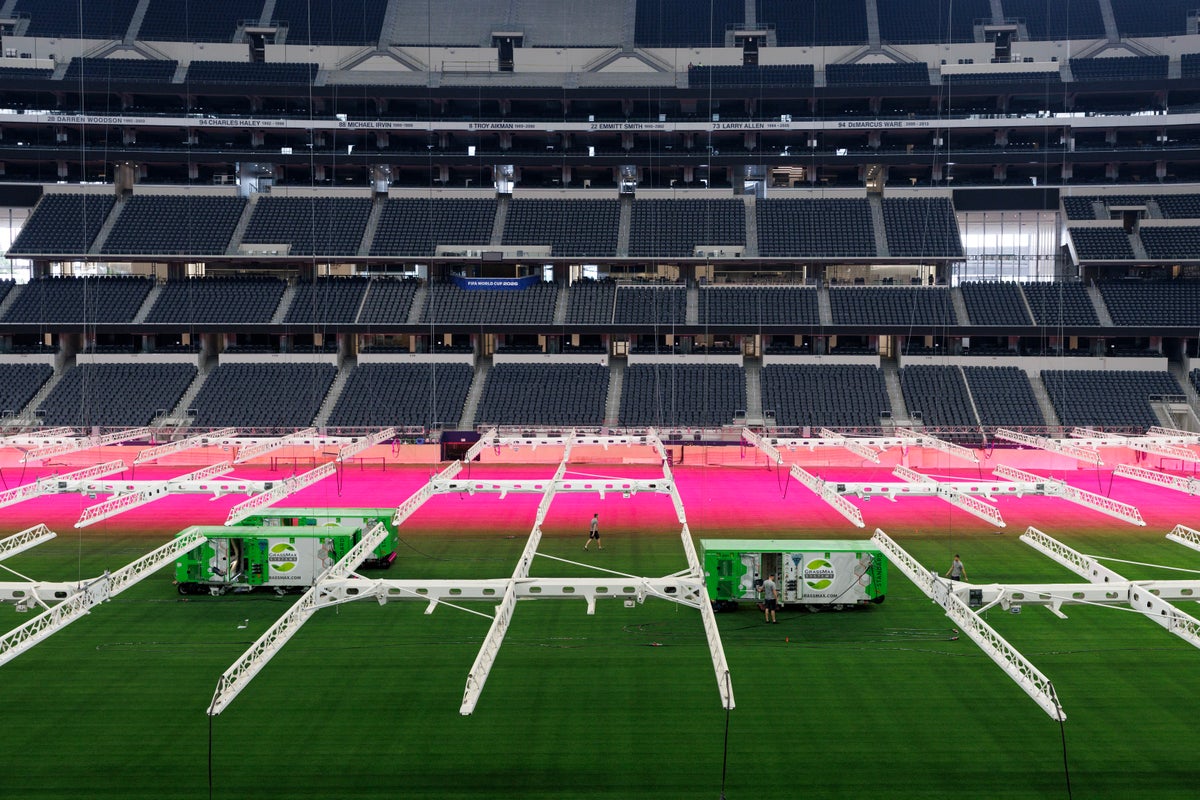
Eight of the 16 stadiums typically use artificial turf—and five of those have roofs that limit the sunlight that reaches the pitch. “If you’re not designed to have natural grass, and you want to put your field in that has the eyes of the world on it, you have to put in all of the technical aspects that would already be in a natural grass stadium,” Rogers says. That includes irrigation, drainage and, at some venues, a FIFA-standard vacuum ventilation system beneath the surface.