How math's 'hairy ball theorem' could explain bad hair days
How math's 'hairy ball theorem' could explain bad hair days An idea from topology explains why you can never get rid of your cowlicks—and, oddly enough, it’s critical in nuclear fusion This article is from Proof Positive , our friendly math newsletter that's delivered to your i
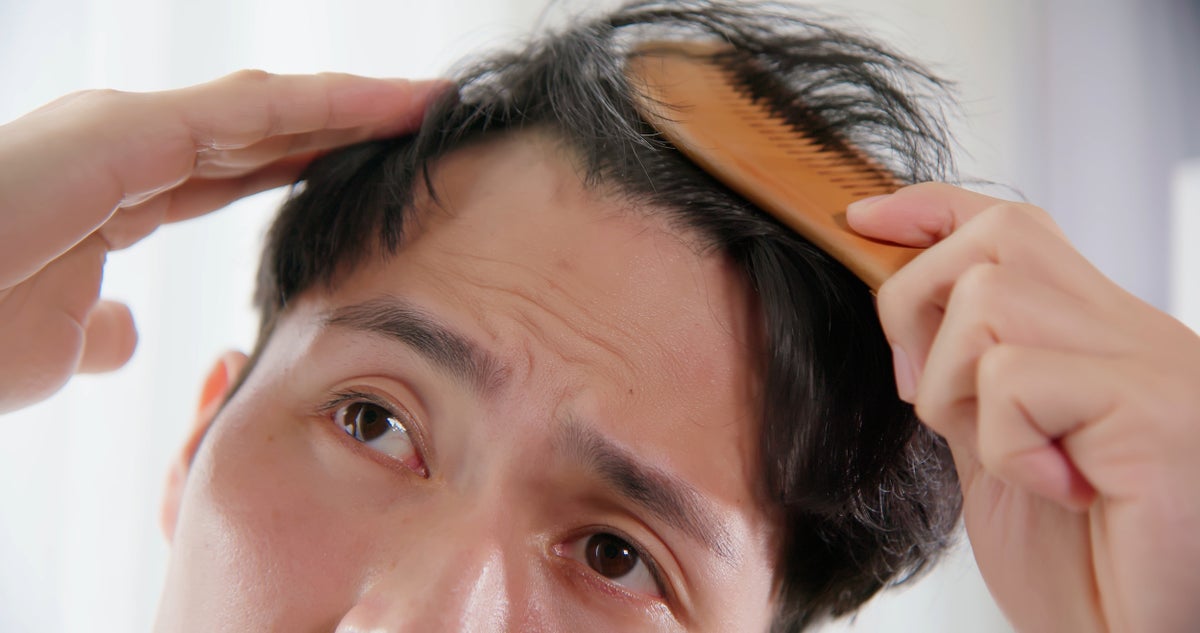
An idea from topology explains why you can never get rid of your cowlicks—and, oddly enough, it’s critical in nuclear fusion
This article is from Proof Positive , our friendly math newsletter that's delivered to your inbox every Tuesday afternoon. Sign up today and read it first.
Is math to blame for bad hair days? Before I answer that question, let me introduce the “hairy ball theorem.” (Yes, that’s really what it’s called—though in Europe it’s sometimes called the “hedgehog theorem.”) It essentially states that it’s impossible to comb hair on a sphere without creating a cowlick or bald spot somewhere.
If you're enjoying this article, consider supporting our award-winning journalism by subscribing . By purchasing a subscription you are helping to ensure the future of impactful stories about the discoveries and ideas shaping our world today.
If that surprises you, you’re not alone. After all, who would have thought that complex topological concepts such as Euler characters and homotopies might have anything to do with hairstyles? Topology is among the most abstract fields in mathematics. In topology, the exact shape of a figure doesn’t matter. Two objects are considered to be the same if you can reshape each into each other without tearing them or gluing them together. A famous example is a mug and a doughnut, which are identical to topologists because both have exactly one hole, so you can reshape them into each other. Meanwhile a bread roll can never become a bagel or a pretzel for a topologist.
Where does hair come in? Let’s keep it simple and think of someone with short, straight locks. Their hair resembles a vector field: each point (strand) can be described as a small arrow that points in a certain direction. A typical example of a vector field is wind direction: at any place on our planet, you can determine it. If you plot the arrows of wind on a globe, the result will resemble a hairy ball or coconut. The theorem essentially says that, on a sphere, you cannot create a perfectly continuous vector field—at some point, there will be a break, such as a bald spot on the back of a neatly combed head.
To understand that, the windy planet analogy helps. Imagine you go for a walk, headed eastward along the Arctic Circle, with an unchanging wind blowing throughout the journey. When you start, you feel the wind against your back and then, as you travel the circle, it seems to come from the left, then from the front and finally from the right. When you return to the starting point, it blows at your back again. So, for you, the wind has turned clockwise during the walk.
Now you fly to the Antarctic Circle to do the same thing: Start again with the wind at your back. Then it blows first from the right before it reaches you from the front and finally from the left. In this case, too, your sensation of where the wind hits you has turned—but counterclockwise.