Russia promotes medieval saints to boost birth rates
Russia’s new Day of Family, Love and Fidelity holiday promotes medieval saints Peter and Fevronia to boost birth rates and push "traditional values," aligning with Putin’s long-term demographic and id
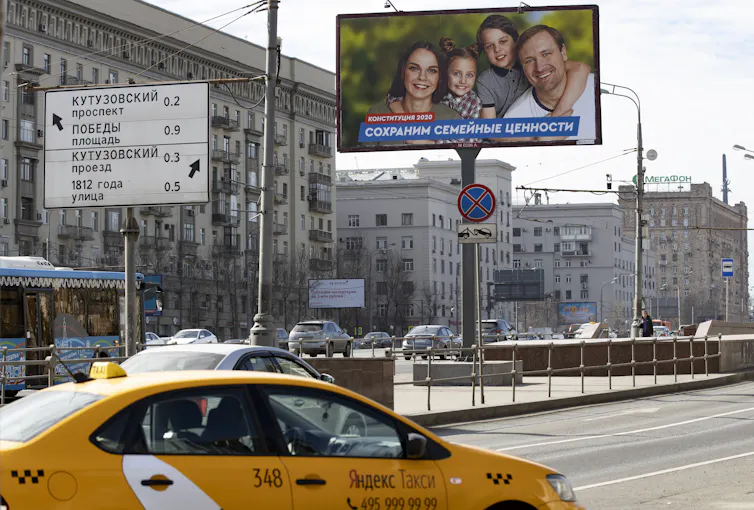
Russia’s government and the Russian Orthodox Church are teaming up to launch a new national holiday called the Day of Family, Love and Fidelity, set f
Read Full Story at Religion News Service →Why This Matters
Russia’s embrace of medieval saints as symbols of national identity reflects a deliberate fusion of religion, statecraft, and demographic engineering. By elevating figures like Peter and Fevronia—patrons of Christian marriage—into a national holiday, the Kremlin signals a rejection of Western liberal values in favor of an alternative model rooted in historical mythology and demographic urgency. This strategy not only legitimizes authoritarian governance under the guise of cultural preservation but also weaponizes tradition as a tool of social control.
Background Context
Russia’s demographic crisis has long haunted its leadership, with plummeting birth rates and shrinking populations threatening economic and military stability. The Orthodox Church, historically intertwined with the state, has re-emerged as a key ally in Putin’s campaign to reverse these trends, offering moral and spiritual reinforcement to policies like financial incentives for families. Medieval saints, once symbols of pre-modern piety, now serve as modern political instruments, bridging centuries of Russian identity with contemporary state objectives.
What Happens Next
Expect further state-sponsored campaigns linking marriage, religiosity, and procreation, with potential expansions of financial incentives or legal restrictions on alternative family structures. The holiday may evolve into a larger propaganda tool, used to contrast Russia’s "traditional values" with Western "decadence," while religious institutions gain greater influence over public life. However, the long-term effectiveness of such measures remains uncertain, as economic hardship and social disillusionment could undermine even the most ardent ideological appeals.
Bigger Picture
This phenomenon is part of a broader authoritarian playbook, where regimes manipulate cultural symbols to consolidate power and deflect from systemic failures. From Hungary’s "Christian democracy" to Poland’s abortion bans, the revival of religious nationalism is a global trend, often tied to demographic anxieties. Russia’s approach is uniquely medieval in its symbolism but modern in its execution—proof that tradition, when weaponized, can become a potent force in 21st-century governance.