How to tell if your dog is left-pawed or right-pawed, according to science
How to tell if your dog is left-pawed or right-pawed, according to science A step-by-step guide to the “Doginburgh Inventory,” a new pawedness test developed by dog behavior researchers By Jackie Flynn Mogensen edited by Claire Cameron “ Handedness ”—a tendency to prefer one h
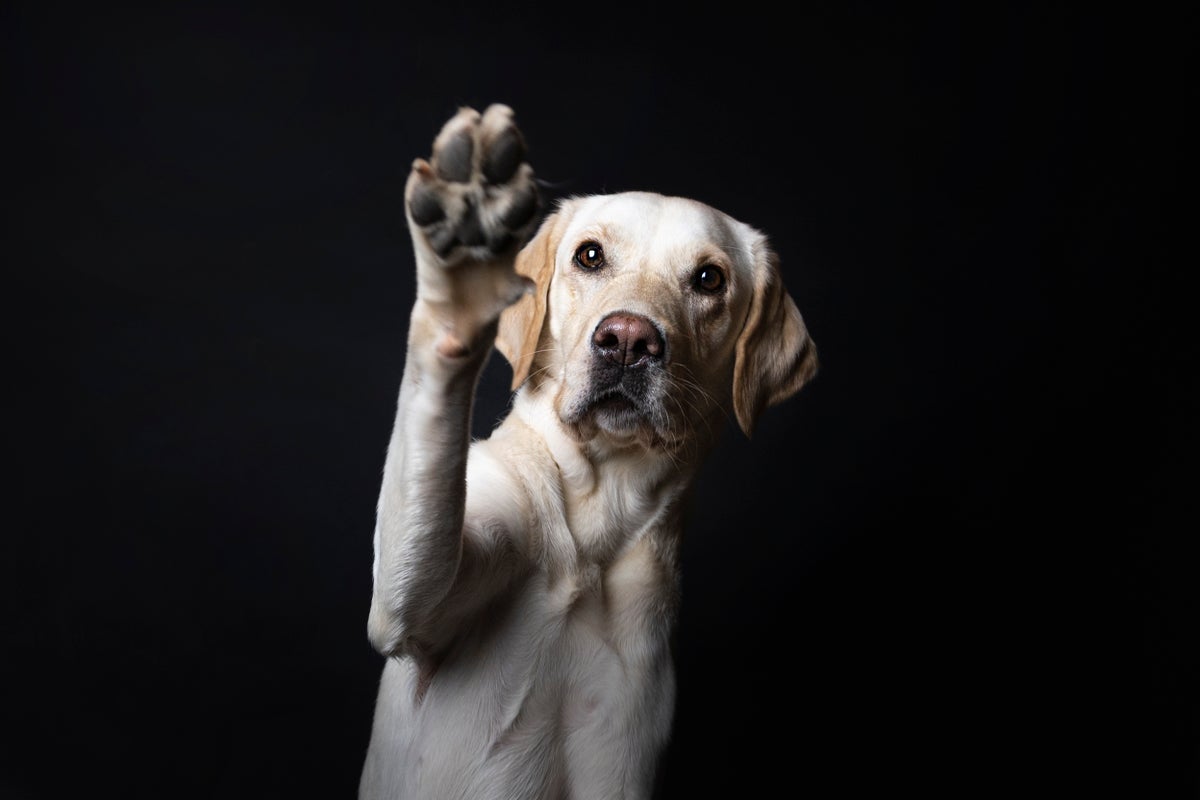
How to tell if your dog is left-pawed or right-pawed, according to science
A step-by-step guide to the “Doginburgh Inventory,” a new pawedness test developed by dog behavior researchers
“ Handedness ”—a tendency to prefer one hand over the other—is almost universal to humans. The majority of people, approximately 90 percent or so , are thought to be right-handed, with much of the rest favoring their left hand, and a tiny group can truly use both interchangeably. It’s not just us: other animals , including some apes, rodents, and reptiles, appear to have their own version of “handedness,” too. In dogs , this is called “pawedness”—and if you’re a pet owner, it is something you can test with your dog at home.
In a new study published Wednesday in Royal Society Open Science , researchers at the University of Bari Aldo Moro in Italy describe a test for pawedness in dogs. The test sorts the animals into categories, including “strong left-pawed,” “weak left-pawed,” “ambilateral,” “weak right-pawed” or “strong right-pawed.” The researchers call it the “Doginburgh Inventory,” after a similar test in humans called the Edinburgh Handedness Inventory.
It’s a useful tool because it can help researchers understand how brain lateralization—using one side of the brain or the other for certain tasks or functions—“relates to behavior, emotions, and cognition, not only in dogs but also in other species,” says Shany Dror , a postdoctoral researcher at the Clever Dog Lab at the University of Veterinary Medicine, Vienna, who was not involved with the new study. In humans, the right side of our brain guides our left hand, while the left side controls the right hand. The same is true in dogs.
If you're enjoying this article, consider supporting our award-winning journalism by subscribing . By purchasing a subscription you are helping to ensure the future of impactful stories about the discoveries and ideas shaping our world today.
In the new study, researchers evaluated dozens of dogs across four tests: two “manipulation” tests and two “locomotion”-based tests. All of them are easy to replicate at home, says study co-author Marcello Siniscalchi, a professor of veterinary physiology at the University of Bari Aldo Moro.
In one test, the dogs were given a Kong toy (basically a rubber cone with rounded edges) with treats inside. The team recorded which paw the dogs used to stabilize the toy while searching for treats and repeated the test several times. Similarly, in another test, the researchers tracked which paw the dogs used to reach for a treat under furniture, such as a couch or bed.







