Hubble Captures M88 on Journey to Center of Virgo Cluster
The Hubble Space Telescope captured a detailed image of Messier 88 (M88), a spiral galaxy 63 million light-years away, moving toward the Virgo Cluster's core. The image reveals M88's spiral arms and dust lanes, helping scientists study galaxy evolution and the effects of ram-pressure stripping in dense cosmic environments.
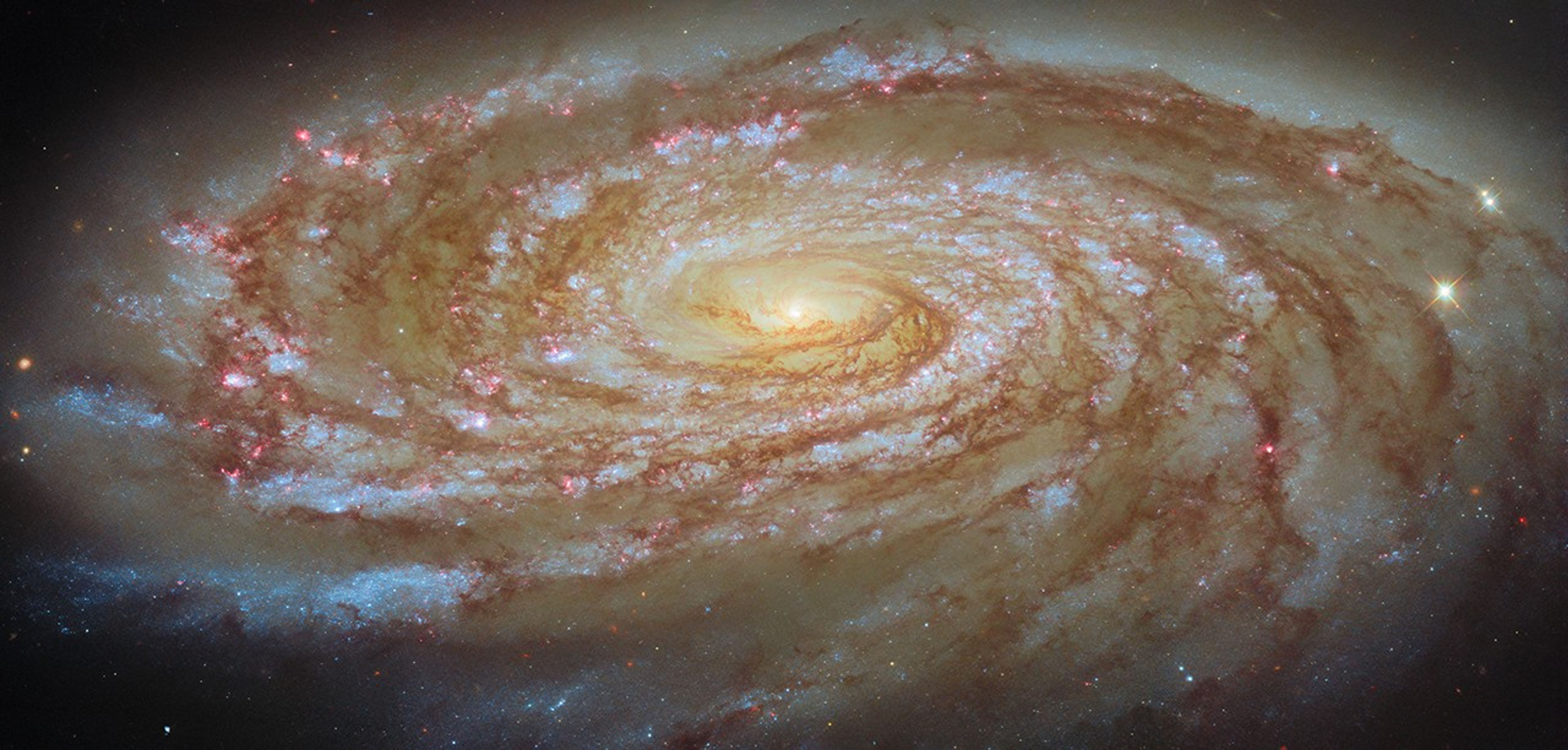
The Hubble Space Telescope has captured a striking image of Messier 88 (M88), an active spiral galaxy hurtling toward the Virgo Cluster’s dense core some 63 million light-years from Earth. The high-resolution photograph reveals the galaxy’s well-defined spiral arms, where young stars blaze blue and dust lanes trace intricate patterns, offering astronomers a rare glimpse into the dynamic structure of a galaxy in motion. M88 is one of the most prominent members of the Virgo Cluster, the nearest large galactic assembly to our own Local Group, making it a key object of study for understanding galaxy evolution and cosmic structure.
M88’s journey is not merely a passive drift but an active trajectory influenced by gravitational forces within the cluster. As galaxies like M88 move toward the Virgo Cluster’s center, they often encounter dense regions of intergalactic gas, which can strip away star-forming material—a process known as ram-pressure stripping. This interaction can alter a galaxy’s evolution, quenching star formation and transforming its appearance over millions of years. The Hubble image provides critical data for scientists studying how such environmental pressures shape galaxies, offering insights into the life cycles of stellar systems in dense cosmic environments.
Recent astronomical observations have intensified focus on the Virgo Cluster due to its role as a cosmic laboratory. In 2023, researchers using the Atacama Large Millimeter/submillimeter Array (ALMA) detected molecular gas tails extending from several Virgo galaxies, including M88, further evidence of ram-pressure stripping in action. These findings align with simulations predicting how galaxies evolve when subjected to extreme gravitational and hydrodynamic forces. Understanding such processes is essential for piecing together the broader narrative of galaxy formation and the role of galaxy clusters in shaping the universe’s large-scale structure.
For scientists, M88 serves as a benchmark for studying not only its own evolution but also the fate of spiral galaxies in crowded clusters. Its proximity and visibility make it an ideal candidate for follow-up observations with next-generation telescopes, including the James Webb Space Telescope, which could reveal more about its stellar populations and the chemical composition of its interstellar medium. As Hubble continues to monitor M88, astronomers hope to uncover further clues about the interplay between galaxies and their environments, shedding light on the fundamental forces driving cosmic change.