Hubble Captures Star-Studded Cluster
This image from NASA’s Hubble Space Telescope showcases Messier 3 (M3), one of the Milky Way galaxy’s most massive globular clusters, or spherical collections of gravitationally bound stars. Globular
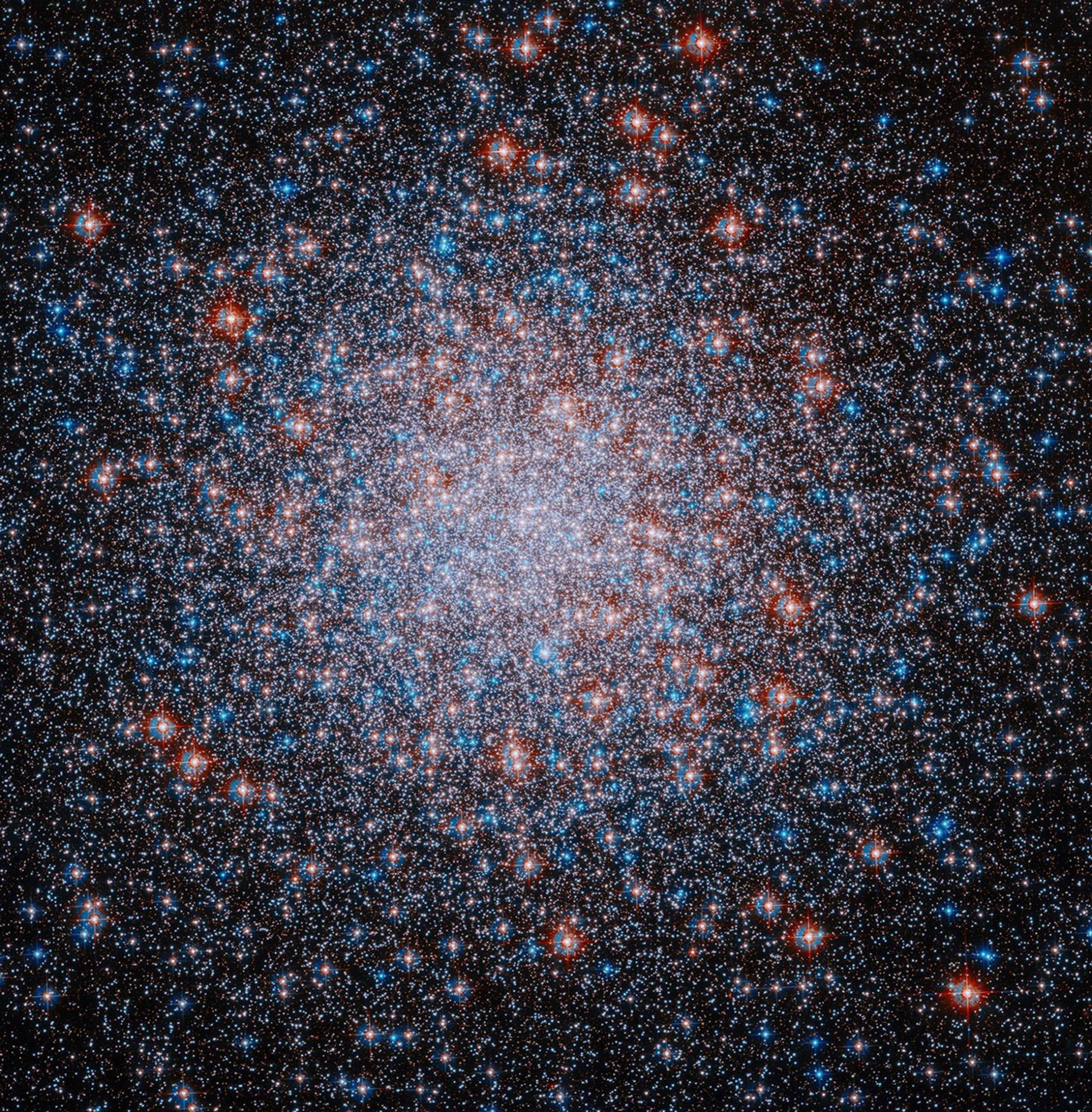
This image from NASA’s Hubble Space Telescope showcases Messier 3 (M3), one of the Milky Way galaxy’s most massive globular clusters, or spherical col
Read Full Story at NASA →Why This Matters
Messier 3 offers a rare glimpse into the early universe, serving as a cosmic time capsule where the oldest stars in our galaxy are preserved. The data gleaned from such clusters helps astronomers refine models of stellar evolution and galaxy formation, bridging the gap between theoretical predictions and observable reality.
Background Context
Discovered in 1764 by Charles Messier while he was cataloging celestial objects to avoid confusing them with comets, M3 was one of the first globular clusters to be studied systematically. Unlike open clusters, which disperse over time, globular clusters like M3 remain intact for billions of years, making them invaluable laboratories for studying stellar dynamics in extreme gravitational environments.
What Happens Next
Future observations with next-generation telescopes, such as the James Webb Space Telescope, may reveal even fainter stars in M3’s core, potentially uncovering clues about dark matter’s role in shaping these ancient structures. Additionally, ongoing spectroscopic studies could identify rare stellar remnants, like neutron stars or black holes, hidden within the cluster’s dense heart.
Bigger Picture
Globular clusters like M3 are increasingly recognized as critical to understanding the Milky Way’s violent past, including mergers with smaller galaxies that shaped its current structure. As astronomers compare M3 to similar clusters in other galaxies, they are piecing together a broader narrative of how these relics of the early universe influence galactic evolution across cosmic time.