I combined my Fitbit Air with an analog watch — it’s the only way I wear the tracker now
When the Fitbit Air debuted as Google’s screenless fitness tracker, early adopters tried using it as an analog watch strap . As someone who bought the Fitbit Air to be less reliant on smartwatches an…
Affiliate links on Android Authority may earn us a commission. Learn more.
When the Fitbit Air debuted as Google’s screenless fitness tracker, early adopters tried using it as an analog watch strap . As someone who bought the Fitbit Air to be less reliant on smartwatches and enjoy low-profile health monitoring, I became immediately intrigued. I was also skeptical. I wasn’t sure whether I could successfully swap out my watch band without damaging it, if the Fitbit Air would be comfortable as a watch band, or whether the combination would even look stylish.
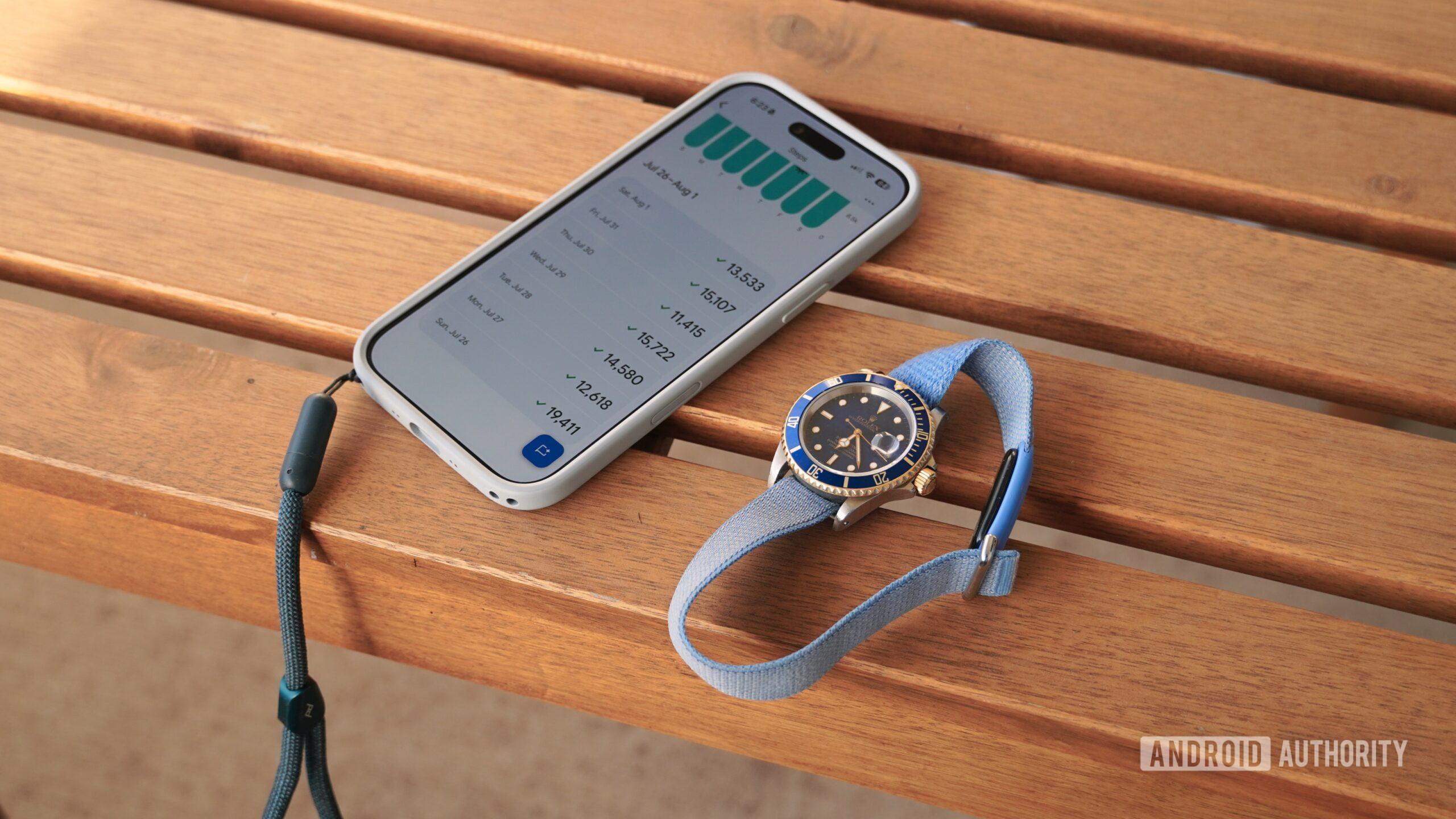
For the first month or so of owning my Fitbit Air , I kept the fitness tracker on my left wrist and a traditional watch on my right . Then, I added the Fitbit Air to my wristwatch, and I’ve been wearing the combo together for over a month.
Fast forward to today, and I can’t imagine wearing the fitness tracker any other way. Adding an analog watch to my Fitbit Air band made it sleeker and more comfortable, and improved skin contact for better accuracy.
The Fitbit Air’s calling card is its lack of screens, and by extension, its lack of distractions . The slim tracker passively monitors your health data and automatically records activities. It can serve as an alarm clock programmable through the Google Health companion app, but that’s the extent of its on-device smarts. Coming from advanced smartwatches, the minimal experience quickly became a perk. However, I couldn’t help but miss being able to quickly glance at the time on my wrist.
Double-wristing is certainly an option, and wearing a Fitbit Air with an analog watch looks better than pairing the latter with a smartwatch. That said, I couldn’t get used to wearing a watch or band on each wrist. No matter how long I tried, the extra weight on my dominant wrist didn’t feel right.
There were also problems with wearing a Fitbit Air and my wristwatch separately. The Fitbit Air never felt snug on the top side of my wrist, whereas my traditional watch’s metal clasp kept digging into the underside of my wrist.
These complaints pushed me to finally remove the metal band from my analog watch and attempt to replace it with the Fitbit Air’s performance loop band. When all was said and done, the Fitbit Air and my traditional wristwatch were better together than apart. I feared the Fitbit Air tracker and its sensors would look unusually large on the underside of my wrist, but they’re actually slimmer than the watch’s original metal clasp. It’s more comfortable, too, without the clasp carving into my skin or the links tugging on my hair.
Read Full Story at Android Authority →