ICE uses controversial program to boost deportations. Here's how it works in 1 county
Walton County Sheriff's Office Sgt. Oscar D'Lassalas, 40, an officer certified to enforce federal immigration law, stands on the road to the jail where undocumented people are held for federal Immigr…
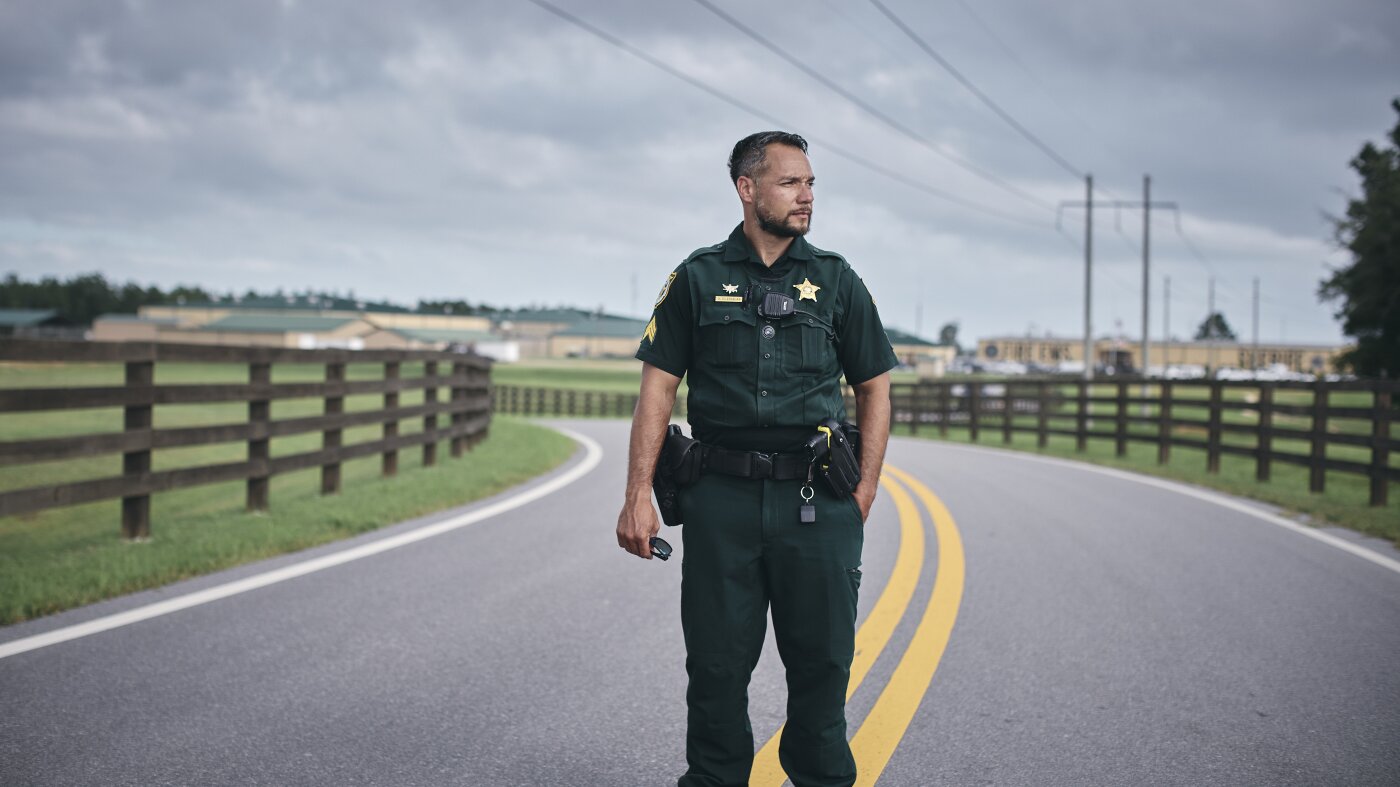
Walton County Sheriff's Office Sgt. Oscar D'Lassalas, 40, an officer certified to enforce federal immigration law, stands on the road to the jail where undocumented people are held for federal Immigration and Customs Enforcement agents to pick up. The sheriff's office in this Florida Panhandle city has partnered with ICE. Nicky Quamina-Woo for NPR hide caption
Oscar D'Lassalas' pride is obvious when he speaks of his family.
"I got four boys and a girl living with me. The baby's going to be 3 in December. She runs the house," he says with a laugh.
Photos of his wife and children are pinned above the driver's seat of his sheriff's office-issued vehicle, which is packed with rifles, a fire extinguisher and bulletproof vests.
D'Lassalas, 40, is a sergeant with the Walton County Sheriff's Office in Florida. He also leads the office's SWAT team. Last year, he became a certified 287(g) task force officer, which allows him to enforce certain parts of federal immigration law in the field.
The sergeant completed 40 hours of training online to get certified. The Trump administration recently accelerated the training , which used to require a monthlong in-person commitment, as it sought to expand the number of law enforcement agencies participating in the 287(g) program.
"To me, it was just another way to help out as much as I can in my community," D'Lassalas says.
The Trump administration has embraced the 287(g) program as a way to boost its mass deportation effort. It's a controversial program that has led to civil rights lawsuits alleging racial profiling and complaints that it drains local resources.
Read Full Story at NPR News →


