Texas cities ban Muslim headscarves in public schools
Texas has seen a rise in local laws targeting Muslim religious practices, like headscarf bans, treating ordinary observance as a security risk. These measures, often unchallenged, reflect growing ant…
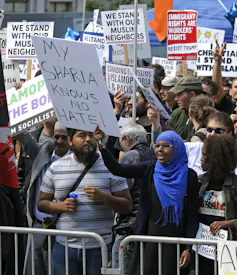
Texas has quietly become a testing ground for how far states can push suspicion of Muslim practices into official policy. A wave of local ordinances and school rules in recent years has banned Islamic headscarves in public spaces, restricted ritual slaughter, and even targeted modest swimwear worn by Muslim women. In 2021 alone, at least six Texas cities considered or passed measures explicitly aimed at Muslim religious attire or customs, according to the Council on American-Islamic Relations.
The shift reflects a post-9/11 hardening of attitudes that treats ordinary Islamic observance as a security risk. Scholars note that after the terror attacks, Texas lawmakers and local officials began equating Muslim identity with potential extremism, a stance later amplified by anti-immigration rhetoric and the rise of far-right groups. Texas has the largest Muslim population in the U.S. outside of major coastal cities, and its growing diversity has collided with a conservative political culture that increasingly frames minority practices as threats to “traditional” American values. The Texas legislature has not passed a statewide ban on headscarves or prayer calls, but dozens of local governments have acted on their own, often with little public debate.
One recent example is the small city of Denton, where officials in 2022 considered an ordinance to ban “face coverings” in public buildings—language critics said was clearly aimed at Muslim women’s hijabs. After protests and legal threats, the proposal stalled, but it followed a pattern seen from Irving to Katy. In 2018, a Texas school district temporarily banned a teenage girl from wearing a hijab to class, sparking a federal lawsuit that is still ongoing. The ban was later reversed, but not before the student spent months in legal limbo.
What happens next may depend on whether courts push back against the creeping criminalization of faith. A federal appeals court is currently reviewing a case from Keller, Texas, where a Muslim woman was denied a job at a public library because her hijab violated the city’s “neutral” dress code. If courts uphold such restrictions, more cities could follow suit. If judges strike them down, Texas may see a slowdown in these measures—or a shift to more subtle forms of discrimination. Either way, the trend shows how local politics can turn routine religious practice into a political wedge issue, one city at a time.
Read Full Story at Religion News Service →