iPhone Duo hands-on: Apple's most exciting device in a decade
I just wish it had three cameras in back. It's been almost 10 years since Apple released the iPhone X , which ushered in a new era of design for the company's flagship handsets. Now, Apple is ventur…
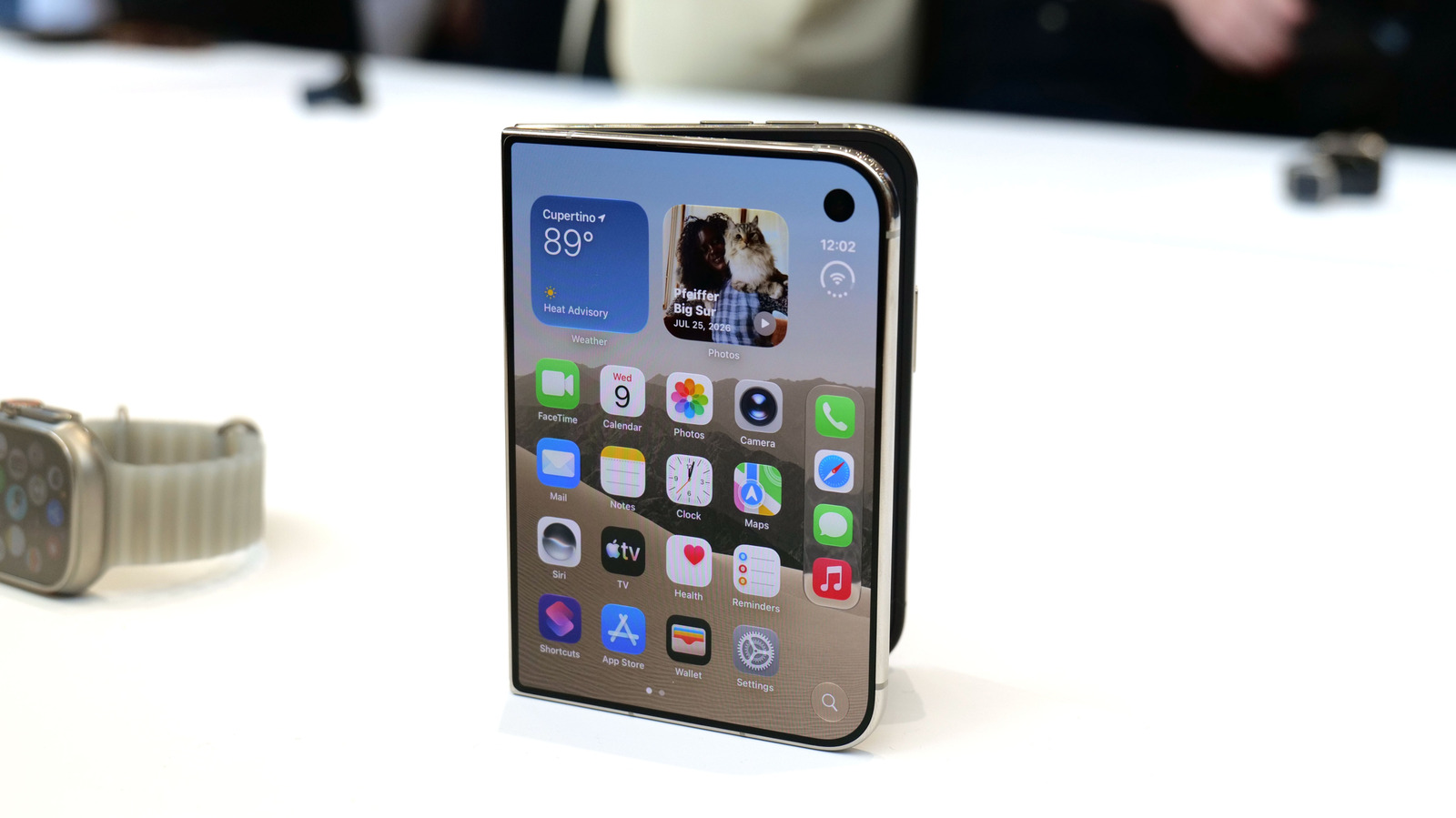
It's been almost 10 years since Apple released the iPhone X , which ushered in a new era of design for the company's flagship handsets. Now, Apple is venturing into uncharted territory once again with the iPhone Duo, which just might be the company's most interesting new phone (or gadget in general) in nearly a decade.
Packing a 5.4-inch external OLED display along with an even larger 7.6-inch flexible OLED panel on the inside, the iPhone Duo reminds me a lot of the original Pixel Fold , except that Apple has refined its chassis even further. The sides of the phone feature lovely rounded edges that make it super easy to open and the transition animation that plays when you switch from the outside display to the main interior panel is a work of art. It's practically seamless, while subtle gradient and depth of field effects help sell the magic of Apple's first foldable device.
That said, despite a beautifully crafted frame made from titanium that includes IP68 dust and water resistance, the Duo is rather hefty. At 11.3mm (when closed) and weighing 254 grams, Apple's fold is significantly heavier and thicker than Samsung's Galaxy Z Fold 8 (201 grams and 9.7mm when closed). I really wanted to post some side-by-side comparisons between the iPhone Duo and both the Z Fold 8 and the original Pixel Fold to really highlight some of their design differences, but I was asked not to by Apple representatives.
Around the outside, the Duo features a full complement of buttons including a lock key with built-in TouchID, a dedicated camera control and a volume rocker. At first, I thought putting the volume rocker on the top of the phone was an interesting choice, but it makes a lot of sense, especially for anyone who shifts between portrait and landscape modes frequently. Another subtle feature of the Duo is that it's really good at sensing when it's open and to what degree. It supports both tent and tabletop modes, with the former allowing the Duo to turn into a fancy clock or standalone calendar. That said, you can also use the phone when it's merely partially bent, which I imagine will be really nice for reading ebooks. And as far as reverting from FaceID to TouchID on the Duo, as someone who has been using other foldables with side-mounted fingerprint sensors, I think it remains the superior solution for quickly unlocking the phone, making purchases and more.
Inside, the Duo features a heavy matte nano texture on its gorgeous main display that serves a few different purposes. In addition to almost completely eliminating annoying reflections, it also neatly disguises the Duo's crease. Yes, there is one, but I must say the divot that runs down the middle of the center is very faint, to the point where it often easier to feel it with your finger than observe it with your eyes. However, one of my favorite little features on the Duo is Apple's inclusion of a under-display FaceTime camera sensor that almost entirely disappears when it's not in use.
This is something Samsung experimented with all the way back in 2021 on the Galaxy Z Fold 3 . However, in more recent years, Apple's Korean rival seems to have given up on that technology, so to see it here on the Duo is not just a notable technical feat, it's also bragging rights for the newest foldable on the block. It's only really visible when you look close and spot that the circular group of pixels above the under-display camera are glossy instead of matte like you get on the rest of the main display.
Finally, while the Duo's outside screen is shiny, its matte interior should also help make stylus input feel really natural, as the phone supports the Apple Pencil across both of its screens. Unfortunately, Apple didn't have any Apple Pencils on hand at its demo area, so I haven't been able to properly test this out just yet.
Around back, Apple gave the Duo two rear cameras: a 48-megapixel Fusion main camera that can also capture 2x telephoto shots at 12MP, plus a 48MP ultra-wide. In a vacuum, it's nice kit that takes crisp shots in a range of lighting conditions. Sure, it doesn't have the variable aperture controls you get on the iPhone 18 Pro line, but that's OK. My bigger gripe is that I really want a longer, dedicated zoom lens you get on the Galaxy Z Fold 8 Ultra. At least by creating a module around back that spans the width of the phone's rear panel, the Duo rests neatly on a table with zero rocking or wobbling, which is the kind of attention to detail I appreciate.
Read Full Story at Engadget →