iPhone Duo vs Samsung Galaxy Z Fold 8: here's how they stack up
Apple's first foldable competes well with the Z Fold 8, at least in terms of specs. Apple's just-announced iPhone Duo represents its most radical reimagining of the smartphone, perhaps ever. With Sa…
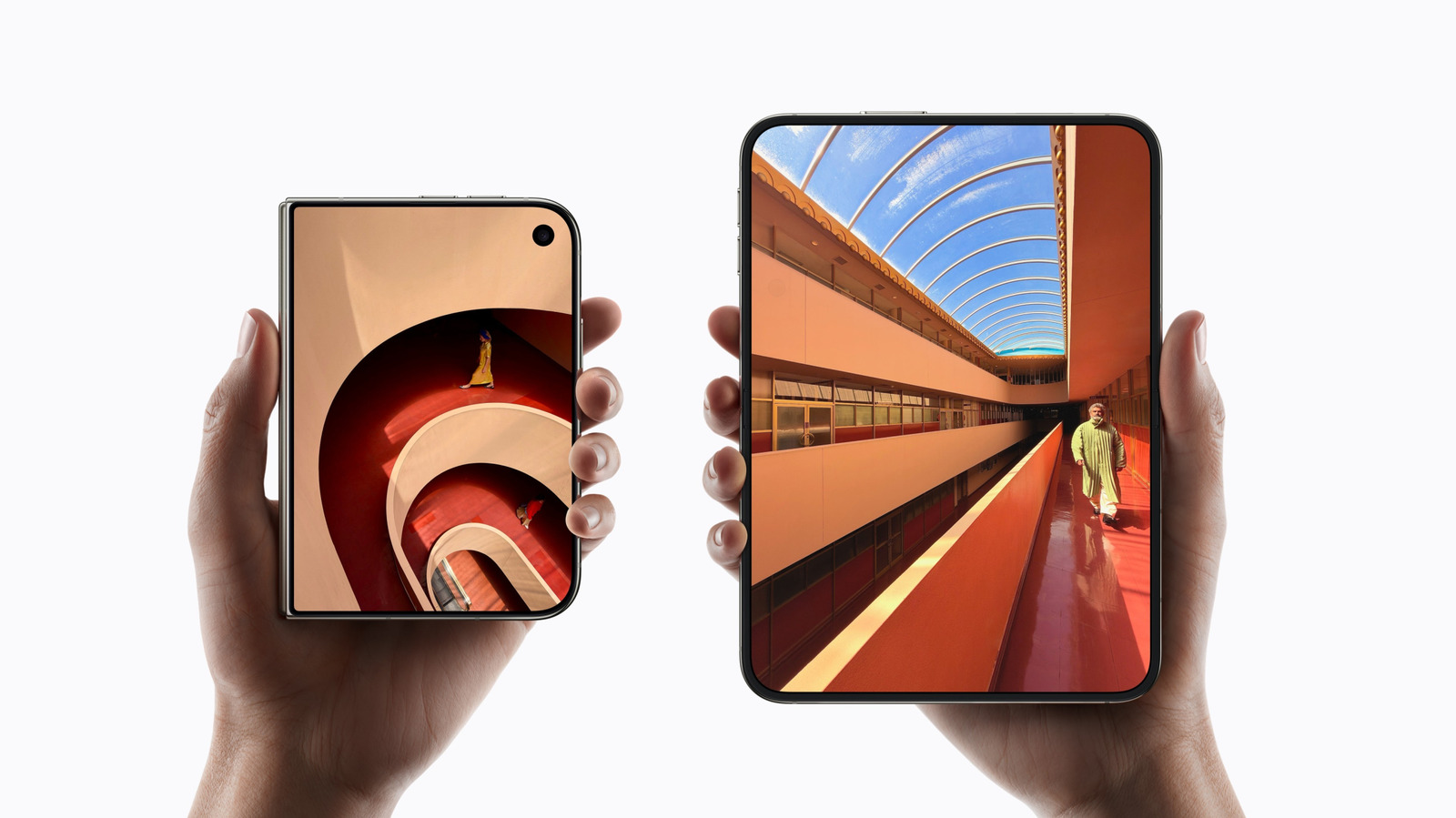
Apple's first foldable competes well with the Z Fold 8, at least in terms of specs.
Apple's just-announced iPhone Duo represents its most radical reimagining of the smartphone, perhaps ever. With Samsung now on its eighth generation of foldable phones, and other competitors multiple generations into their own foldable lines, the iPhone Duo is the first Apple device with a screen that bends shut.
Samsung, which manufactures parts for the iPhone and made that folding screen, preempted the Cupertino colossus by launching the Galaxy Z Fold 8 last month in August. While the Z Fold series has traditionally been a tall and skinny device that opens up into a nearly square display, the Z Fold 8 is instead short and squat, taking on a profile that has been called "passport-style." (The taller candy bar-style didn't go away, but was renamed the Z Fold 8 Ultra to justify a price increase.) That's not-so-coincidentally the same form factor Apple chose for its inaugural folding phone, which means the two devices are positioned in the market as direct competitors.
Samsung seems to have struck gold with the Galaxy Z Fold 8, its passport-style foldable. Yesterday, Samsung reported that the phone and its larger sibling, the Galaxy Z Fold 8 Ultra, are outselling last year's Fold 7 by 30 percent in the first month of their respective life cycles. Of course, the iPhone Duo is expected to be a juggernaut, and may make Samsung's numbers look downright cute when the dust settles. It's got a stacked spec sheet that takes clear aim at Samsung.
If you've decided this is the year you'll finally fold for a foldable, there's a solid chance these are the two smartphones you'll waffle between. So, here's how the two of them stack up in every way that matters. While we'll need time to test the iPhone Duo before rendering a final verdict on it, we held up its spec sheet side-by-side with the Samsung Galaxy Z Fold 8 to see how the two compare.
The squat and slim Fold 8 has an inner display that unfolds to 7.6 inches with a resolution of 2,448 by 1,848 pixels; it runs at 120Hz. Apple has chosen the same 7.6-inch screen size with a slightly higher resolution of 1,878 by 2,670, also at 120Hz. Samsung's outer display is 5.5 inches, while Apple's is 5.4 and again has a slightly higher resolution.
Samsung manufactured the folding OLED screens for the iPhone Duo, and you might expect it to reserve some goodies for its own products. In Engadget's Fold 8 review , we gushed over the anti-reflective coating on both screens, which makes it far easier to use the phone in direct sunlight or harsh overhead lighting. Shockingly, that feature has made its way to the iPhone Duo. Apple may be calling it a "nano-texture finish," but it does the same thing. Apple claims its inner screen has 40 percent higher stiffness than other materials used in the industry. Both Samsung and Apple's latest foldables are also reinforced by a titanium plate under the folding layers.
The Fold 8 is powered by the Qualcomm Snapdragon 8 Elite Gen 5, which is built on a 3nm process. While it was extremely competitive against Apple's last generation A19 Pro silicon, the A20 Pro chip found in the iPhone Duo is built on a 2nm process and pushes ahead of Qualcomm's best mobile chip in both productivity and gaming tasks. Apple boasted 50 percent more memory bandwidth and a 40 percent faster GPU on the A20 Pro compared to the A19 Pro. You can expect Qualcomm to launch the Snapdragon 8 Elite Gen 6 in the near future, but it won't show up in new Android phones until later this year, likely appearing in next year's Galaxy phones. As for RAM, the Galaxy comes with 12GB unless you opt for the top-end 1TB storage model, in which case you'll get a whopping 16GB. Apple has not revealed the amount of RAM in the iPhone Duo. However, Apple is known for well-optimized software, and iOS has more aggressive RAM management than Samsung's take on Android.
Read Full Story at Engadget →