Iranians struggle to buy food as war drives up prices
Living conditions for ordinary Iranians are getting tougher as war and sanctions add to years of economic strain . Officials have introduced higher wages and food vouchers to try and shield low-income households, but many Iranians say the measures are failing to keep up with ris
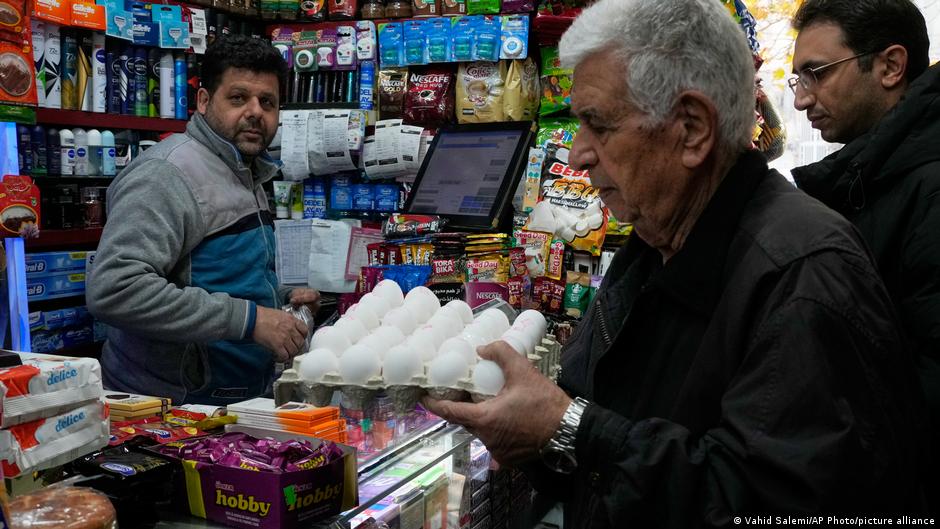
Living conditions for ordinary Iranians are getting tougher as war and sanctions add to years of economic strain .
Officials have introduced higher wages and food vouchers to try and shield low-income households, but many Iranians say the measures are failing to keep up with rising prices.
In March, the monthly minimum wage in Iran was raised by 60%, or 166 million rials ($120, €104). However, for many households, the most visible sign of the crisis is not a headline inflation figure, but the speed with which ordinary prices change.
One Tehran resident told DW that the price of rice went up 9% within two weeks. Other items like ice cream saw similar hikes. Prices are climbing week by week, while salaries are adjusted only once a year.
Officials say a food voucher scheme is meant to ease the burden on households. But many Iranians argue that the support has not kept pace with prices.
The same Tehran resident said that since the food voucher policy was introduced, chicken prices had more than doubled, while milk had gone up nearly 50%. The voucher itself, the resident said, remained unchanged.
Some households, if they have any savings left, buy food, detergents and hygiene products in bulk and store them at home before prices rise again.
The war with the US and Israel has exacerbated Iran's ongoing economic problems. As a resolution to the conflict seems far off , the supplies of oil, gas and fertilizer remain disrupted.