‘It’s massive destruction’: outcry in Texas over waivers to allow border wall in Big Bend national park
Despite plunging border crossings, the Trump administration is circumventing laws to expedite building in a vast, pristine wilderness T he Trump administration has waived a slew of environmental and historical preservation laws that would allow it to build a towering border wall
Despite plunging border crossings, the Trump administration is circumventing laws to expedite building in a vast, pristine wilderness
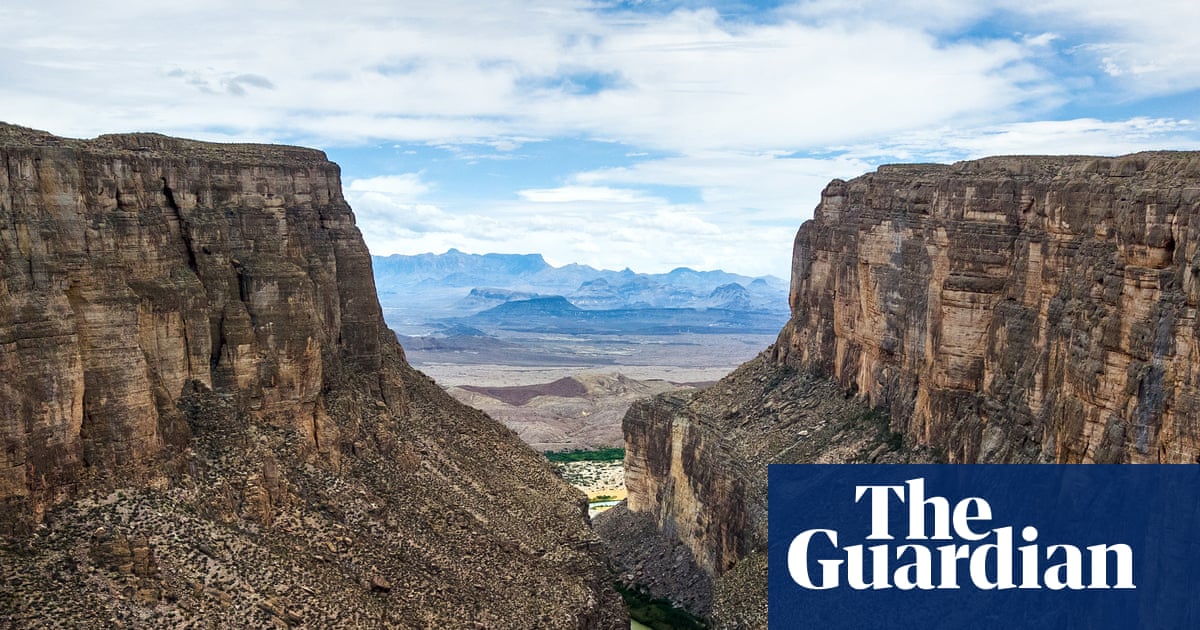
T he Trump administration has waived a slew of environmental and historical preservation laws that would allow it to build a towering border wall that cuts through Big Bend national park, a vast protected wilderness in south Texas.
Congress poured a whopping $46.5bn for border wall construction into the “Big, Beautiful” bill last year, supercharging Donald Trump ’s ambition to wall off the southern border with Mexico. The longest unwalled stretches lie along a roughly 500-mile (800km) section of west Texas that Customs and Border Protection calls the “Big Bend sector”.
That corridor includes some of the largest chunks of protected land in a state that is 95% privately owned, including Big Bend national park, Big Bend Ranch state park and Black Gap wildlife management area .
The prospect of marring those landscapes in the name of border security at a time of plummeting unauthorized immigrant crossings has drawn fierce backlash from a bipartisan group of local leaders and protest from public land users. The notion of walling off Big Bend national park has sparked the most fury . The 800,000-acre (325,000-hectare) expanse of Chihuahuan desert punctuated by the Chisos mountain range draws half-a-million visitors annually to hike, camp, stargaze and float the Rio Grande.
For months, CBP has sent mixed signals about its intentions for Big Bend national park , while limiting its comments about its plans to vague and infrequent statements. CBP updated an interactive map on its website in February to indicate that the agency planned to erect a steel bollard wall along the park’s river frontage, sparking an outcry from public land advocates, local business owners and elected officials.
CBP later changed the map to show that it only intended to use detection technology along the length of the park’s border. The current iteration shows that the agency plans to build new roads along the length of the park’s southern border, along with four separate 4-6ft-tall barriers intended to stop incoming vehicles. CBP officials have rarely discussed their plans for the wall publicly.
The park’s advocates worry that an opaque agency with a massive war chest could still wreak severe damage on the most beloved park in Texas . The waiver that the Department of Homeland Security (DHS) published on Tuesday in the Federal Register empowers CBP to build seemingly whatever security infrastructure it wants in the park – from 30ft steel bollard fencing to unpaved roads.