‘It’s not about heroes and villains’: the triumphant return of long-lost indie I Shot Andy Warhol
Director Mary Harron on her audacious ‘anti-biopic’ of Scum Manifesto author Valerie Solanas, who shot Warhol in 1968 O n 3 June 1968, Valerie Solanas, the sole member of Scum (the Society for Cutting Up Men), entered Andy Warhol ’s Factory, pulled out a .32-caliber pistol and f
Director Mary Harron on her audacious ‘anti-biopic’ of Scum Manifesto author Valerie Solanas, who shot Warhol in 1968
O n 3 June 1968, Valerie Solanas, the sole member of Scum (the Society for Cutting Up Men), entered Andy Warhol ’s Factory, pulled out a .32-caliber pistol and fired three shots. The first struck Mario Amaya, an art critic, in the hip, the second lodged in a wall and the third pierced Warhol’s chest. A little over two days later, in the early hours of 6 June, Robert Kennedy was assassinated, stealing airtime from the attempted murder of America’s most famous pop artist. After the shooting, Solanas, as Warhol might have put it, got her “15minutes of fame”.
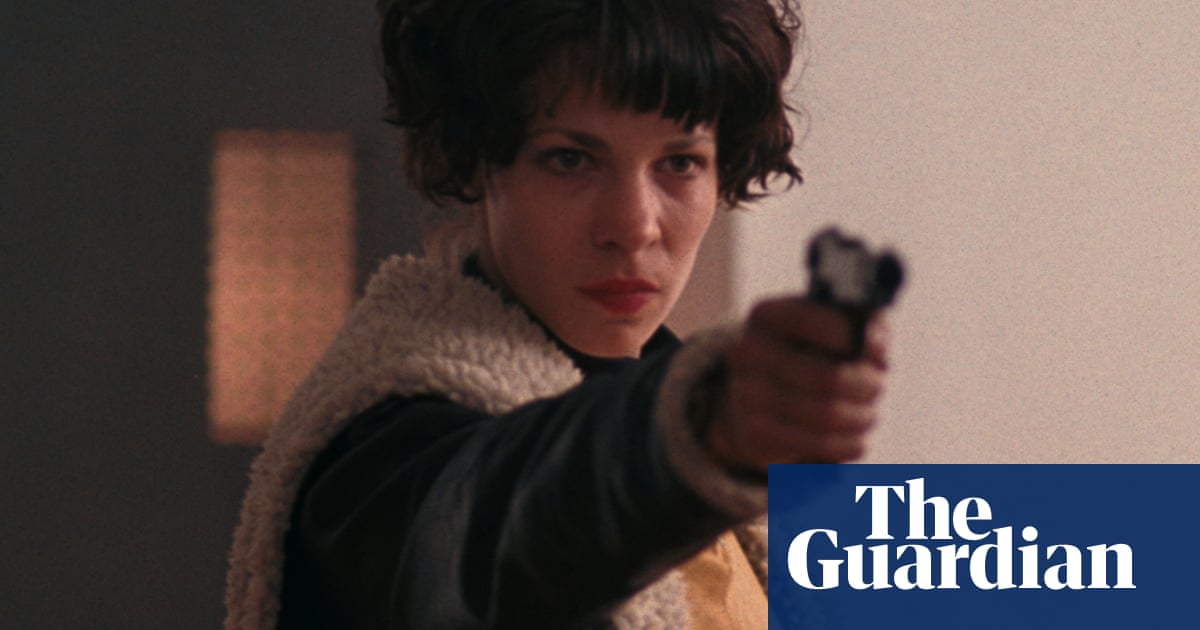
When police asked Solanas why she shot Warhol, she replied she “had a lot of very involved reasons”. That phrase recurs throughout Mary Harron’s 1996 directorial debut, I Shot Andy Warhol , which takes its title from another line in Solanas’s police confession and walks the viewer back through her life, while leaving the question of why she did it open to interpretation. Thirty years ago, it opened Cannes’ Un Certain Regard section, and today, the film remains one of the 90s’ most formally adventurous biographical dramas and has become a queer cult classic.
This summer, I Shot Andy Warhol returns to cinemas in a new 4K restoration from Janus Films. For years, the film shared something of its subject’s fate, slipping into obscurity. Its rights passed through a succession of bankrupt distributors, and one of the only ways to see it was through a battered YouTube upload sourced from a long-out-of-print DVD. “I’d been trying for about six or seven years to get the film back in circulation,” Harron says from an office in Brooklyn.
For Harron, the film returns at a moment when both its treatment of gender and its politics may read differently. “I think people will understand it better now. Our culture’s taking this big back step towards male dominance and authoritarian regimes; everything women like Valerie were fighting against.” Solanas, who was born in 1936, and attended college during one of America’s most conservative eras, had a politics that might be considered an analog to today’s trans-exclusionary radical feminism; guided as much by righteous anger towards patriarchal social control as by specious biological claims. In her Scum Manifesto, she argued that men’s Y chromosomes made them fundamentally inferior.
In Harron’s portrait of Warhol’s would-be assassin, Lili Taylor plays Solanas as a ragtag artist in constant search of an audience, one she believes Warhol’s star-making power can provide. Jared Harris embodies Warhol with irritating feyness, and Stephen Dorff plays Candy Darling, the cult superstar and transgender actor whose glamour Solanas disdains. “Valerie was kind of a Terf,” Harron says. “She had all kinds of visionary ideas, and then these deeply held prejudices.”
A willingness to sit with that kind of ambivalence and refuse a neat conclusion has defined Harron’s career, from American Psycho to 2018’s Charlie Says, which starred Matt Smith as Charles Manson . She recalls studio executives wanting more information about Patrick Bateman’s childhood while developing American Psycho, hoping psychology would explain away his motives. She resisted that clean, explanatory framework then, and always has. “It’s just not intellectually satisfying to give those kinds of explanations,” she says.
It is also what distinguishes I Shot Andy Warhol from many contemporary acts of historical rehabilitation. Harron approaches Solanas with sympathy without turning her into a saint. “I love Valerie, but you don’t have to turn her into a 100% hero,” she says. “It’s not about heroes and villains. To me, that’s what always makes the story interesting, showing the complications of people, and the inconsistencies of people.”