James Webb telescope discovers oldest black holes, LID-1166, in early universe
The James Webb Space Telescope has discovered LID-1166, the oldest and closest pair of black holes found in the early universe, suggesting they formed much earlier and faster than previously believed…
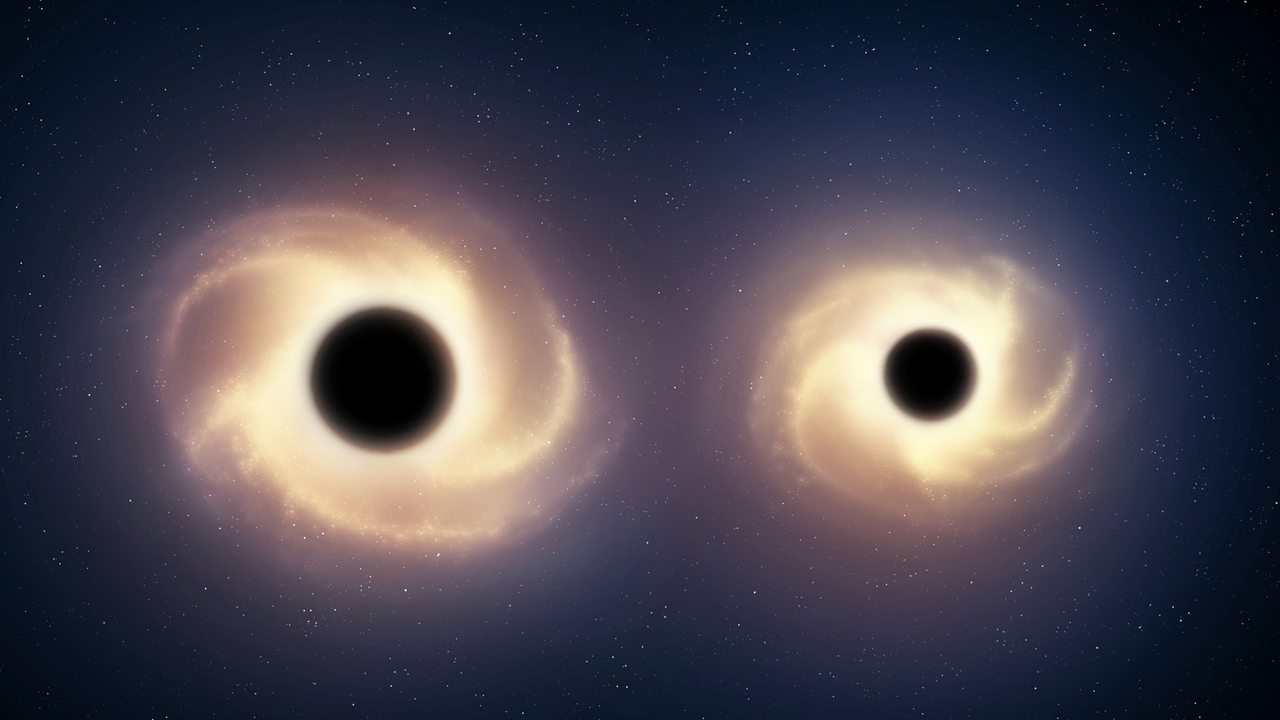
The James Webb Space Telescope has identified a pair of black holes, known as LID-1166, that are the oldest and closest to each other ever discovered in the early universe. This groundbreaking find, made public in October 2023, offers new insights into the formation and growth of black holes, indicating that they reached significant sizes much earlier than previously thought.
This discovery is crucial because it challenges existing theories about black hole formation in the universe's infancy. The early universe, just a few hundred million years after the Big Bang, was thought to be too chaotic for such massive black holes to exist in close proximity. LID-1166's existence suggests that these cosmic giants may have formed rapidly in dense environments, possibly giving rise to the supermassive black holes seen at the centers of galaxies today.
The dual black hole system consists of two black holes separated by only a few hundred light-years, a close distance in cosmic terms. The detection was made using the advanced infrared capabilities of the Webb telescope, which can observe distant galaxies and their hidden components. Researchers believe that studying LID-1166 can help clarify how black holes evolved in the early universe and their role in galaxy formation.
Looking ahead, scientists will continue to monitor LID-1166 and similar systems to gather more data. This research could reshape our understanding of the universe's history and the mechanisms that led to the formation of the first galaxies. As astronomers explore more distant regions of space, they hope to uncover additional pairs of black holes, providing a clearer picture of the conditions that fostered their growth and the structure of the early universe.
Read Full Story at Live Science →