Kamala Sohonie: The biochemist who wanted to feed a nation
Kamala Sohonie: The biochemist who wanted to feed a nation Biochemist Kamala Baghvat, later known as Kamala Sohonie, forced open the doors of India’s male-only laboratories and used her knowledge to help feed a nation By Mohua Chinappa , Lorena Galliot & The Lost Women of Scien
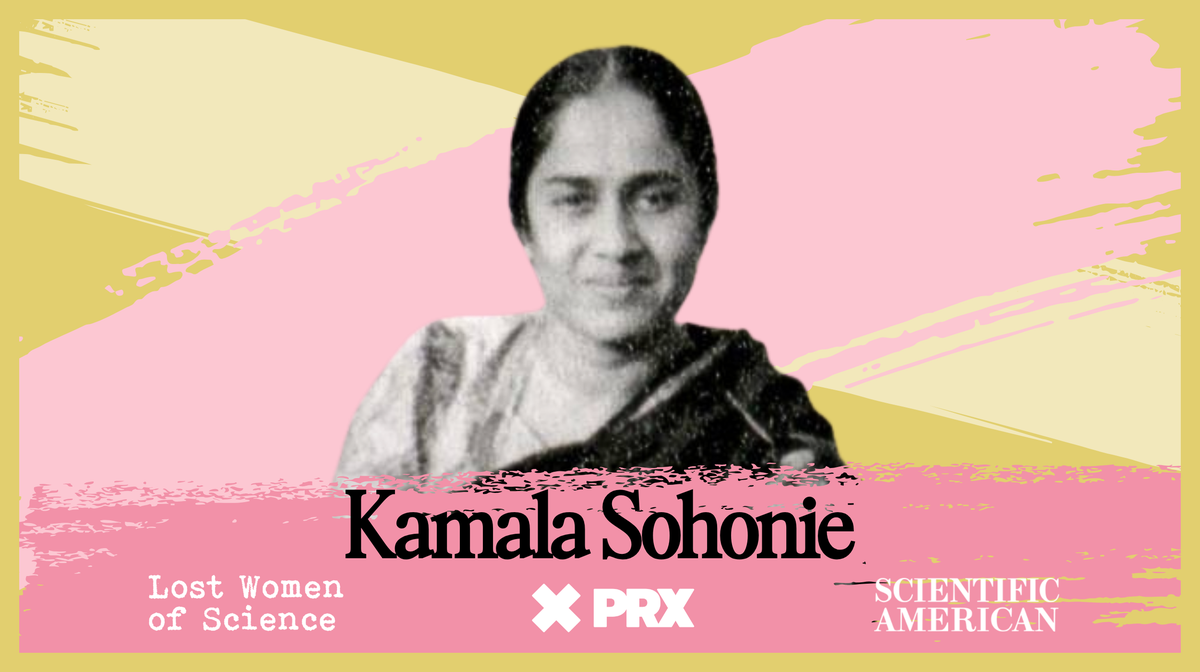
Biochemist Kamala Baghvat, later known as Kamala Sohonie, forced open the doors of India’s male-only laboratories and used her knowledge to help feed a nation
By Mohua Chinappa , Lorena Galliot & The Lost Women of Science Initiative
In India in the 1930s, Kamala Baghvat, later known as Kamala Sohonie, dreamed of working alongside the world’s greatest scientific minds. But she was repeatedly told “no” when she tried to work in the then male-dominated field.
Inspired by Mahatma Gandhi, she used nonviolent protest to pry her way into some of India’s top laboratories. She became the first Indian woman to earn a Ph.D. in biochemistry and, eventually, the first woman to lead India’s Royal Institute of Science (now the Institute of Science, Mumbai). Her career centered around a topic she was passionate about: solving India’s malnutrition crisis.
If you're enjoying this article, consider supporting our award-winning journalism by subscribing . By purchasing a subscription you are helping to ensure the future of impactful stories about the discoveries and ideas shaping our world today.
Mohua Chinappa : In the early 1930s, Gandhi's defiance of unjust British rule resonated throughout India. His nonviolent resistance inspired millions to challenge the status quo. For one young woman, it became a blueprint for her own battle.
Kamala grew up in the city of Bombay, now called Mumbai, in an educated and progressive family. She had long, jet black hair that ran down her back in a single braid. She aspired to be a chemist, like her father and uncle before her. Never mind that few — if any — Indian women were scientists back then.
In 1933, Kamala graduated from college in Bombay with top honors in physics and chemistry. She was one of very few women at the time studying science at the college level, and she didn’t stop there. She applied to the prestigious Indian Institute of Science in Bangalore, or IISc for short, for an advanced degree in biochemistry.