Kim Budil
The director of Lawrence Livermore National Laboratory discusses changing the pace of scientific research Kim Budil is an American physicist. She has been director of Lawrence Livermore National Laboratory since 2021 and is the first woman to hold the role. Her research focuses
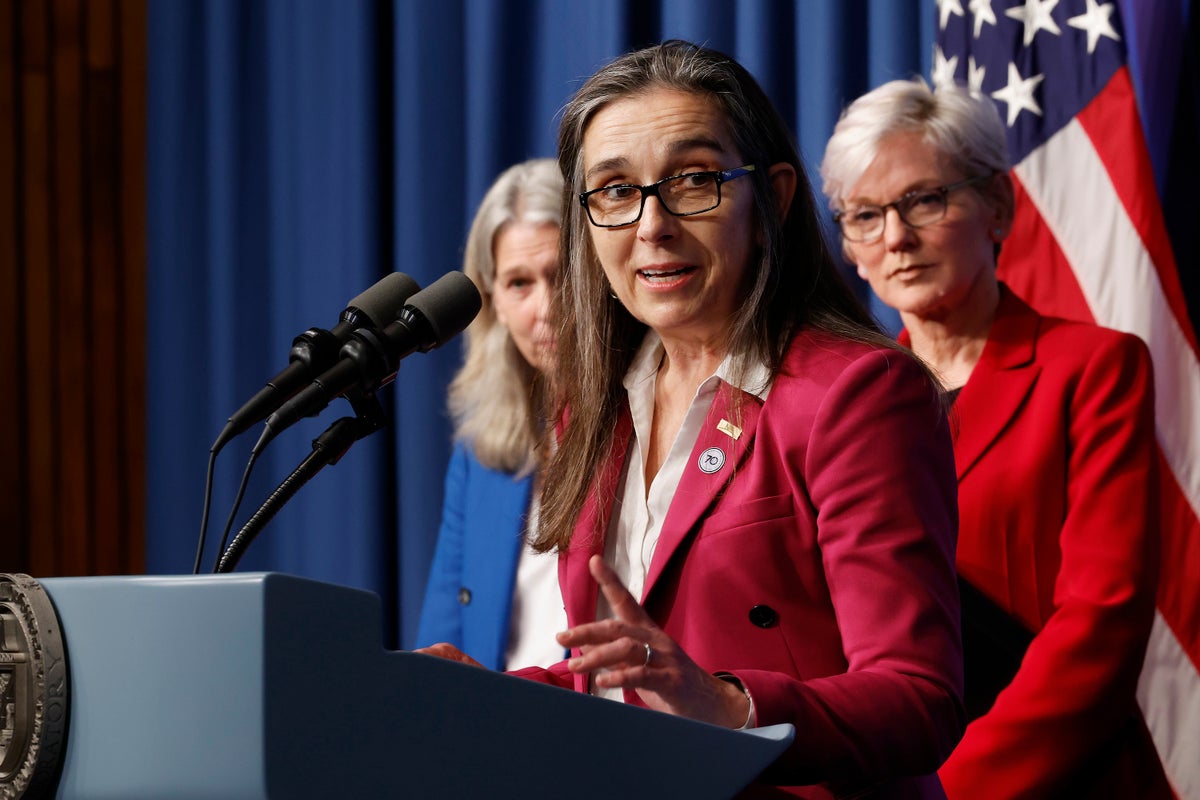
The director of Lawrence Livermore National Laboratory discusses changing the pace of scientific research
Kim Budil is an American physicist. She has been director of Lawrence Livermore National Laboratory since 2021 and is the first woman to hold the role. Her research focuses on high-power laser science, fusion research and national security programs within the U.S. national laboratory system.
How would you describe the current state of American science?
If you're enjoying this article, consider supporting our award-winning journalism by subscribing . By purchasing a subscription you are helping to ensure the future of impactful stories about the discoveries and ideas shaping our world today.
I would describe the current state of American science as changing fast but certainly strong. The U.S. has a very rich and robust scientific ecosystem, with a fantastic academic sector, incredible industrial research and national labs trying to bridge between those two communities, but an increasingly competitive environment internationally. And so, as that spins up..., we need to shift into a new gear.
One is the pace we operate at—in an environment that changes much faster than what we’re used to and from a position where we’re no longer an uncontested leader in every domain where we choose to participate. That’s been changing over the past couple of decades, but it’s really changing in meaningful ways now.
I think the second thing we have to get used to is a very different balance of capabilities across that ecosystem. So, just as an example, the emergence of large language models from these big artificial intelligence companies—that’s really different, right? We don't usually see these powerful technologies emerging outside the government-funded sphere. So how do we work with that community, not as providers but as peers? How do we engage in a way that ensures you always get the public benefit of these very powerful technologies, you understand the risks, and you can manage those, and you get the full benefit of the potential upside in a rapidly changing environment? Maybe we can’t wait for a new AI rules-and-regulations order to emerge. We have to build this ecosystem.
I think, for me, the incredible opportunity that we have in front of us with new technologies and an incredible community of people who are learning to use these new technologies in new ways.