King's College team wins access to cutting-edge Google quantum chip
Scientists from King's College London have become the first UK academic research team to gain access to Google's cutting-edge quantum computer chip Willow as part of a scheme launched with the UK's national quantum lab last year. Quantum computers can in theory solve problems wh
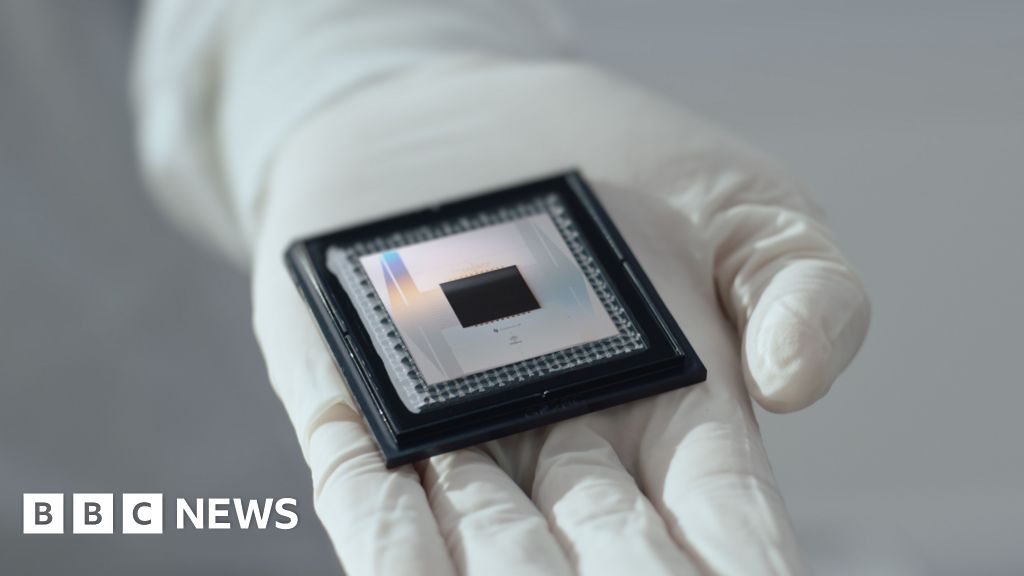
Scientists from King's College London have become the first UK academic research team to gain access to Google's cutting-edge quantum computer chip Willow as part of a scheme launched with the UK's national quantum lab last year.
Quantum computers can in theory solve problems which the most powerful conventional computers cannot.
Google says Willow can solve a theoretical problem in five minutes which would take the world's current fastest super computers 10 septillion - or 10,000,000,000,000,000,000,000,000 - years to complete.
King's lead for the project Dr Eleanor Crane said its use of Willow would "light a torch" for research to answer questions about the most important natural processes.
"It would be useful if society could understand how plants transform sunlight into energy, find materials which transport electricity quickly, or how molecules bind to each other," said Crane, who will co-lead the research team alongside Dr Alexander Schuckert from ENS Paris.
These natural processes rely on the interactions between many fundamental particles which made up the building blocks of life.
But some questions are really hard to answer with the computers or even supercomputers we currently use.
"If we could get to grips with these processes, then we could use this understanding to create better solar cells, more efficient energy grid systems, and discover drugs for previously untreatable diseases," she said.