Largest whale ‘graveyard’ discovered, with skeletons spanning 5 million years
Largest whale ‘graveyard’ discovered, with skeletons spanning 5 million years The fossilized remains of more than 450 whales have amassed along a 750-mile-long stretch of the Indian Ocean floor By Meghan Bartels edited by Claire Cameron Chinese scientists have discovered the l
Largest whale ‘graveyard’ discovered, with skeletons spanning 5 million years
The fossilized remains of more than 450 whales have amassed along a 750-mile-long stretch of the Indian Ocean floor
Chinese scientists have discovered the largest whale “graveyard” ever found. It contains nearly 500 whale skeletons all collected by chance and spreads across 750 miles of seafloor and five million years of evolutionary history.
“They’ve really captured something novel,” says Nick Pyenson, a paleontologist at the Smithsonian Institution’s National Museum of Natural History, who was not involved in the new research. The discovery is detailed in a study published today in Nature . “It’s a cool study; it’s really neat to see,” Pyenson says.
The discovery is centered on the Diamantina Fracture Zone, which travels west from the southwesternmost tip of Australia into the Indian Ocean along a rift valley that formed some 50 million years ago, when the Down Under continent split from Antarctica.
If you're enjoying this article, consider supporting our award-winning journalism by subscribing . By purchasing a subscription you are helping to ensure the future of impactful stories about the discoveries and ideas shaping our world today.
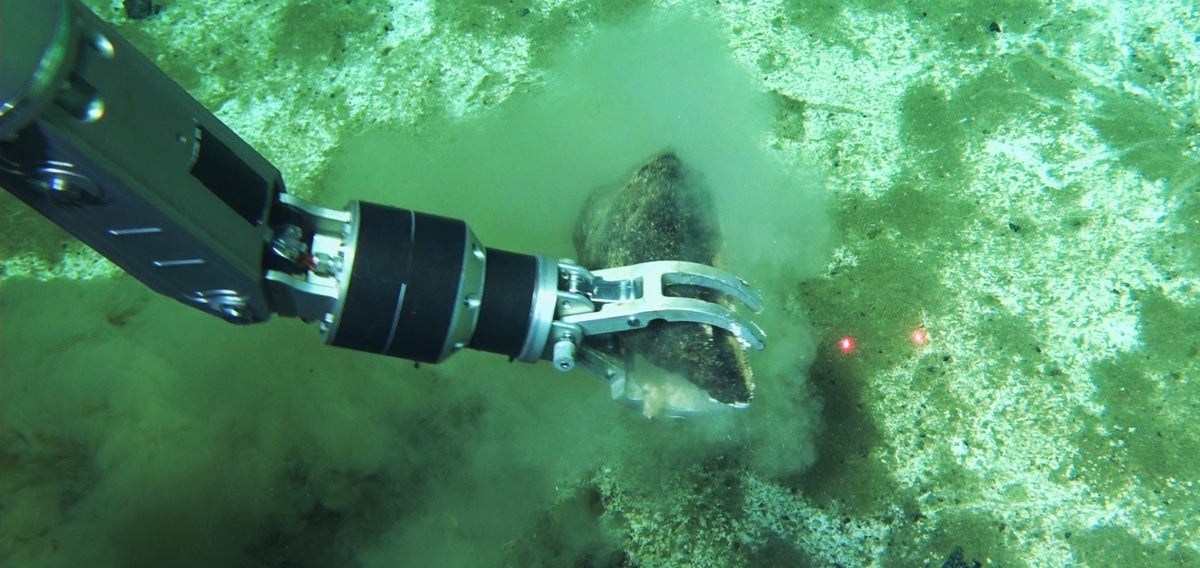
In early 2023 Chinese scientists used a crewed submersible vehicle to scout along the fracture and spotted what they quickly realized was a whale fossil at some 23,000 feet (7,000 meters) below the surface. Over the course of some 30 additional dives, the researchers discovered an incredible array of whale remains, as well as traces of the animals’ activity at most of the sites they explored.
Five of the whale skeletons they found were recent enough to be hosting the type of dynamic ecosystem that scientists associate with “ whale falls .” Such systems support a shifting cast of scavengers and then microbes specialized to these fleeting feasts. (Because scientists only discovered whale falls less than 50 years ago, Pyenson says that researchers don’t have an accurate estimate for how long these pop-up ecosystems can last.)







