NASA's Webb Telescope captures detailed images of Lion Nebula
NASA's James Webb Space Telescope has released detailed images of the Lion Nebula (NGC 2392), located 3,000 light-years away, revealing its structure and composition. These observations enhance our u…
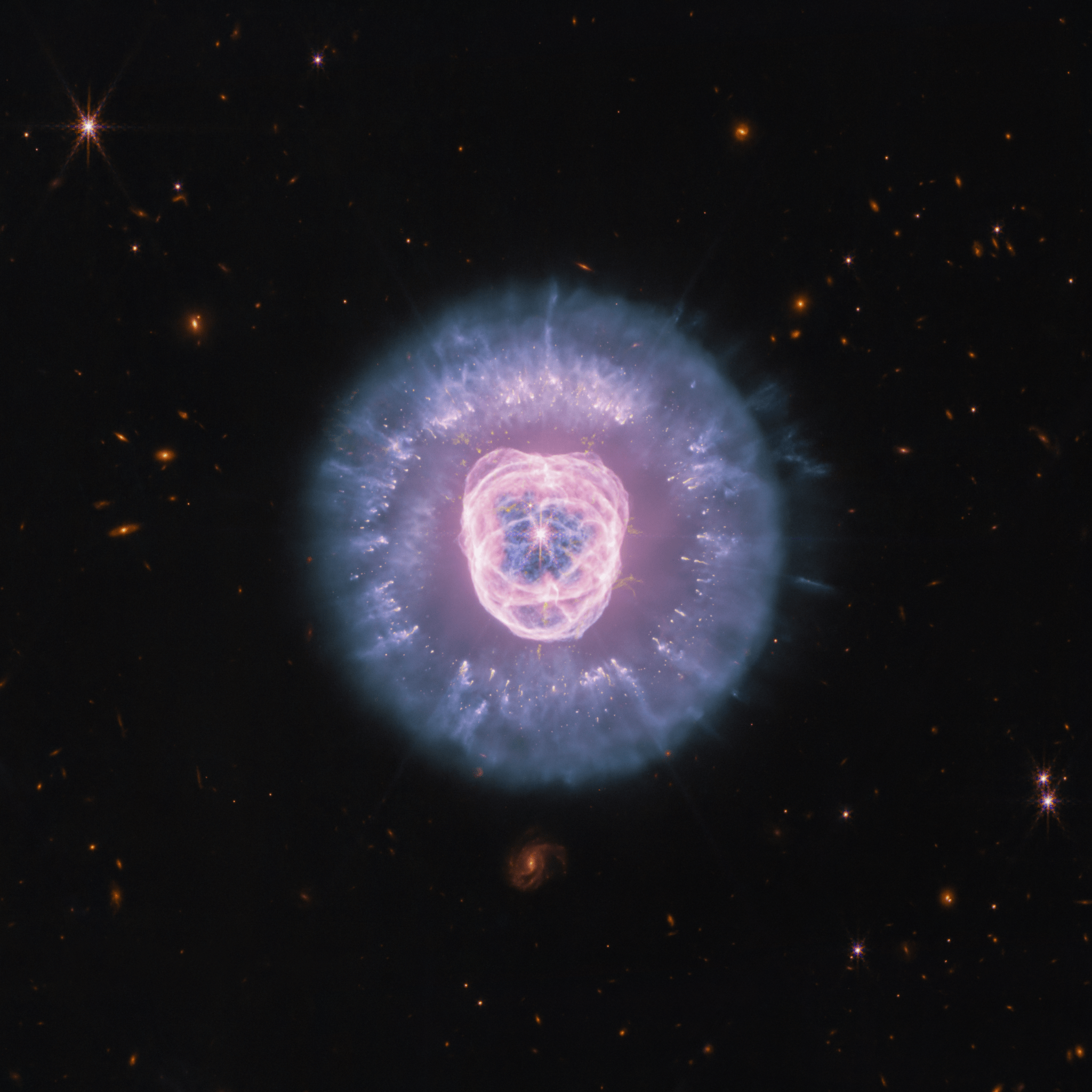
NASA's James Webb Space Telescope has captured stunning new images of NGC 2392, known as the Lion Nebula. This release occurred on August 10, 2026, showcasing the nebula's intricate "mane" in unprecedented detail, thanks to Webb's advanced high-resolution imaging capabilities. The Lion Nebula is located about 3,000 light-years from Earth in the constellation Gemini.
The significance of these images lies in Webb's ability to observe celestial phenomena with greater clarity than ever before. The Lion Nebula is a planetary nebula, a stage in stellar evolution that occurs when a star expels its outer layers. Observations like these help astronomers better understand the lifecycle of stars and the chemical processes that contribute to the formation of new celestial bodies. Webb's findings come at a time when scientists are eager to deepen their understanding of the universe's evolution, especially as new technologies and methods emerge.
In the latest images, the nebula's structure reveals intricate details and vibrant colors, indicating the presence of various elements like hydrogen, helium, and carbon. The high-resolution data allows researchers to study the nebula's composition and structure more precisely. These observations could lead to new insights into star formation and the processes that govern the life cycles of stars. The release of this data is expected to generate excitement in the scientific community, as researchers analyze the findings and potentially publish new studies based on Webb's observations.
Looking ahead, the James Webb Space Telescope will continue to observe various celestial objects, expanding our understanding of the universe. As astronomers analyze the Lion Nebula's data, they may identify new phenomena or patterns not previously observed. This research is crucial not just for understanding our cosmic neighborhood but also for exploring questions about the origins of life and the universe itself. The ongoing discoveries made by Webb promise to reshape our knowledge of space in the years to come.
Read Full Story at NASA →