Meal deliveries can save money and improve health. Will they survive Medicaid cuts?
Volunteers prepare food at Community Servings, a Boston nonprofit that produces medically-tailored meals. Robin Lubbock/WBUR hide caption On a weekday morning in a quiet Boston neighborhood, a kitch…
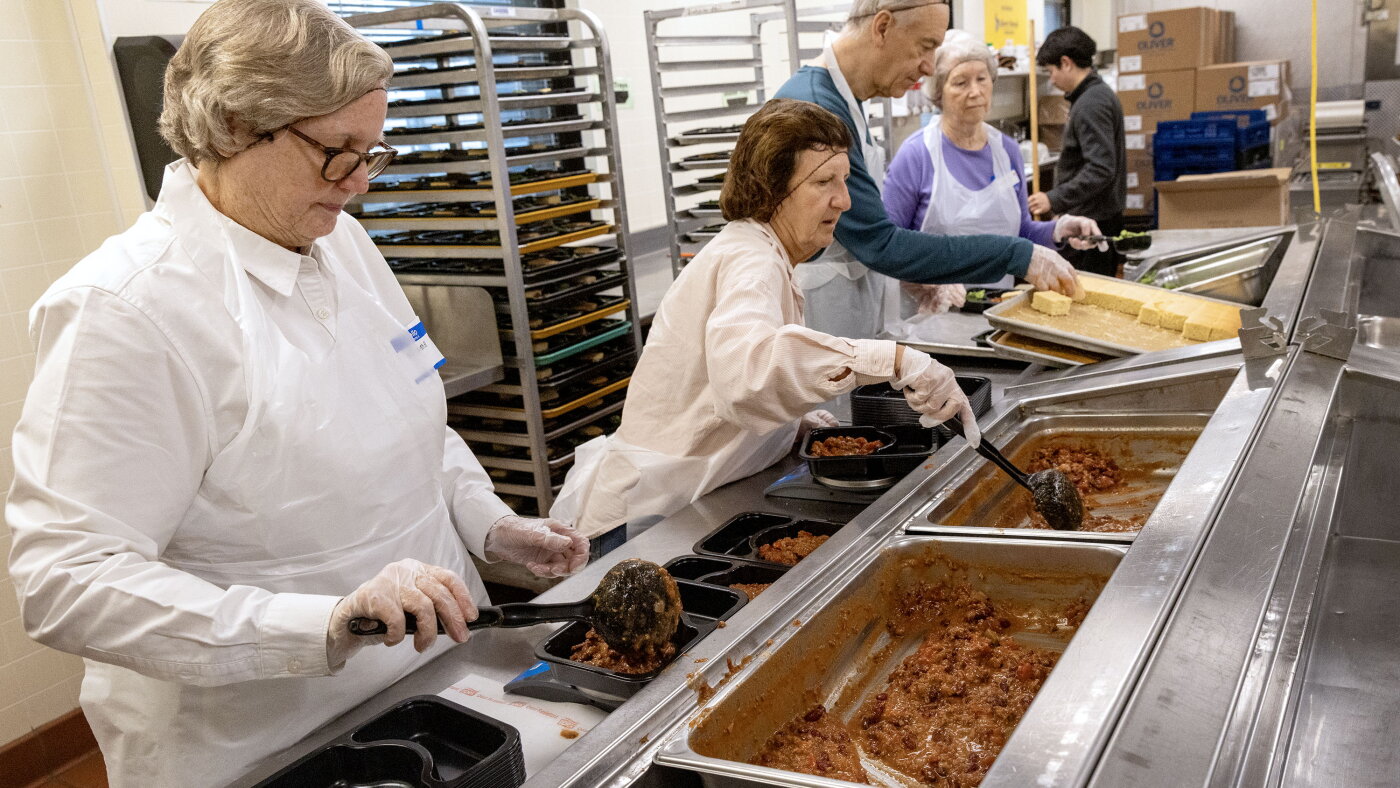
Volunteers prepare food at Community Servings, a Boston nonprofit that produces medically-tailored meals. Robin Lubbock/WBUR hide caption
On a weekday morning in a quiet Boston neighborhood, a kitchen bustled with activity. Volunteers sliced chicken breasts, stuffed bell peppers, filled trays, and carefully labeled each item.
This story was produced in partnership with KFF Health News .
It was part of an experiment to offer nutritious and medicall- tailored meals to Medicaid patients who are unable to shop for groceries and cook for themselves.
"Once I started to eat these meals that were geared toward my illness, I built up my muscle mass again, built up my strength, built up my confidence in myself," said Vanessa Georges, who is in remission from throat cancer and said she would struggle to consume enough calories without the deliveries.
Georges said she noticed another benefit from the meals: She spends less time at the doctor's office.
Researchers have found evidence backing her observation. About 1,900 Massachusetts residents who, like Georges, received medically-tailored meals for at least three months needed less medical care, according to a study published in the journal Nature Medicine. They had 20% fewer emergency department visits and 31% fewer hospitalizations than similar patients who did not receive meals.
Trays of stuffed peppers and carrots from Community Servings are ready to be sealed and delivered to Boston-area residents who receive medically tailored meals. Robin Lubbock/WBUR hide caption
Read Full Story at NPR News →