Global warming doubled Europe’s June heatwave intensity
Climate change doubled the likelihood of Europe's record June heatwave, with temperatures up to 4°C hotter due to human-caused warming. Without emissions cuts, extreme heatwaves could become five time
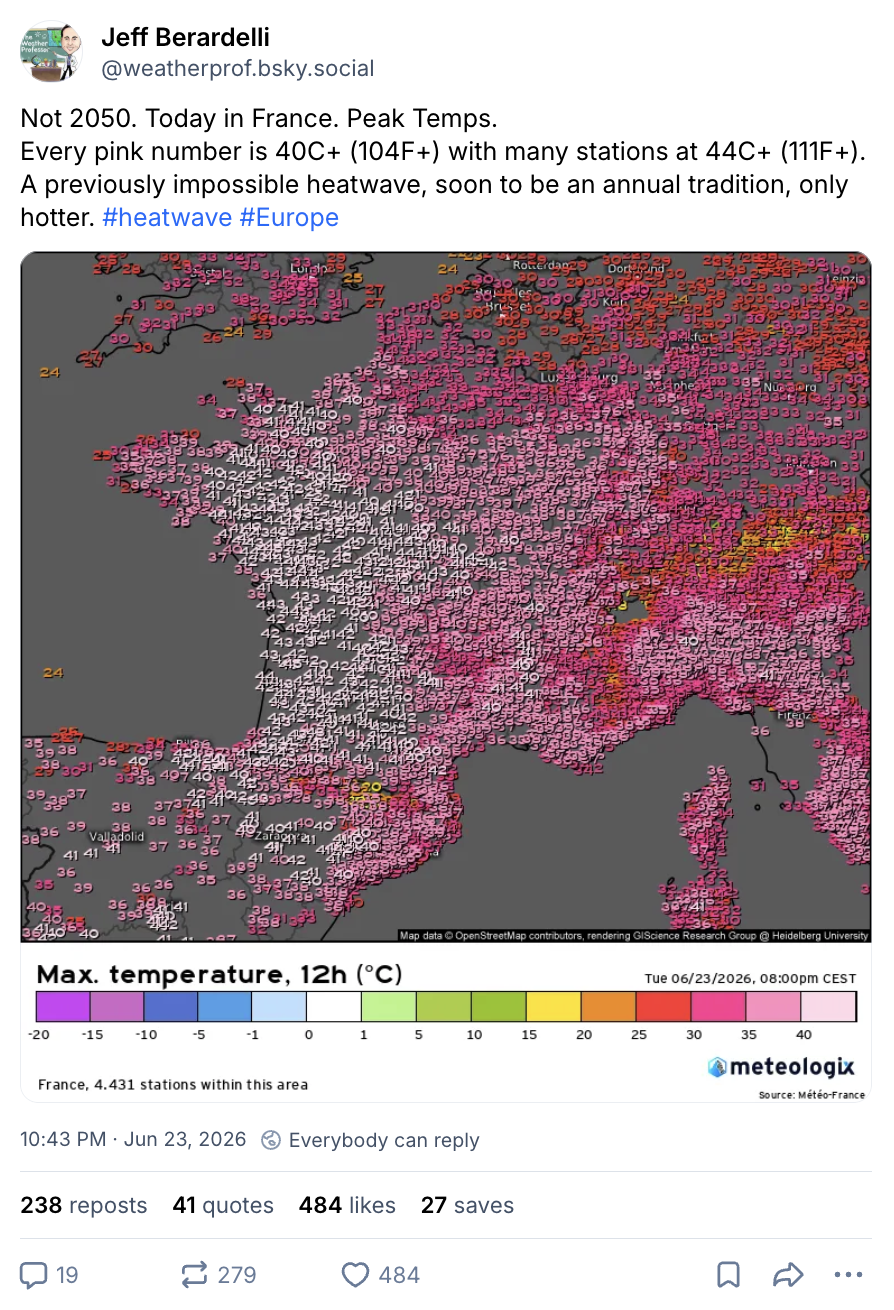
Western and central Europe just endured another record-breaking heatwave in June, with temperatures soaring past 40°C (104°F) in some areas—just two m
Read Full Story at Carbon Brief →Why This Matters
The record-breaking June heatwave in Europe is more than an environmental anomaly—it’s a stark warning that the climate crisis is accelerating faster than many models predicted. This event underscores how human activity is not just influencing but actively reshaping extreme weather patterns, with cascading risks for public health, infrastructure, and economic stability across the continent.
Background Context
Europe has warmed nearly 2°C since pre-industrial times—faster than the global average—making it a global hotspot for climate impacts. The June heatwave, which saw temperatures soar 4°C higher than natural variability would allow, reflects a decade-long trend where heat records are broken with alarming frequency. Policymakers are now grappling with how to adapt aging energy grids, urban cooling systems, and agricultural practices to a climate that no longer resembles the one they planned for.
What Happens Next
Expect renewed pressure on governments to accelerate decarbonization efforts, particularly in sectors like transportation and heavy industry where emissions cuts have stalled. The insurance industry may also reconsider risk models for Southern European nations, potentially driving up premiums or withdrawing coverage in high-risk zones. Meanwhile, public health officials will likely fast-track heat action plans as researchers warn that even brief extreme heat events can trigger long-term spikes in mortality.
Bigger Picture
This heatwave fits a global pattern where climate change is supercharging early-season extremes, from South Asia’s deadly pre-monsoon heat to North America’s increasingly frequent "fire weather." The trend suggests a future where Europe’s summers could resemble today’s Middle East—raising urgent questions about whether current adaptation strategies, like cooling centers and green infrastructure, will suffice in a warming world.