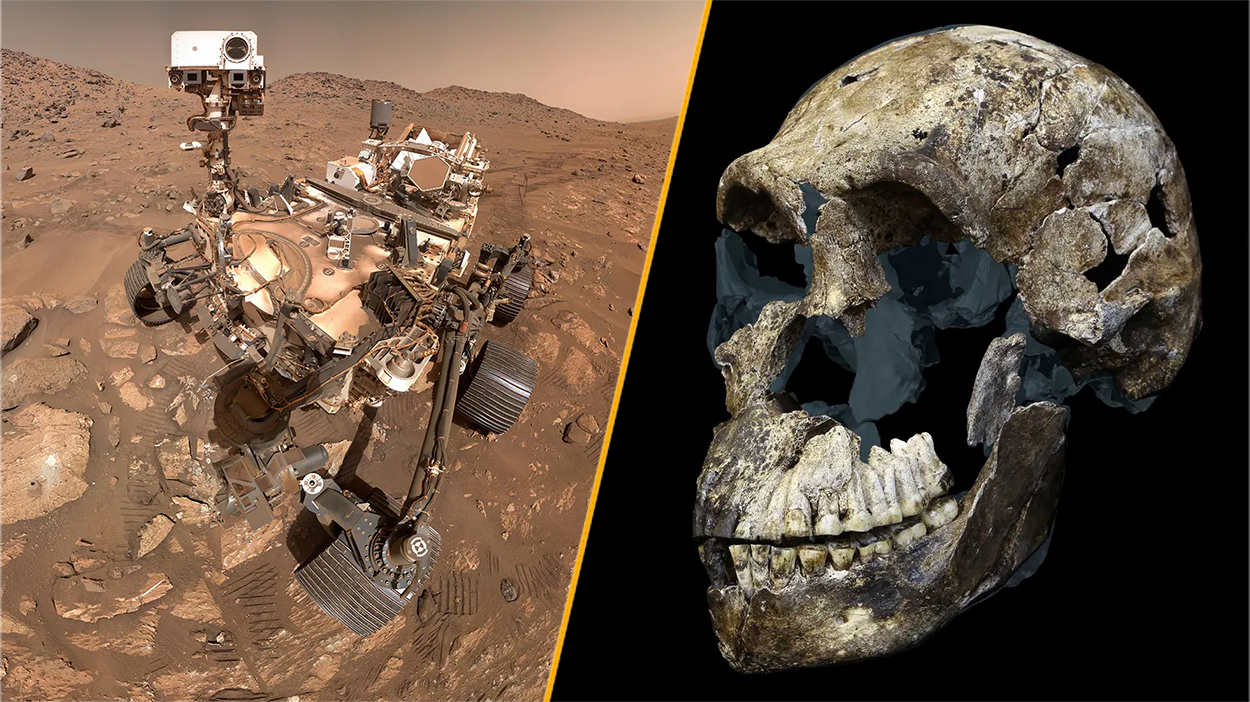
NASA awards $40M contracts to seven firms for Mars rover tech
NASA awarded seven companies contracts to develop advanced Mars rover mobility systems, including wheels, legs, and flying mechanisms. These upgrades will enable heavier payloads, steeper climbs, and

NASA just picked seven companies to build the next wave of Mars rovers. The space agency awarded contracts under its STRIDE initiative—short for Scien
Read Full Story at NASA →Why This Matters
The contracts signal a pivot in NASA’s Mars exploration strategy, prioritizing mobility over mere durability. By investing in diverse locomotion technologies—from wheeled rovers to legged and aerial systems—the agency is laying the groundwork for a new era of planetary science, where payload flexibility could unlock discoveries in terrains previously deemed inaccessible.
Background Context
Past Mars missions relied heavily on wheeled rovers like Perseverance, which excelled on flat terrain but struggled with steep slopes or loose regolith. The shift toward hybrid systems reflects lessons from past failures, such as the Mars Polar Lander’s crash, and builds on experimental concepts like NASA’s Mars Helicopter, Ingenuity. Private sector involvement, including companies with no prior spaceflight experience, also underscores the commercialization of deep-space technology.
What Happens Next
Prototype testing will likely accelerate, with NASA selecting one or more systems for future missions, potentially as early as the 2030s. Key variables to watch include energy efficiency, dust resistance, and the ability to integrate with other robotic systems. A lack of standardization across mobility platforms could pose challenges for collaboration between international partners or commercial ventures.
Bigger Picture
This move aligns with a broader trend of adapting terrestrial robotics for extraterrestrial use, mirroring advances in AI-driven locomotion and autonomous navigation. It also highlights the growing role of public-private partnerships in space exploration, where NASA’s funding serves as a catalyst for emerging aerospace startups. Ultimately, the shift toward modular, adaptable mobility systems could redefine how humanity explores not just Mars, but other celestial bodies with extreme terrain.