NASA reveals James Webb's detailed image of Centaurus A
NASA's James Webb Space Telescope captured the most detailed infrared images of the Centaurus A galaxy, revealing its star-forming regions and violent past. These images help scientists understand gal
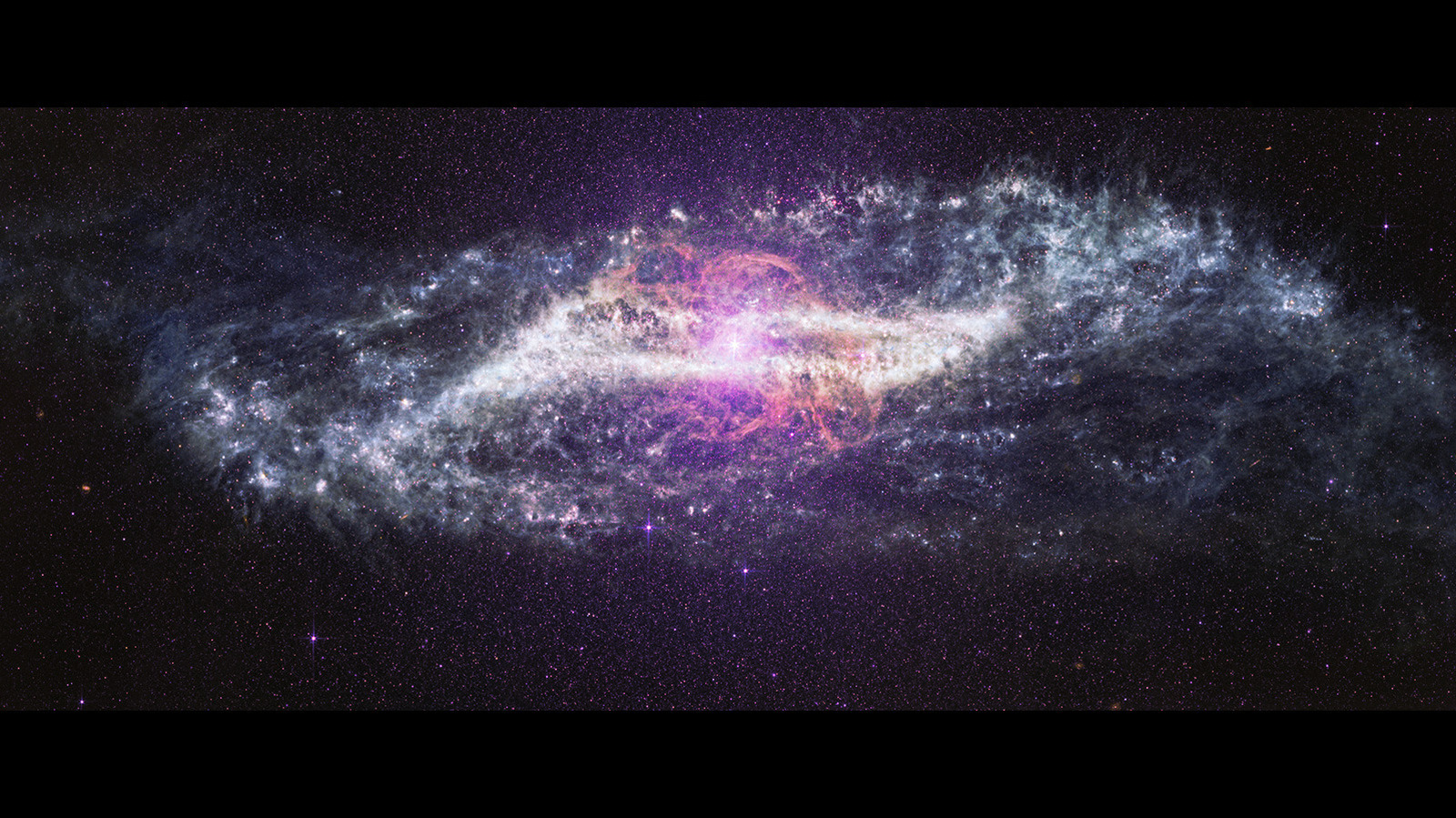
NASA has unveiled the most detailed images yet of the Centaurus A galaxy, captured by the James Webb Space Telescope, marking four years since the obs
Read Full Story at Engadget →Why This Matters
The James Webb Space Telescope's latest infrared portrait of Centaurus A isn't just a breathtaking cosmic snapshot—it's a scientific time machine. By piercing through the galaxy's dense dust lanes with unprecedented clarity, these observations allow astronomers to reconstruct the violent merger that shaped it, offering clues about how such cosmic collisions seed new stars and shape galactic evolution across the universe.
Background Context
Centaurus A, located 13 million light-years away, has long fascinated scientists due to its status as the closest active galaxy to Earth—a label earned by the supermassive black hole at its heart. Its distorted shape, marked by dark dust lanes and bright lobes, reflects a history of galactic cannibalism, where a spiral galaxy was consumed by a larger elliptical one. NASA's infrared breakthroughs here build on decades of ground-based observations, now supercharged by Webb's unmatched sensitivity.
What Happens Next
With these detailed images, researchers will refine models of galactic mergers and their role in triggering starbursts, potentially rewriting standard theories of galaxy formation. The data may also reveal hidden pockets of star formation obscured in visible light, while future Webb observations could trace the jet from Centaurus A's black hole back to its feeding mechanisms—key to understanding active galactic nuclei across the cosmos.
Bigger Picture
This milestone underscores Webb's transformative role in astronomy, where infrared vision is revolutionizing our understanding of cosmic violence and rebirth. It also highlights how studying nearby 'laboratory galaxies' like Centaurus A helps decode the more distant, primordial systems that Webb was designed to observe, bridging the gap between local and early-universe astrophysics in a single leap.