NASA releases detailed image of Tarantula Nebula's star-forming structures
NASA’s new composite image of the Tarantula Nebula combines multi-telescope data to reveal intricate star-forming structures. This high-resolution view helps scientists understand how massive stars t…
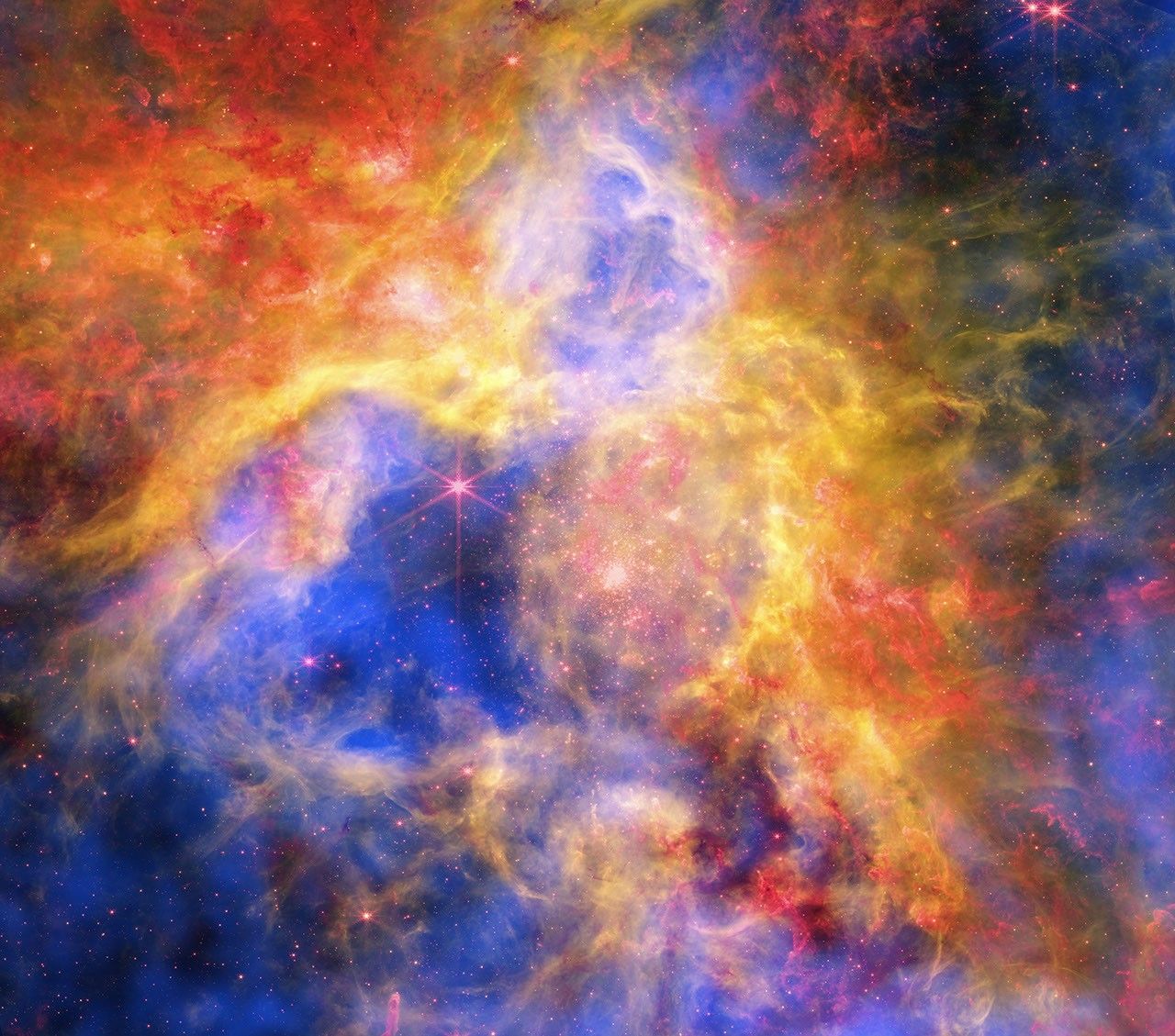
NASA scientists have released a striking new composite image of the Tarantula Nebula, blending data from multiple space telescopes to reveal the complex structures within one of the most active star-forming regions in the nearby universe. Known officially as 30 Doradus, this massive cloud of gas and dust resides in the Large Magellanic Cloud, a satellite galaxy orbiting the Milky Way. The new visualization acts like a cosmic collage, layering observations in different wavelengths to highlight features that remain invisible to the naked eye or single-instrument views. This release underscores the power of multi-messenger astronomy, where combining infrared, ultraviolet, and visible light data provides a more complete picture of celestial phenomena than any single telescope could achieve alone.
The Tarantula Nebula is not just a pretty picture; it is a critical laboratory for astrophysics. Because it is relatively close by cosmic standards, approximately 163,000 light-years away, astronomers can study its processes in high resolution. It is one of the largest and brightest star-forming regions known, hosting thousands of young, massive stars. These stars are so hot and luminous that they blast their surrounding environment with intense radiation and stellar winds. This energy carves out cavities in the gas clouds and triggers the collapse of nearby material, sparking the birth of new stars. By understanding how these massive stars form and evolve, scientists gain insights into the life cycles of stars across the entire universe, including our own Sun, which formed in a similar, though less violent, environment billions of years ago.
The creation of this specific image relied on coordinating data from NASA’s Hubble Space Telescope and other observatories. Each instrument captures a different aspect of the nebula. Hubble’s sharp vision in visible light reveals the intricate filaments and shells of gas sculpted by stellar winds. Infrared data penetrates the dusty clouds to show the embedded young stars that are still forming. Ultraviolet observations highlight the hottest, most energetic regions where massive stars are ionizing the surrounding hydrogen. By assigning different colors to these different wavelengths, researchers created a false-color image that maps the physical conditions within the nebula. This technique allows scientists to distinguish between hot, ionized gas and cooler, denser regions where new stars are condensing. The resulting visual is both scientifically valuable and aesthetically compelling, demonstrating how data visualization can bridge the gap between raw scientific data and public engagement.
This release is part of a broader effort to maximize the scientific return from NASA’s fleet of observatories. As telescopes like the James Webb Space Telescope begin to deliver their own high-resolution images of star-forming regions, combining their data with older archives from Hubble creates a temporal and spectral depth that was previously impossible. Researchers plan to use these layered images to study the feedback loops between massive stars and their interstellar environment. They want to understand exactly how stellar winds regulate star formation, either by triggering new collapses or by dispersing the gas needed for future stars. This knowledge helps refine models of galaxy evolution. For the general public, the image serves as a reminder that the universe is dynamic and chaotic, filled with violent beauty that shapes the cosmos over millions of years. The next step will be to compare these detailed maps with theoretical simulations to test our understanding of how galaxies like the Milky Way change over time.
Read Full Story at NASA →