NASA Testing Advanced Capabilities for Moon, Mars Rovers
On a bleak stretch of the Colorado Desert in Southern California, a compact four-wheeled rover recently trundled about 16 miles (26 kilometers) with minimal intervention from the team of engineers tra
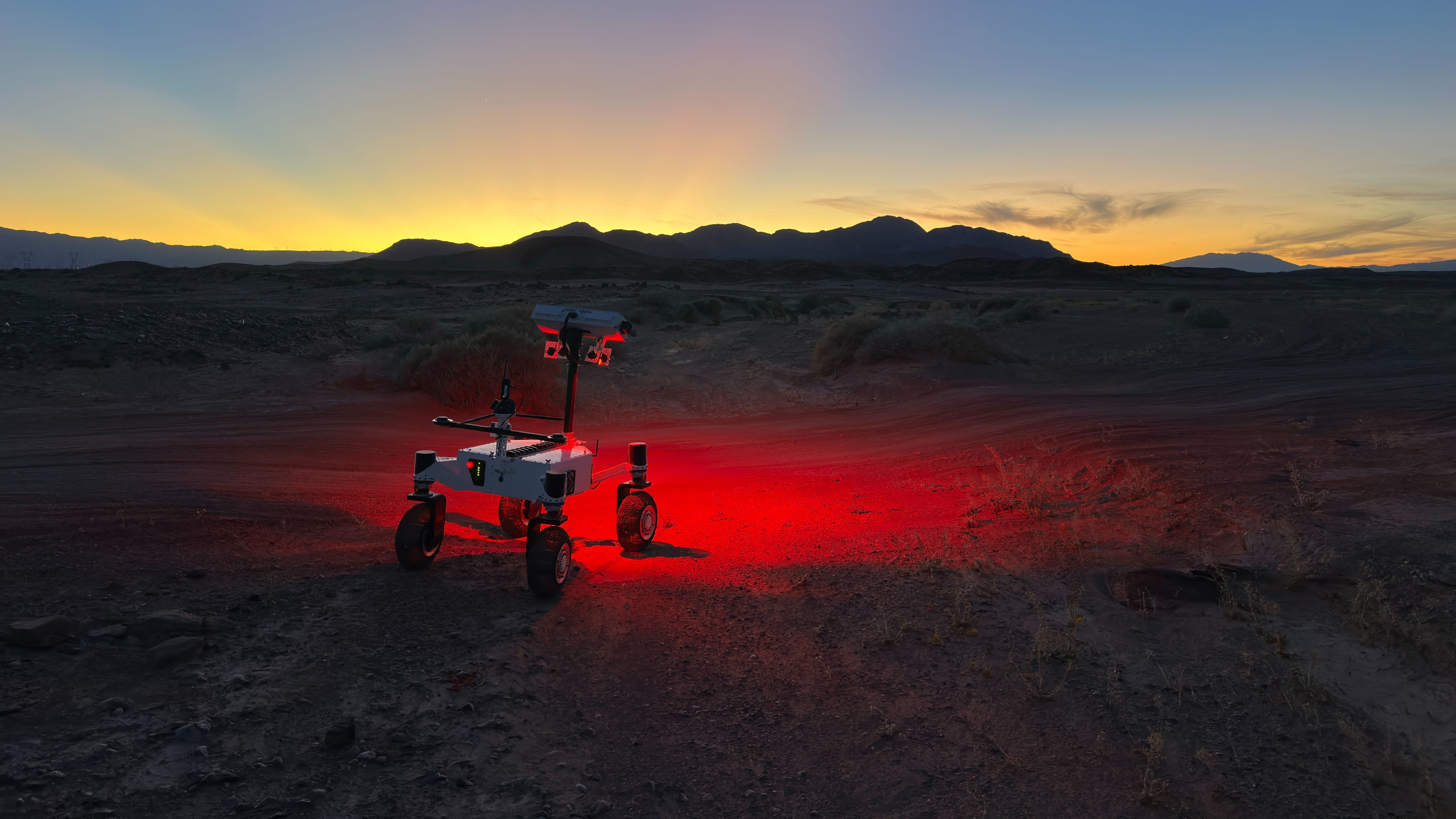
On a bleak stretch of the Colorado Desert in Southern California, a compact four-wheeled rover recently trundled about 16 miles (26 kilometers) with m
Read Full Story at NASA →NASA’s recent rover test in the Colorado Desert underscores a pivotal moment in the agency’s long-term strategy for lunar and Martian exploration. The experiment—part of the Collaborative Autonomous Distributed Robotic Exploration (CADRE) project—represents more than just a technical milestone; it signals a shift toward decentralized, self-coordinating robotic systems that could redefine how humanity explores hostile environments beyond Earth. For decades, rovers have relied on meticulous pre-programmed instructions from Earth, a model that becomes increasingly impractical as distances grow and communication delays stretch from minutes to hours. By testing a rover that can navigate, make decisions, and even recover from setbacks with minimal human input, NASA is laying groundwork for a future where robotic fleets operate semi-autonomously, paving the way for sustained human presence on the Moon and eventual crewed missions to Mars. The Colorado Desert’s rocky terrain serves as a stand-in for the lunar surface, where dust, temperature swings, and uneven ground pose constant challenges. But the implications run deeper than terrain. CADRE’s design leans into swarm robotics—a concept borrowed from biology, where simple agents work in unison to achieve complex tasks. If successful, such systems could deploy multiple small rovers to map caves, scout landing sites, or even repair infrastructure without risking astronauts. This aligns with NASA’s broader Artemis program, which aims to establish a sustainable lunar base, and the agency’s Mars Sample Return mission, where precision and adaptability will be critical. Yet key questions linger. How will these rovers handle unexpected obstacles, like deep crevasses or electromagnetic interference? Can their decision-making algorithms adapt to the unique conditions of Mars, where dust storms can obscure solar panels for months? And how will they interact with human crews, who may need to override or repurpose their autonomy in real time? The broader trend here is unmistakable: space exploration is entering an era where autonomy and resilience are as vital as raw horsepower. As NASA and private companies like SpaceX push deeper into the solar system, the success of tests like this one will determine whether robotic pioneers can truly become the trailblazers of the next great frontier.







