NASA Webb, Hubble Reveal History of Relic of Milky Way’s Formation
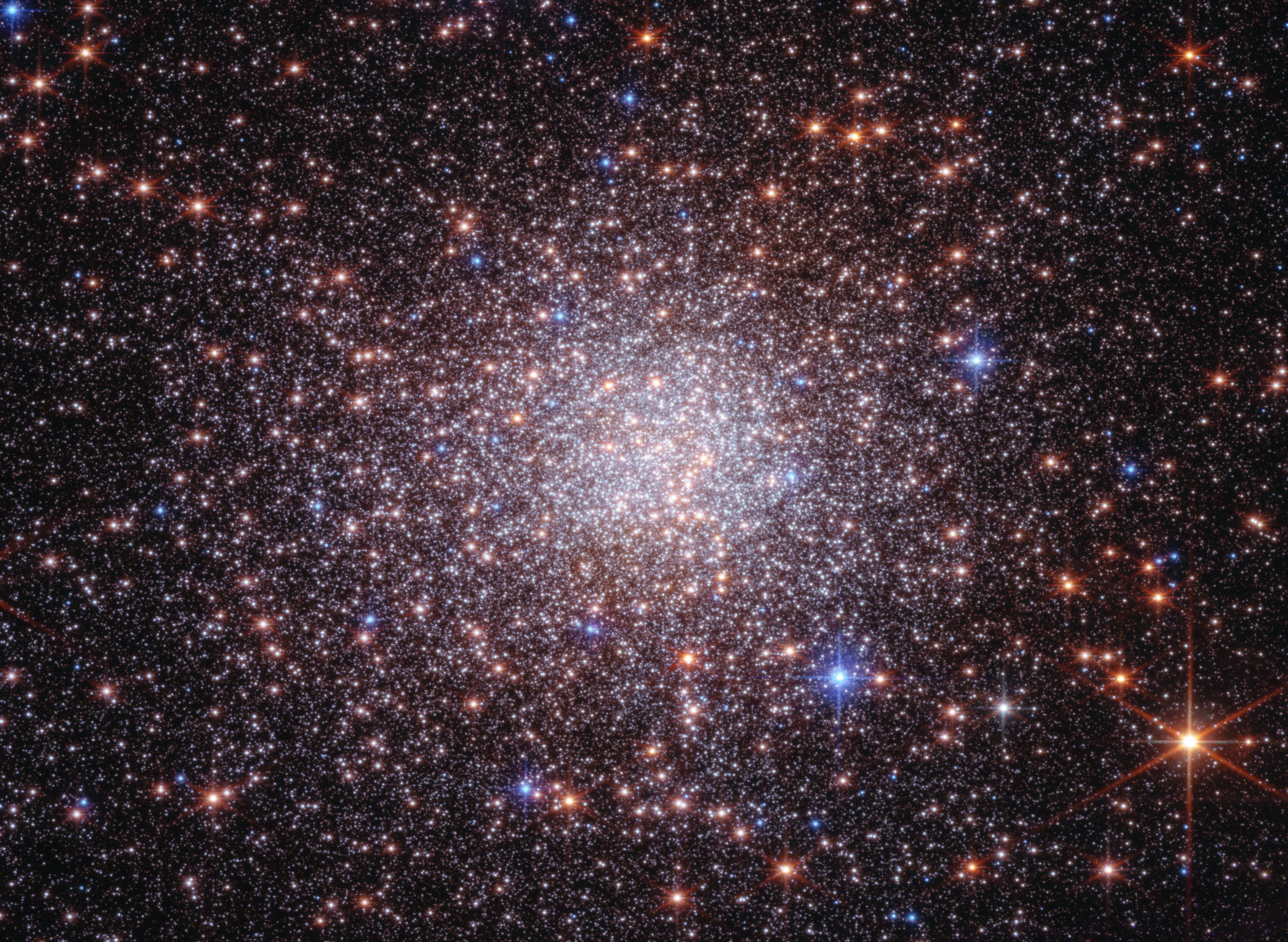
Researchers using two of humanity’s most powerful observatories — NASA’s James Webb and Hubble Space Telescopes — have definitively shown that Terzan 5 is not a globular star cluster as it was once c…
NASA — 16 June 2026
Text:
21
0
0
Researchers using two of humanity’s most powerful observatories — NASA’s James Webb and Hubble Space Telescopes — have definitively shown that Terzan
Read Full Story at NASA →
⚡ Quickyla Analysis
Original editorial context — not sourced from the article above
The revelation that Terzan 5, long classified as a globular star cluster, is instead a relic from the Milky Way’s earliest formation stages underscores how our understanding of galactic archaeology is rapidly evolving. This discovery challenges decades of astronomical classification, suggesting that some of the oldest structures in our galaxy may be far more complex than previously assumed. By leveraging the combined power of Hubble’s decades-long observations and Webb’s unparalleled infrared sensitivity, researchers have peeled back layers of cosmic history, exposing a stellar population that defies conventional wisdom. The implications stretch beyond mere taxonomy; they hint at a more dynamic, even chaotic, early universe where star formation and galactic assembly were far from orderly processes.
What makes Terzan 5 particularly intriguing is its dual stellar population—a hallmark of ancient mergers or rapid enrichment events that occurred billions of years ago. This suggests that the Milky Way’s halo, often thought to be a repository of pristine, single-generation star clusters, may instead contain survivors of dramatic cosmic upheavals. Such findings align with emerging theories that the galaxy’s earliest chapters were marked by violent interactions, where globular clusters—once considered monolithic—could be the fossilized remnants of dwarf galaxies or disrupted stellar systems. The Webb and Hubble data now force astronomers to reconsider whether globular clusters are truly "simple" systems or, in fact, composite structures masquerading as uniformity.
The next phase of this research will likely focus on identifying similar "imposter" clusters across the galaxy, using high-resolution spectroscopy to dissect their chemical fingerprints. If Terzan 5’s true nature is confirmed as a galactic relic, it could prompt a systematic reevaluation of catalogs that have grouped hundreds of clusters under the same umbrella. Meanwhile, the broader trend here is unmistakable: as observational tools grow more sophisticated, our models of galactic formation are being stress-tested like never before. This isn’t just about correcting one misclassification—it’s about rewriting the narrative of how the Milky Way came to be.
Sources

🔬 Science
'Astonishing': James Webb telescope spots the most chemically primitive galaxy in the ancient universe

🔬 Science
El Niño Is Underway

🔬 Science
Astronomers gaze into the 'Crystal Ball Nebula' and see a vision of our dying sun — Space photo of the week

🔬 Science
Bacteria uncover distinct strategy to import rare sugar polymers, crystal structures show

🔬 Science
NASA Awards Contract for Johnson Space Center Infrastructure

🔬 Science
Repairing DNA damage: Scientists discover a surprising new benefit of melatonin

