NASA’s experimental quiet supersonic plane passes another critical milestone
NASA’s experimental quiet supersonic plane passes another critical milestone NASA’s X-59 research aircraft reached its target speed and altitude for the first time on Friday By Claire Cameron edited by Clara Moskowitz Just days after NASA’s experimental X-59 plane flew at supe
NASA’s experimental quiet supersonic plane passes another critical milestone
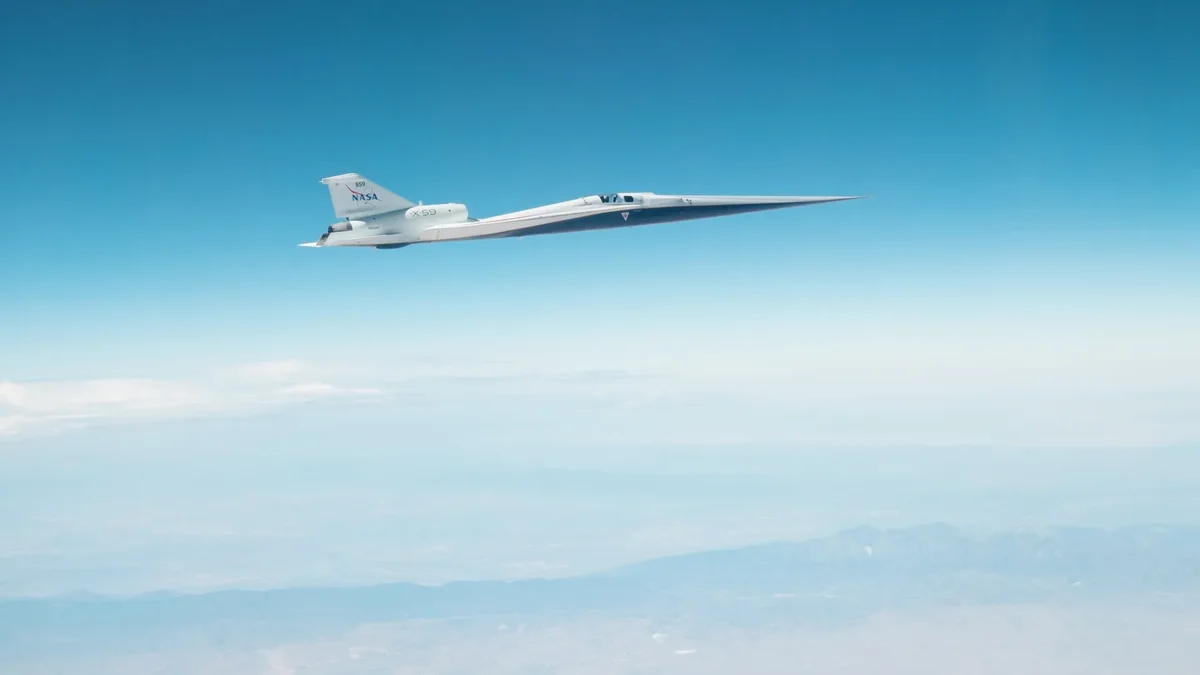
NASA’s X-59 research aircraft reached its target speed and altitude for the first time on Friday
Just days after NASA’s experimental X-59 plane flew at supersonic speeds for the first time, the space agency has announced another milestone for the research aircraft.
The plane is designed to travel faster than the speed of sound without creating loud sonic booms—instead it generates what NASA describes as a “sonic thump.”
On Friday the X-59 flew at Mach 1.4, or around 924 miles per hour, at an altitude of 55,000 feet. This is the speed and altitude the plane must reach in order to fly over populated areas. Future flights will give NASA crucial data about how quiet people perceive the plane to be.
If you're enjoying this article, consider supporting our award-winning journalism by subscribing . By purchasing a subscription you are helping to ensure the future of impactful stories about the discoveries and ideas shaping our world today.
When aircraft travel faster than the speed of sound, the pressure waves they produce are funneled toward the rear of the aircraft, where they form a cone; if the aircraft flies low enough for the cone to glance off Earth, the result is a sonic boom. These loud bangs (and the high cost of the technology) were the reason why the world’s only supersonic passenger plane, the Concorde, was retired in 2003.
The X-59 is designed for a quieter faster-than-the-speed-of-sound flight. It has a long nose that dissipates the pressure waves to the point that the aircraft may produce only a “supersonic thump,” which NASA has said will sound somewhere between a distant thunder crack and a car door slamming down the block.







