NASA’s Mars mission MAVEN is lost forever
NASA’s Mars mission MAVEN is lost forever MAVEN was the first successful mission designed to study the atmosphere of Mars. It also became a vital node of NASA’s communications network at the Red Planet NASA has officially lost a decade-old Mars orbiter that performed vital scie
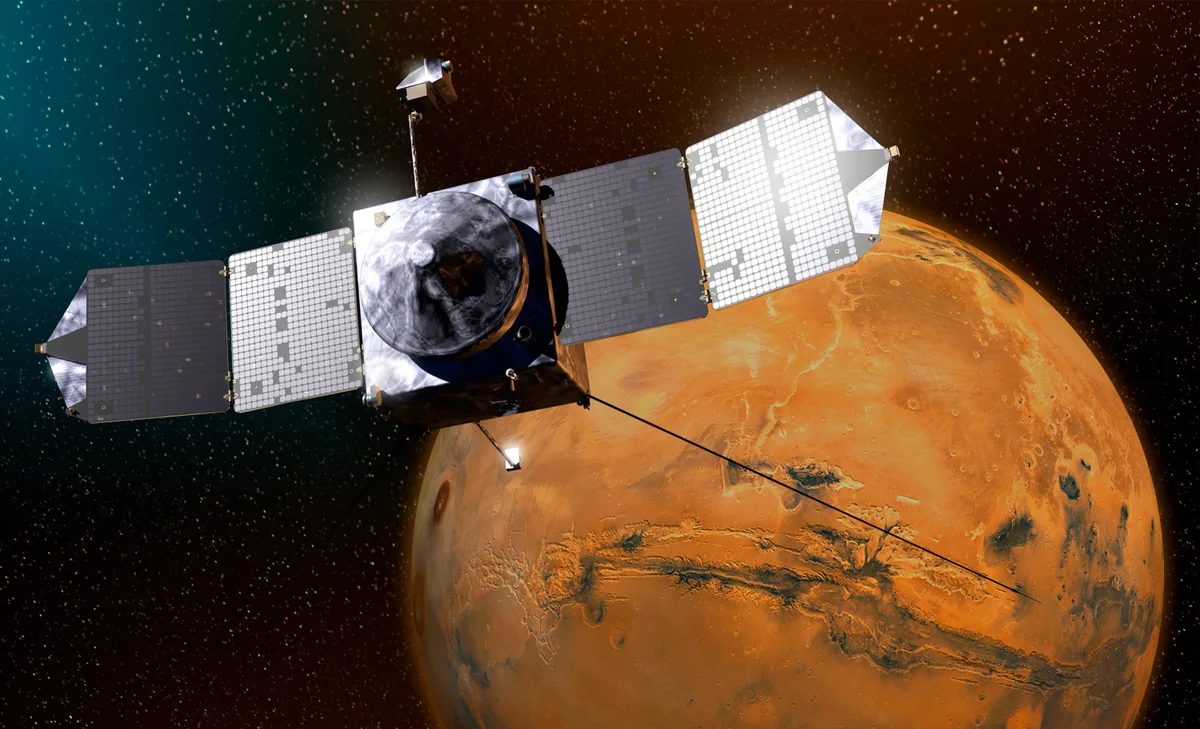
MAVEN was the first successful mission designed to study the atmosphere of Mars. It also became a vital node of NASA’s communications network at the Red Planet
NASA has officially lost a decade-old Mars orbiter that performed vital scientific and communications work at the Red Planet.
The Mars Atmosphere and Volatile Evolution (MAVEN) mission, which launched in November 2013, was the first successful spacecraft dedicated to studying the atmosphere of the Red Planet and became a key node in the communications network supporting NASA’s Mars rovers on the surface. But MAVEN’s decade-long tenure has come to an end after NASA lost contact with the spacecraft last December and was unable to reestablish control over the orbiter.
“The science MAVEN has given us is key to informing what kind of radiation protection and safety measures we must take before sending humans to Mars,” said Louise Prockter, director of the Planetary Science Division at NASA, in a June 3 statement . “The data collected from MAVEN will continue to provide valuable insight into Mars for decades to come.”
If you're enjoying this article, consider supporting our award-winning journalism by subscribing . By purchasing a subscription you are helping to ensure the future of impactful stories about the discoveries and ideas shaping our world today.
The new announcement about MAVEN has come after a preliminary report from an anomaly review board that NASA convened in February to investigate the status of the spacecraft. MAVEN’s troubles started abruptly while it was on the far side of Mars from Earth. NASA’s last detailed information from the spacecraft came on December 4, after which a small amount of additional tracking data were delivered on December 6.
Those data suggested to NASA engineers that the spacecraft was “rotating in an unexpected manner” and that its “orbit trajectory may have changed,” the agency wrote last December . That fear appeared to be confirmed when, from the Martian surface, NASA’s Curiosity rover looked toward where MAVEN ought to have been on two separate days in mid-December 2025 but couldn’t detect the spacecraft.
While trying to troubleshoot MAVEN’s condition, NASA had to work around some inconvenient celestial geometry in the form of the latest Mars solar conjunction. The term refers to times when Earth and Mars are on opposite sides of the sun, leaving Earthlings unable to communicate with the fleet exploring the Red Planet. Mars solar conjunction lasted from December 29, 2025, through January 16, 2026.