NASA's Nancy Grace Roman Space Telescope is set to launch this weekend. When will we see its first photos?
NASA 's next-generation cosmic observatory — the Nancy Grace Roman Space Telescope — is set to launch this weekend on a potentially decade-long mission to hunt for distant exoplanets , map out the Mi…
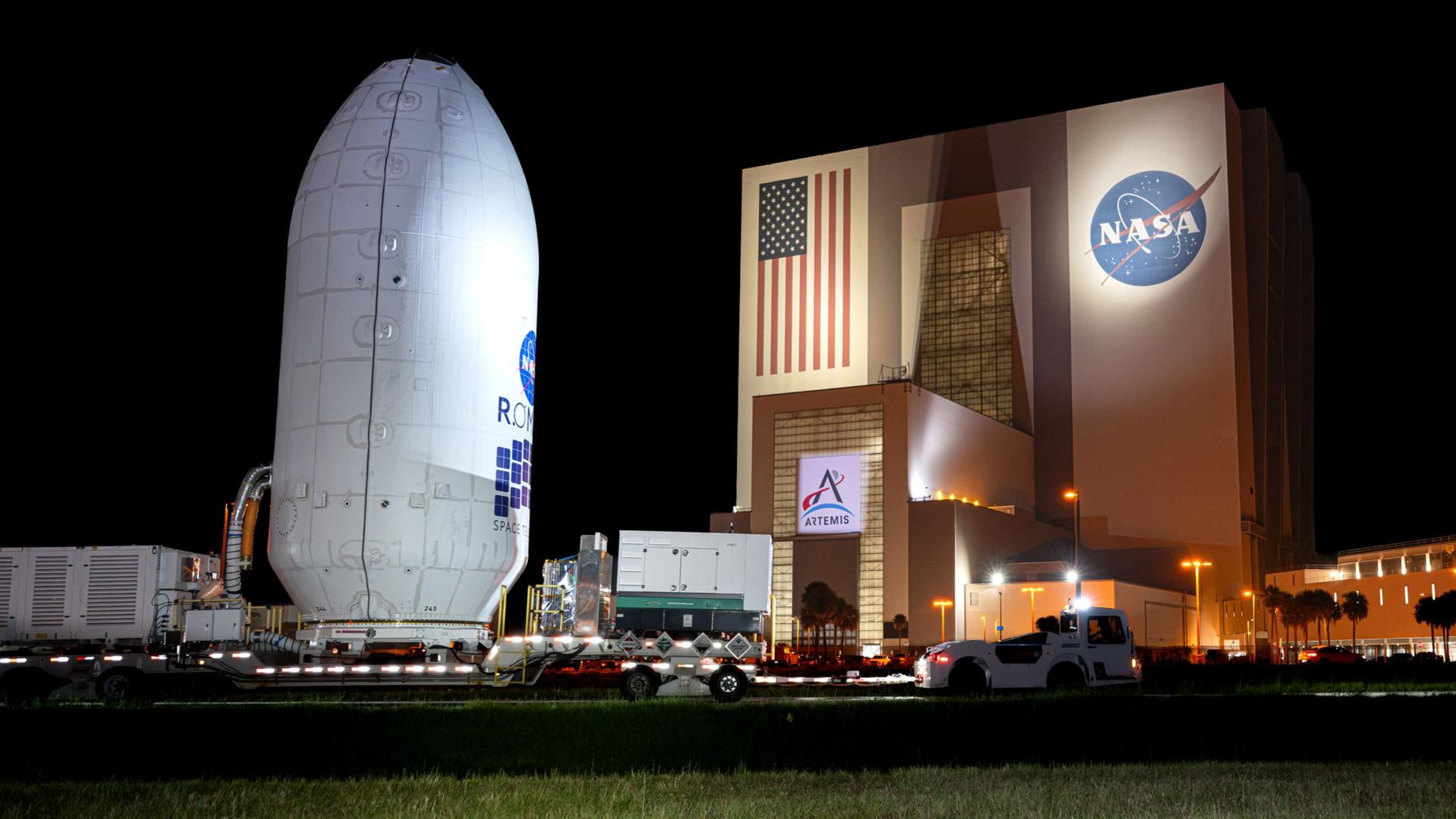
NASA 's next-generation cosmic observatory — the Nancy Grace Roman Space Telescope — is set to launch this weekend on a potentially decade-long mission to hunt for distant exoplanets , map out the Milky Way and unravel some of the universe's biggest mysteries, such as the true nature of dark matter .
The Roman telescope and its payload are scheduled to lift off aboard a SpaceX Falcon Heavy rocket Sunday (Aug. 30) at 7:26 a.m. EDT from Launch Complex 39A at NASA's Kennedy Space Center in Florida, according to NASA . A few hours later, the telescope will be released from the rocket's second stage and be exposed to the vacuum of space for the first time.
But even if everything goes according to plan, we will still have to wait a while to get a glimpse of Roman's first groundbreaking images.
As of Thursday morning (Aug. 27), the National Weather Service forecasts a 50% chance of thunderstorms at Kennedy Space Center Sunday, so weather could delay the launch. If that happens, a second launch window is available Monday (Aug. 31) at 7:22 a.m. EDT, when there is a reduced risk of thunderstorms.
You can watch the event on a SpaceX livestream and stay up to date with last-minute developments and postlaunch news via a live blog from Live Science's sister site Space.com.
The Roman Space Telescope is NASA's latest flagship observatory. It follows the James Webb Space Telescope ( JWST ), which launched in 2021, and the Hubble Space Telescope , which has been in orbit since 1990. Rather than replacing those spacecraft, Roman will work alongside them to help scientists scour the skies like never before .
The observatory is named after pioneering scientist Nancy Grace Roman , who served as NASA's first chief astronomer between 1960 and 1979. It is approximately 42 feet (12.7 meters) tall and 14 feet (4.4 m) wide and weighs around 18,000 pounds (8,000 kilograms) — about the same as a fully grown Tyrannosaurus rex , according to a NASA fact sheet .
Get the world’s most fascinating discoveries delivered straight to your inbox.
Read Full Story at Live Science →