NASA’s Quantum Lab Aboard Space Station Gets Chilly Upgrade
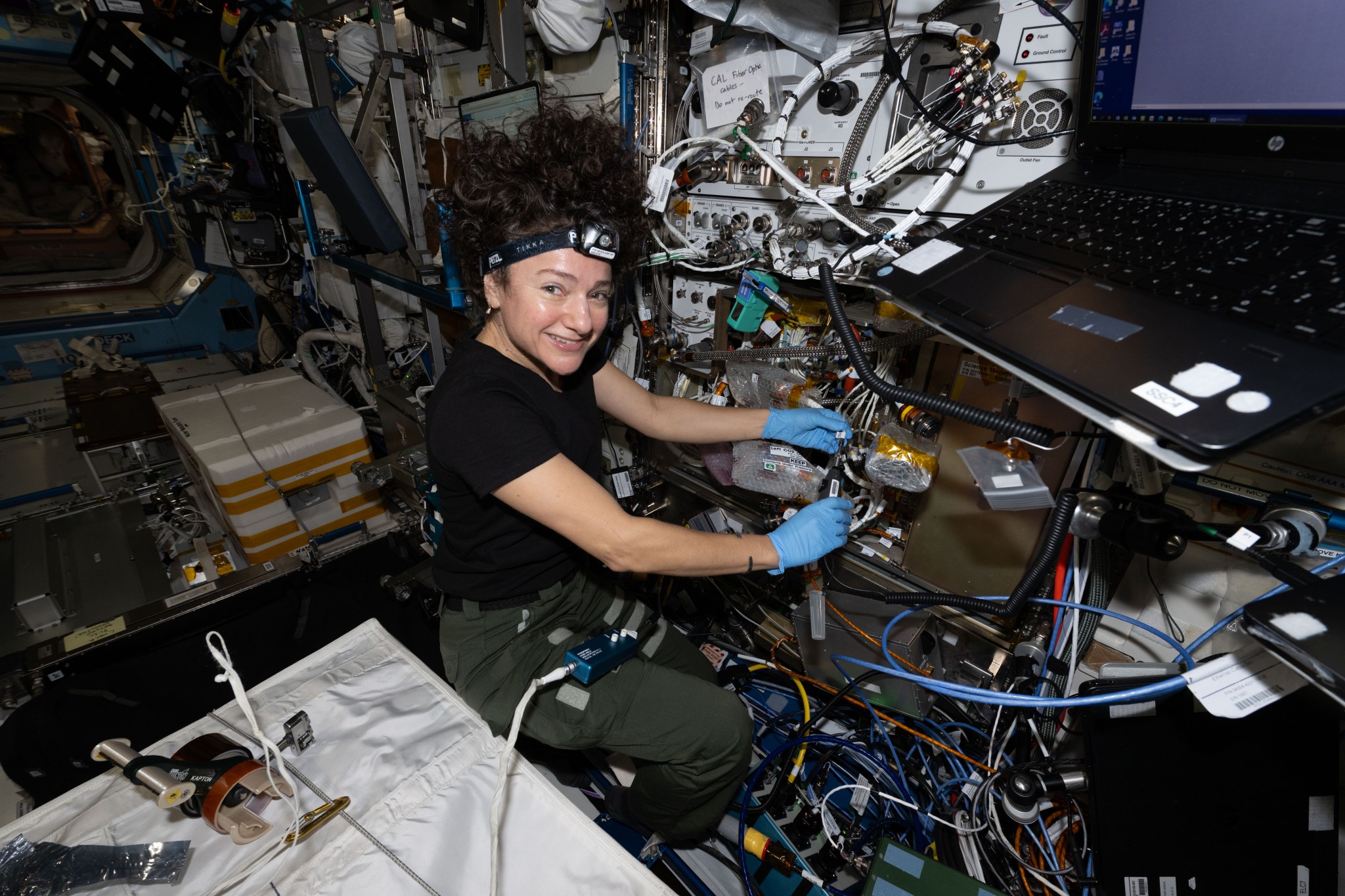
Astronauts aboard the International Space Station have switched on NASA’s newly upgraded Cold Atom Lab, a one-of-a-kind facility designed to improve how scientists explore the fundamental workings of…
NASA — 16 June 2026
Text:
16
0
0
Astronauts aboard the International Space Station have switched on NASA’s newly upgraded Cold Atom Lab, a one-of-a-kind facility designed to improve h
Read Full Story at NASA →
⚡ Quickyla Analysis
Original editorial context — not sourced from the article above
NASA’s upgrade to the Cold Atom Lab aboard the International Space Station marks another leap forward in humanity’s ability to probe the universe’s most elusive phenomena. At its core, this facility isn’t just about creating the coldest temperatures in orbit—it’s a gateway to observing quantum behaviors in ways that are impossible on Earth. The lab’s latest enhancements, which allow it to reach even lower temperatures and extend the duration of experiments, could redefine our understanding of quantum mechanics, gravity, and even the fundamental nature of matter itself.
The significance of this work cannot be overstated. On Earth, gravity routinely disrupts ultra-cold quantum experiments, limiting how long researchers can observe atoms in their most delicate states. The microgravity environment of the ISS eliminates that barrier, but the Cold Atom Lab has faced its own challenges—namely, maintaining the extreme conditions required for quantum observations over longer periods. The upgrade suggests NASA is refining its ability to harness this unique vantage point, potentially paving the way for breakthroughs that could influence everything from quantum computing to the detection of dark matter.
For those unfamiliar with the Cold Atom Lab’s mission, its purpose is to create Bose-Einstein condensates—states of matter where atoms behave as a single quantum entity—and study their properties. These experiments have already yielded insights into quantum tunneling and superfluidity, but the lab’s upgrades hint at even more ambitious goals. Could these advancements help us test Einstein’s general relativity with unprecedented precision? Might they reveal new phases of matter that could revolutionize materials science?
Looking ahead, the lab’s next steps remain an open question. Will the data gathered lead to entirely new physics, or will it simply refine existing theories? The answers could take years to materialize, but the potential is undeniable. Meanwhile, this work underscores a broader trend in space science: the ISS is evolving from a purely operational outpost into a cutting-edge research platform, one that bridges the gap between Earth-bound labs and the mysteries of the cosmos. As quantum technologies advance, such facilities will only grow in importance, cementing the station’s role as humanity’s most distant—and most innovative—laboratory.
Sources

🔬 Science
'Astonishing': James Webb telescope spots the most chemically primitive galaxy in the ancient universe

🔬 Science
El Niño Is Underway

🔬 Science
Astronomers gaze into the 'Crystal Ball Nebula' and see a vision of our dying sun — Space photo of the week

🔬 Science
Bacteria uncover distinct strategy to import rare sugar polymers, crystal structures show

🔬 Science
NASA Awards Contract for Johnson Space Center Infrastructure

🔬 Science
Repairing DNA damage: Scientists discover a surprising new benefit of melatonin

