NASA’s X-59 Prepares for First Supersonic Flight
NASA’s X-59 quiet supersonic aircraft is set for its first supersonic test flights, exceeding 767 mph, to evaluate its Quiet Supersonic Technology (QueSST) and reduce sonic booms. Success could lead to revised aviation regulations, enabling future supersonic commercial travel over land.
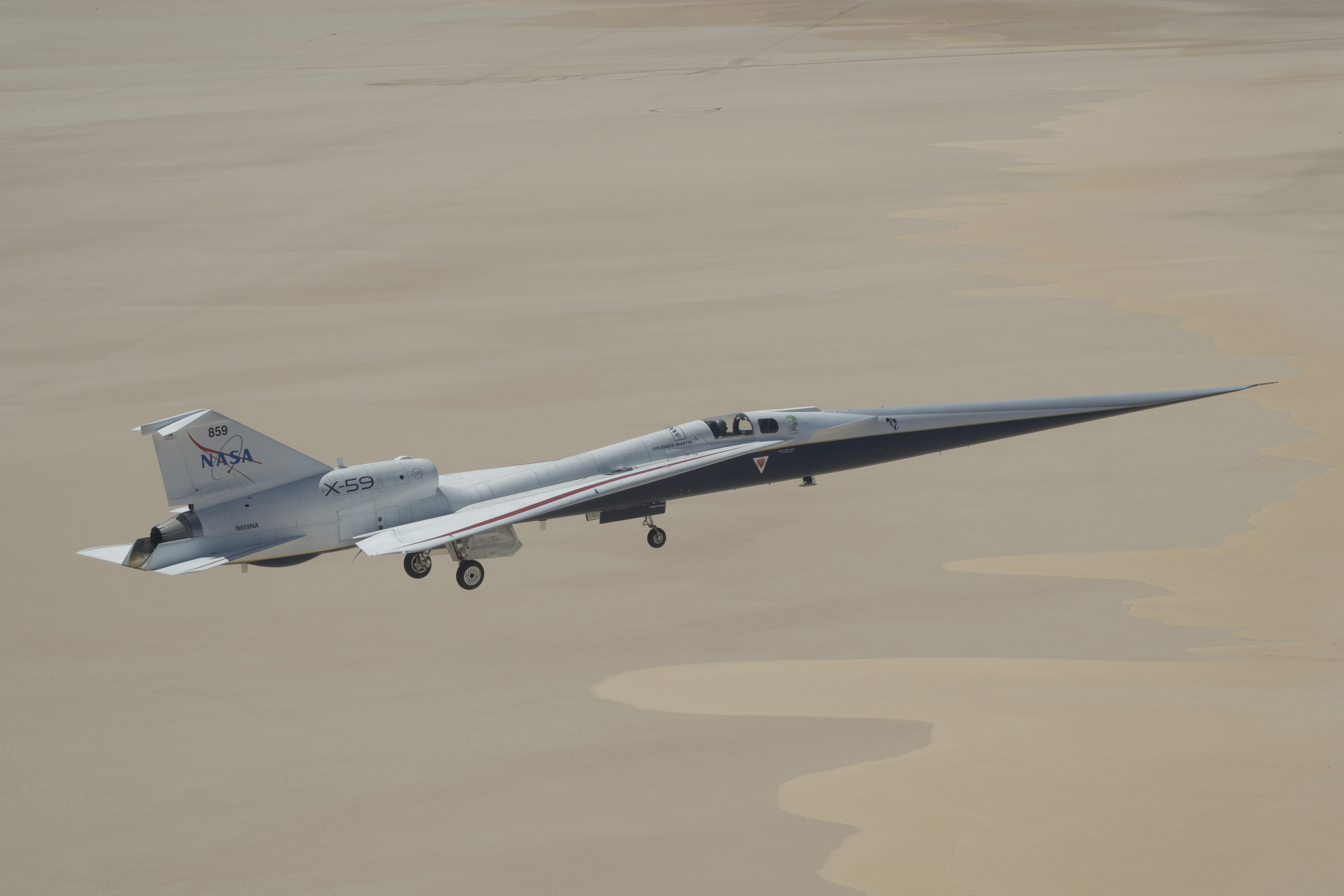
NASA’s X-59 quiet supersonic research aircraft is preparing for some of its most significant flights yet, as it is set to begin a new block of test flights that will include its first time flying faster than the speed of sound. The X-plane, designed to reduce the loud sonic boom typically associated with supersonic flight to a quieter "thump," marks a pivotal moment in aviation history. Since its unveiling in 2023, the X-59 has undergone rigorous ground testing and initial low-speed flight trials at Lockheed Martin’s Skunk Works facility in Palmdale, California. The forthcoming supersonic tests, expected to take place over the coming months, will evaluate the aircraft’s performance at speeds exceeding 767 mph (1,235 km/h), while also assessing its revolutionary Quiet Supersonic Technology (QueSST) designed to mitigate sonic booms.
The significance of the X-59’s mission extends beyond mere technological demonstration; it could redefine commercial aviation. Since the retirement of the Concorde in 2003, supersonic passenger travel has been virtually non-existent due to regulatory bans on overland supersonic flights, largely because of the disruptive noise from sonic booms. NASA’s X-59 aims to gather data that could persuade aviation authorities, such as the Federal Aviation Administration (FAA), to revise these restrictions. If successful, this could pave the way for a new generation of supersonic commercial aircraft capable of flying faster than sound without causing excessive noise pollution, potentially revolutionising global travel by cutting flight times dramatically.
Recent developments have underscored the urgency of this project. In October 2023, NASA conducted the first flight of the X-59, focusing on subsonic speeds to evaluate its handling and performance. The aircraft has since undergone further ground tests, including engine runs and taxi trials, to ensure all systems are flight-ready. Meanwhile, NASA has been collaborating with international partners, including the European Union’s Horizon Europe programme, to share data and research on supersonic noise reduction. These efforts reflect a broader push within the aerospace industry to balance innovation with environmental and regulatory considerations.
The upcoming supersonic phase of the X-59’s test programme will be closely watched by both the aviation industry and environmental groups. Success could accelerate the development of quieter supersonic jets, while also addressing concerns about noise pollution and fuel efficiency. For NASA, the X-59 represents not just an engineering achievement but a potential catalyst for a new era in air travel, one where speed and sustainability coexist. The stakes are high, and the world will be watching as this groundbreaking aircraft prepares to break the sound barrier once again—this time, quietly.