James Webb Telescope finds clay minerals on Neptune's small moons
The James Webb Space Telescope has found clay-like minerals on Neptune's small moons, indicating they may be remnants of larger bodies destroyed when Triton was captured by Neptune. This discovery su…
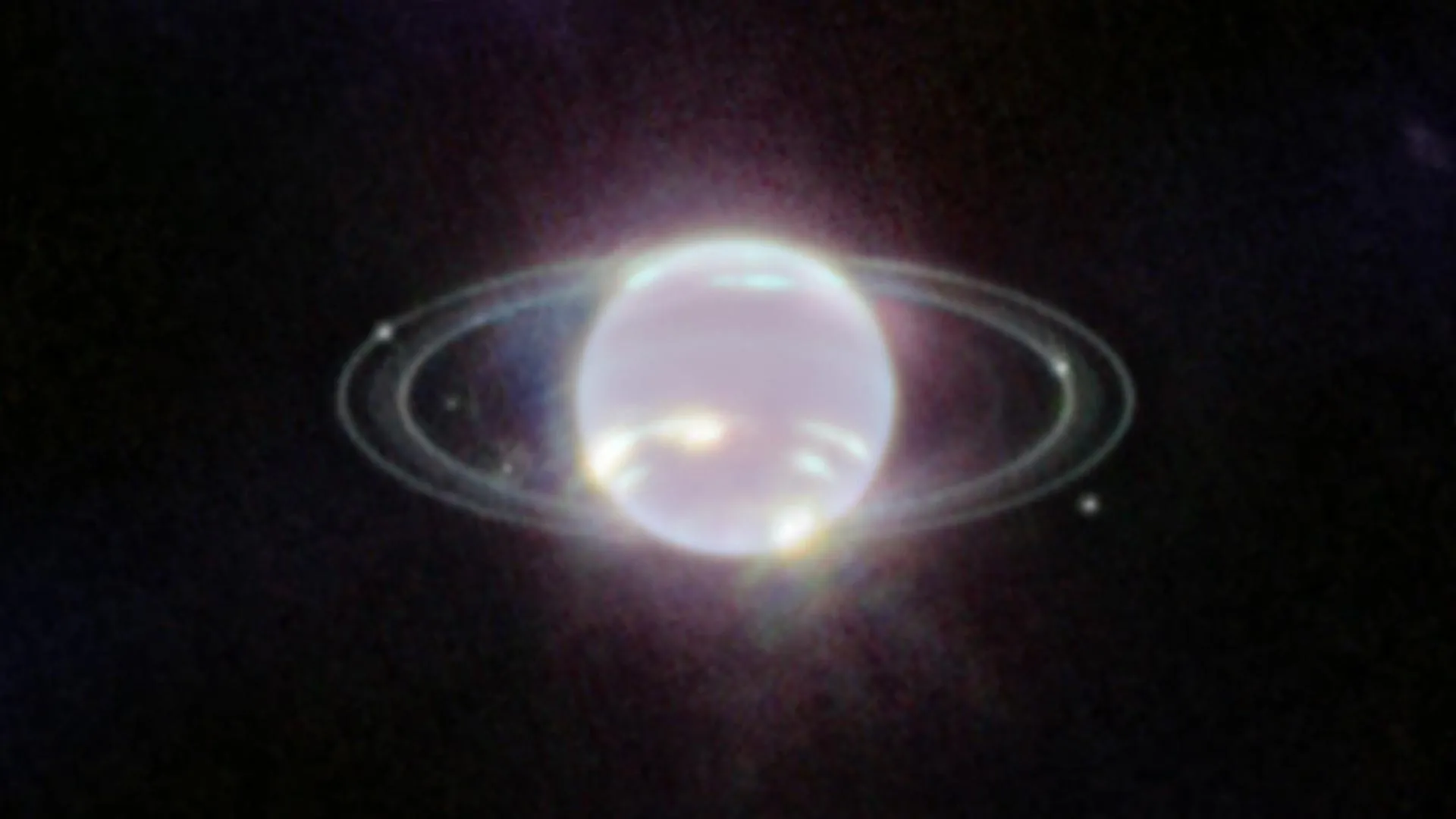
The James Webb Space Telescope (JWST) has revealed that Neptune's small inner moons may be remnants of ancient celestial bodies destroyed in a cosmic event. Researchers found clay-like minerals on the surfaces of Larissa and Galatea, as well as in Neptune's rings. These minerals typically require the presence of liquid water to form, yet the moons themselves do not exhibit signs of water ice.
This discovery provides new context for the unusual characteristics of Neptune's moons. Scientists believe that the material found on these moons originated from larger icy bodies that were shattered when Triton, Neptune's largest moon, was captured by the planet's gravitational pull. This event likely obliterated much of Neptune's original satellite system, leading to the peculiar compositions observed today.
The presence of these clay-like minerals suggests that there were once larger, more complex moons that harbored liquid water. This finding raises questions about the history of Neptune's moons and the dynamics of its early solar system. An analysis of the minerals could help scientists understand the chemical processes that occurred during the ancient catastrophe.
As researchers continue to study the data from JWST, they aim to piece together the history of Neptune and its moons. Understanding the origins of these celestial bodies could shed light on the evolution of similar systems in our galaxy. This research highlights the importance of ongoing exploration of our solar system and the potential for discovering more about the conditions that fostered planetary formation.
Read Full Story at ScienceDaily →