Nero's Bridge reappears in Tiber River amid Rome's severe drought
Nero's Bridge has resurfaced in the Tiber River due to a severe drought, revealing a first-century structure and highlighting the ongoing water crisis in Rome. The low water levels, exacerbated by cl…
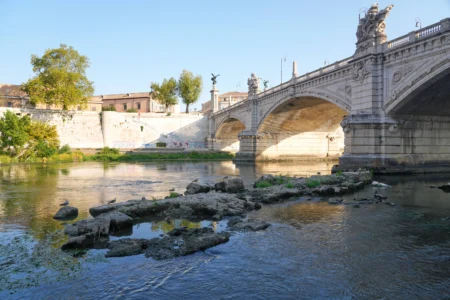
The remains of Nero's Bridge have surfaced in Rome’s Tiber River, close to St. Peter’s Basilica, as a severe drought has led to critically low water levels. This phenomenon has become increasingly visible after weeks of virtually no rainfall, unveiling a structure that dates back to the first century AD.
The current water crisis in Rome is exacerbated by climate change, which has intensified weather patterns and resulted in prolonged dry spells. Italy has experienced a significant decrease in rainfall this year, with some regions reporting up to 70% less precipitation than average. The Tiber River, which normally flows with a robust current, has shrunk to alarming levels, revealing not only historical artifacts but also raising concerns about water supply for both residents and agriculture.
Nero's Bridge, known as the Pons Neronis, was built during the reign of Emperor Nero and has been submerged for centuries. Its reappearance has drawn attention from historians and archaeologists, eager to study the bridge and its context within ancient Rome. Local authorities are also monitoring the situation closely, as the drought has prompted discussions about water conservation strategies and long-term planning to address future shortages.
As the drought continues, experts warn that the water crisis could have lasting implications for Rome. If rainfall does not return soon, the city may face restrictions on water use, impacting both daily life and tourism. The emergence of Nero's Bridge serves as a stark reminder of the changing climate and the historical legacies that lie beneath the surface, prompting a renewed focus on preserving both modern and ancient resources in the era of climate change.
Read Full Story at Crux Now →