Netanyahu’s veto and the limits of American power
Donald Trump has built much of his political identity around a simple proposition: American presidents have been too cautious about using American power. Allies, adversaries and bureaucrats, he argue…

Donald Trump has built much of his political identity around a simple proposition: American presidents have been too cautious about using American power. Allies, adversaries and bureaucrats, he argues, have learned to ignore Washington because Washington has forgotten how to make people comply. His Gaza initiative was supposed to demonstrate the opposite. Trump would impose a framework, the parties would accept it, and the United States would finally act as the indispensable power it claims to be.
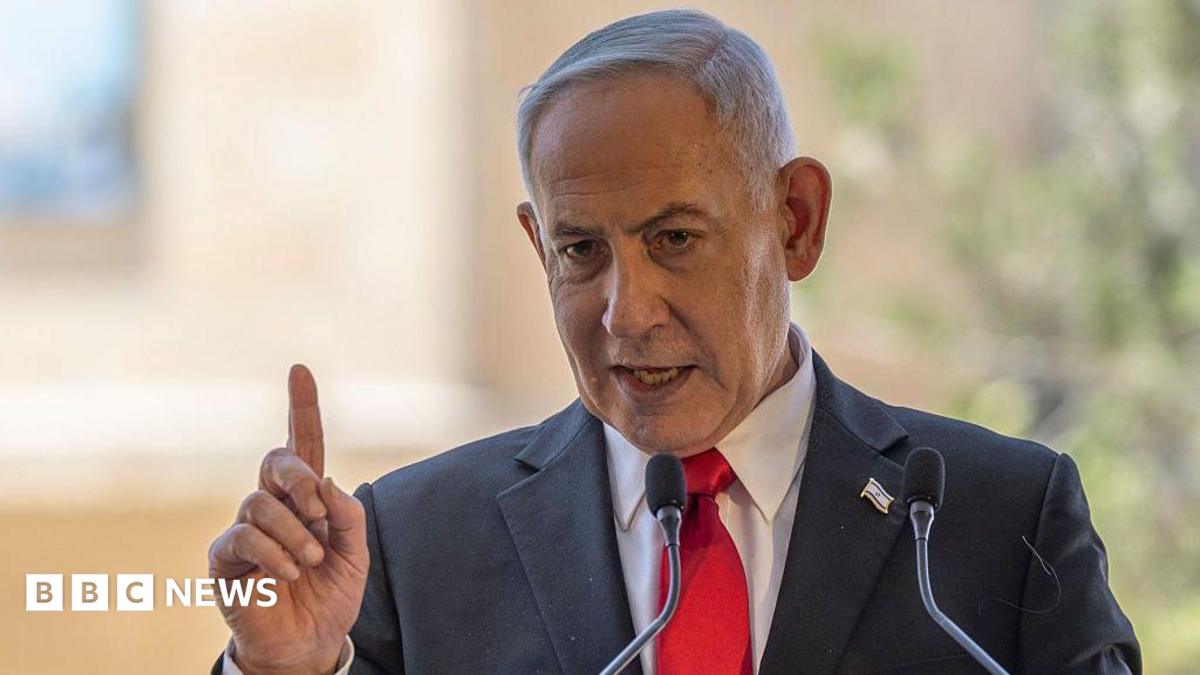
Benjamin Netanyahu’s swift rejection of that framework was not merely a negotiating tactic. It amounted to a pre-emptive veto, designed to weaken the initiative before it could gain momentum. It is tempting to portray the dispute as a routine disagreement between an Israeli prime minister and a US president, but that misses the larger significance. Netanyahu’s insistence that no Israeli withdrawal can take place until Hamas is “genuinely” disarmed strikes directly at the heart of Trump’s proposal and raises a question Washington has spent decades avoiding: What happens when a superpower allows an ally to dictate the terms of its own diplomacy?
Trump’s 15-point framework is based on reciprocal steps. Hamas would surrender its weapons within a transitional arrangement; an international stabilisation mechanism and a Palestinian security structure would begin taking shape; and Israeli forces would progressively withdraw as the new order became operational.
Netanyahu has effectively rewritten that equation. Israel, he argues, cannot make a meaningful withdrawal until Hamas has been completely disarmed. On the surface, this sounds like an uncompromising security requirement. In practice, it creates a condition that can be endlessly postponed. Who determines what constitutes complete disarmament? Who verifies it? What happens when Israel claims that weapons remain hidden or that new threats have emerged? If the answer to each question lies with the Israeli government, withdrawal becomes contingent on a standard Israel alone can define and revise.
A condition that cannot be independently measured and verified is not a security requirement; it is a political escape hatch. In Netanyahu’s hands, disarmament becomes not one component of a negotiated process, but a permanent veto over the process itself.
The deeper question, therefore, is not whether Hamas should surrender its weapons. Every credible post-war proposal assumes it cannot remain an independent armed authority. The real struggle is over who controls the sequence and therefore who controls the transition.
Trump’s framework requires Israel to surrender some control to an international and Palestinian transitional structure. Netanyahu’s position gives Israel control over when its military authority ends. If Israel alone determines when the threat has disappeared, Israel alone determines when the transition can begin. The result would be an open-ended Israeli security presence, dressed in the language of disarmament.
The political divergence between the two men makes the confrontation sharper. Trump needs the Gaza war to end. He wants a diplomatic achievement branded as his own, proof that US power can succeed where conventional diplomacy failed. Netanyahu faces a fundamentally different calculation. For him, the war is inseparable from the definition of Israeli victory. Any arrangement that ends the fighting while leaving Hamas with residual capabilities, or transfers meaningful authority to Palestinians and international actors, could be portrayed by his right-wing allies as an abandonment of the war’s central objectives.
Read Full Story at Al Jazeera →