James Webb telescope finds mature galaxies in little red dots
The James Webb Space Telescope's new image suggests that the universe’s mysterious "little red dots" are mature galaxies in disguise, reshaping our understanding of early galaxy evolution. This means…
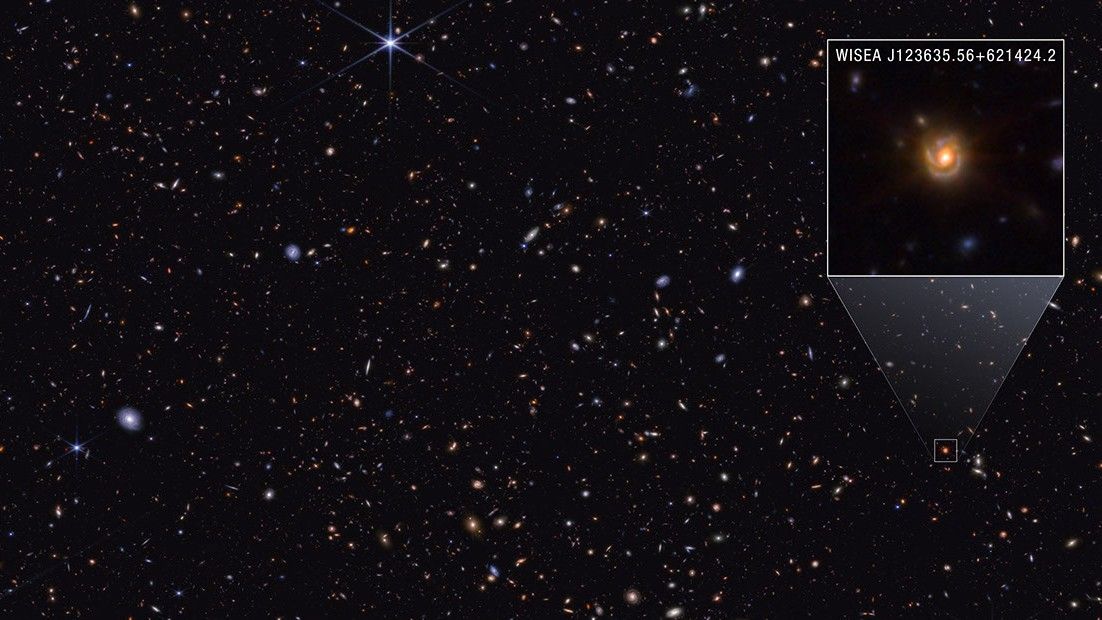
A new image from the James Webb Space Telescope suggests the universe’s mysterious “little red dots” — faint, red specks once thought to be a vanished class of early galaxies — may still be hiding in plain sight, just looking different over time.
These dots first appeared in early Webb data as small, red, and surprisingly bright objects in the young universe. Astronomers initially thought they might be primordial galaxies so compact and massive that they defied standard models. But as more data came in, many of these dots faded from view or changed appearance, leaving researchers puzzled. Now, a new study proposes they didn’t disappear — they evolved. The red color likely comes from dust and aging stars, and as these galaxies grew and merged, their light shifted into longer, redder wavelengths that Webb is especially good at detecting.
The team used Webb’s infrared instruments to analyze the light profiles of dozens of these dots, finding that their spectra match galaxies rich in old stars and heavy elements — signatures of mature systems rather than fresh, star-forming ones. This suggests the “little red dots” aren’t a separate class of objects, but a phase many early galaxies pass through as they age and accumulate dust. The finding aligns with growing evidence that the early universe was far more dynamic than once thought, with rapid growth and transformation.
The discovery reshapes how scientists interpret galaxy evolution in the first billion years after the Big Bang. If these red dots are indeed mature galaxies in disguise, it means the early universe may have been far more populated and chemically advanced than predicted. Next, researchers plan to use Webb’s spectroscopic data to pin down the exact ages and masses of these galaxies, which could rewrite the timeline of cosmic history. The hunt for the true identity of the little red dots is far from over — but for now, they’re looking less like ghosts and more like ancestors.
Read Full Story at Live Science →