Peter Kyle’s quest for UK’s first $1tn firm is honourable, but he is overselling state activism | Nils Pratley
Business secretary exaggerates role of the British Business Bank and the National Wealth Fund in nurturing firms I s the business secretary, Peter Kyle, suffering from SpaceX fever? It must be something of that sort because his launch this week of a “concierge service” to allow
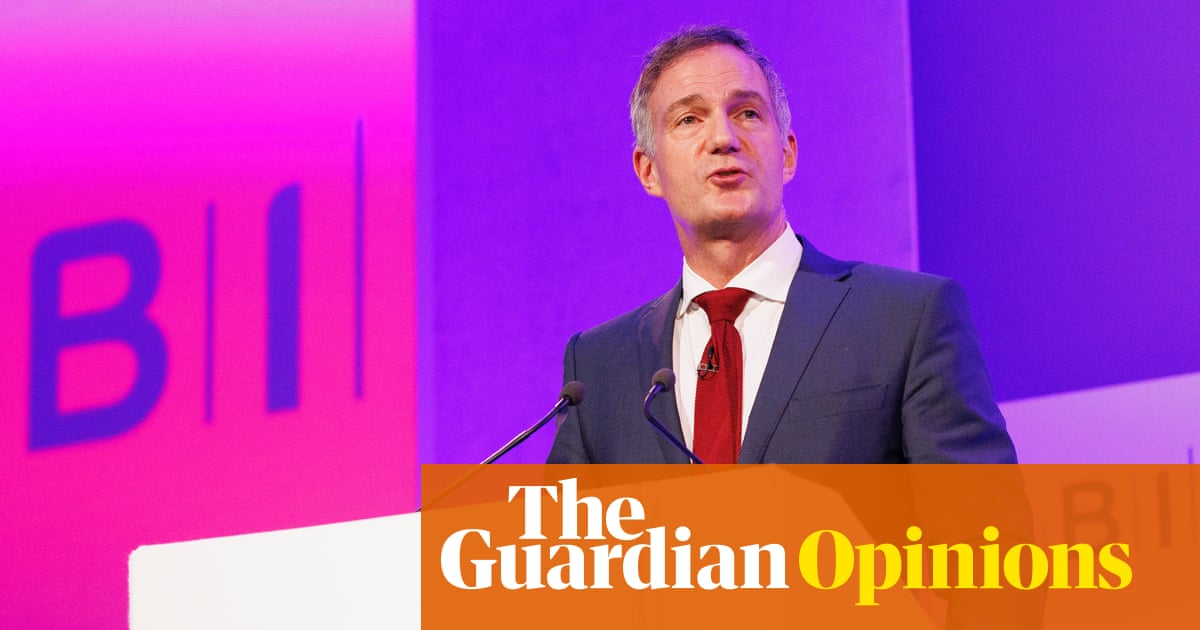
Business secretary exaggerates role of the British Business Bank and the National Wealth Fund in nurturing firms
I s the business secretary, Peter Kyle, suffering from SpaceX fever? It must be something of that sort because his launch this week of a “concierge service” to allow fast-growing companies to navigate Whitehall bureaucracy came with an extraordinary pitch. The new service is “part of his [Kyle’s] quest to nurture the UK’s first trillion-dollar firm,” said the official announcement .
One trillion dollars is about £750bn so Kyle’s quest is not a small undertaking when you see that the largest company on the London Stock Exchange, HSBC, is worth £235bn. Arm Holdings, the fast-growing UK chip designer that is listed in the US (sadly), is worth £280bn. So Kyle is saying he thinks he can “nurture” something much bigger.
One could regard such talk as harmless political puffery. A UK business secretary is supposed to sound bullish about UK companies, and policymakers across Europe have long bemoaned the fact that most of the world’s trillion-dollar tech companies have emerged from the US, with a couple of contributions from South Korea and Taiwan.
But things become worrying when Kyle moves on to the risks to be taken with public money via the two investment vehicles given extra funding by the Treasury, the British Business Bank (BBB) and the National Wealth Fund (NWF). “You are going to start to see us take more risks, upping the risk threshold in our desire to back British innovation as it scales,” Kyle told the Sunday Times at the weekend. “I want us to be aggressively ambitious.”
There are two problems with that declaration. One is the blurry use of “us”, which prompts fears of civil servants, or even Kyle himself, playing at being fund managers. That is not how the system works. The BBB, with an eye on sectors within the government’s industrial strategy, and the NWF, with a project-based focus on critical infrastructure, get their funding from the Treasury but the politicians are meant to stay away completely from the day-to-day job of lending and investing to make a profit.
Second, “aggressively” ambitious jars. Try strategically, patiently or thoughtfully. Or “responsibly”, which is how BBB describes how it deploys public capital to align with “private‑sector standards of institutional investment.” Quite right too: the key point about the setup, we were told, is that it imports private-sector expertise and investment discipline to advance public-sector goals over the long-term.
It’s true the sums have become bigger. The BBB can now make direct investments in a single company of up to £150m. So far, the biggest is £100m into Oxford Quantum Circuits, a quantum computing company, last week. If the size is all Kyle means by “aggressively ambitious”, then fine. But he would be better off highlighting how the Oxford investment was not a novel punt, but a follow-on investment in a company where the BBB had been a shareholder since 2022. The BBB still goes down some odd avenues (such as the £25m into Octopus-backed tech companies Kracken, as argued here previously ) but the quantum computing investment seemed to follow a certain internal logic.