Physicists deploy neutrino telescope 1.5 miles underwater to test relativity
Physicists have deployed a neutrino telescope 1.5 miles underwater to test Einstein's theory of relativity by detecting potential deviations in neutrino behavior. This experiment is important as it c…
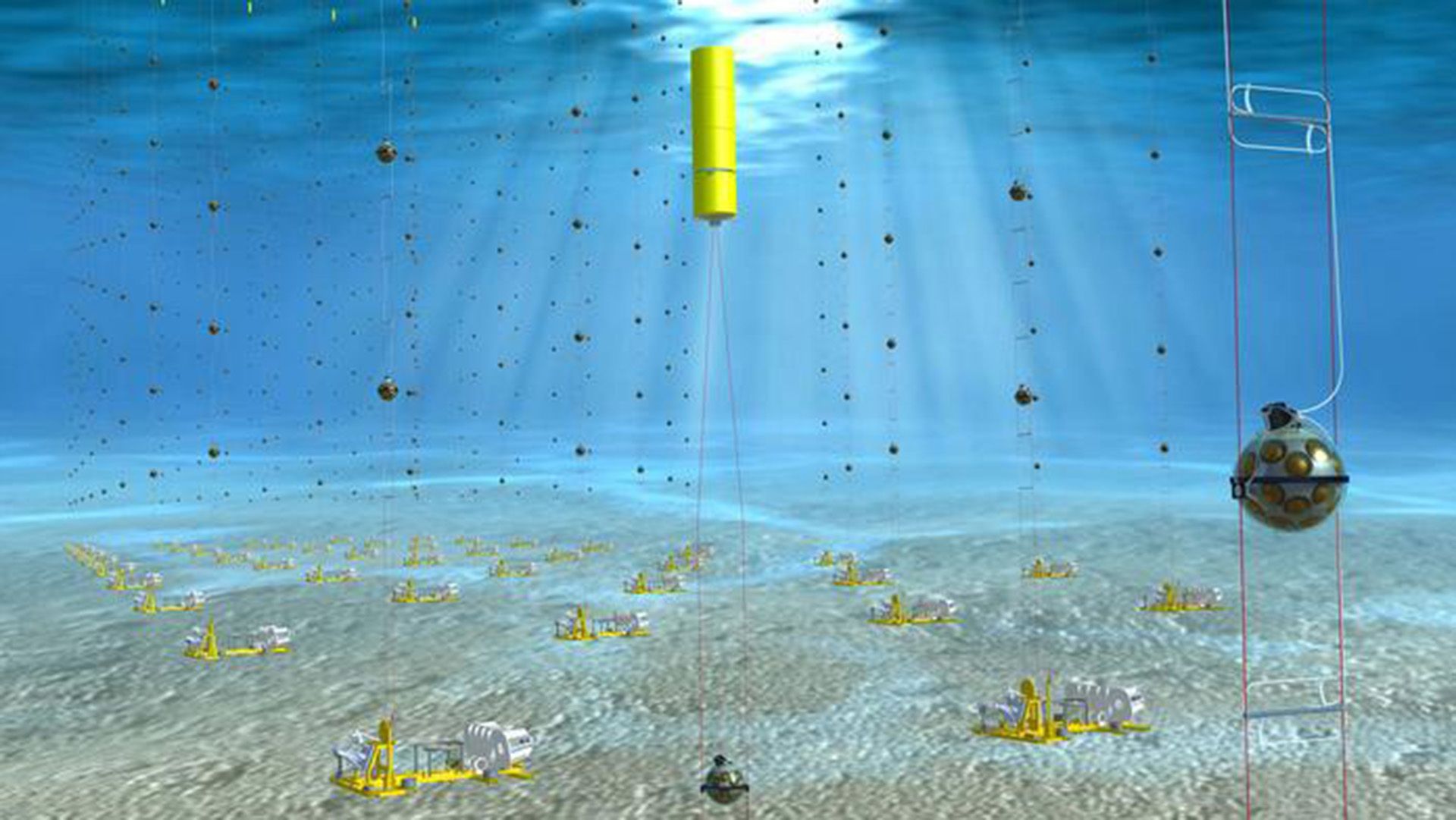
Physicists have deployed a half-built neutrino telescope 1.5 miles beneath the Mediterranean Sea to test Einstein's theory of relativity. The experiment aimed to detect any deviations in the behavior of neutrinos, which are subatomic particles known for their elusive nature. Conducted by the KM3NeT collaboration, the project represents a significant effort to probe some of the fundamental principles of modern physics.
This experiment is crucial as it seeks to validate or challenge the invariance of the speed of light, a cornerstone of Einstein's relativity. Over the last century, relativity has shaped our understanding of space, time, and gravity. Scientists have long sought to find cracks in this theory, especially in the context of new physics that could explain phenomena like dark matter and dark energy. With neutrinos being less interactive than other particles, they provide a unique opportunity to explore these questions without interference from surrounding matter.
The KM3NeT telescope, located on the seabed, is designed to detect the faint flashes of light produced when neutrinos interact with water. Although the initial results from the telescope came up empty, the limits achieved are comparable to those from larger detectors, which shows the potential of this underwater facility. The collaboration involved numerous institutions and scientists, highlighting the global interest in understanding the fundamental laws of the universe.
Looking ahead, the KM3NeT telescope will continue to gather data as construction progresses. Researchers hope that as the facility is completed and more neutrinos are detected, they will uncover new insights about the universe. This work could either reinforce Einstein's theories or open the door to groundbreaking new physics, ultimately shaping our understanding of the cosmos for years to come.
Read Full Story at Live Science →