Archaeologists uncover bronze foot of Roman emperor in Scotland
Archaeologists have uncovered a bronze foot from a statue of Roman emperor Antoninus Pius in Scotland, indicating the statue was deliberately dismantled during the Roman withdrawal 1,800 years ago. T…
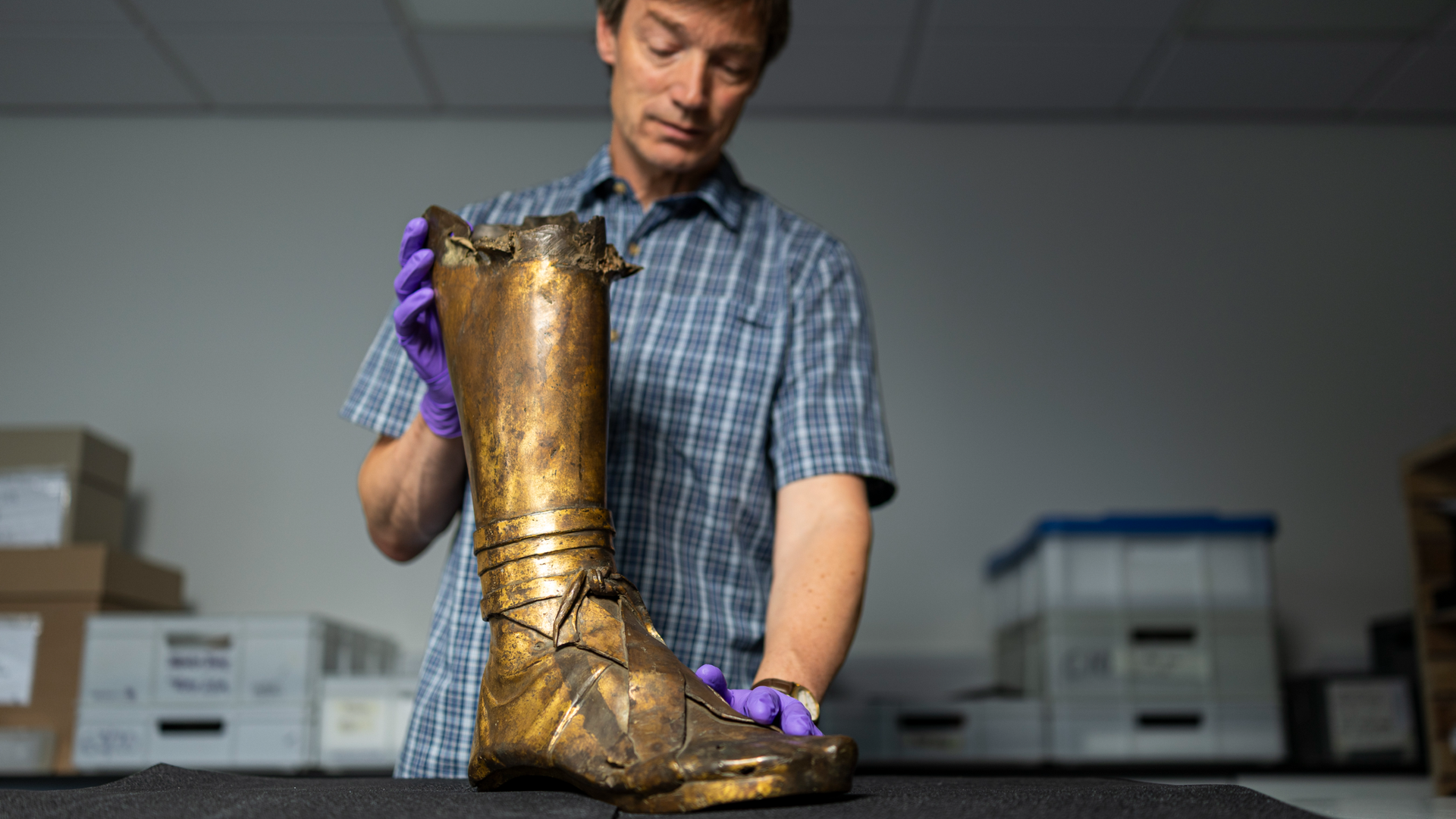
Archaeologists say a bronze foot recovered from a peat bog in the Scottish Highlands was once part of a monumental statue of the Roman emperor Antoninus Pius, and that the statue was deliberately dismantled when the Romans withdrew from Scotland about 1,800 years ago. The foot, measuring about 30 centimetres long, was identified through metal analysis and stylistic comparison with other Roman bronze works. It is the only surviving piece of what must have been a large public monument celebrating the emperor’s brief conquest of the region.
The find comes at a time when scholars are revisiting the legacy of the Antonine Wall, the northernmost frontier built by the Romans under Antoninus Pius in AD 142. The wall marked the empire’s furthest advance into Caledonia, but it was abandoned only a few decades later when the Romans retreated to the more defensible Hadrian’s Wall. Roman practice often called for the removal or destruction of imperial statues when an army left a province, both to deny locals symbols of power and to recycle valuable metal. The bronze foot suggests that the Romans took the statue apart piece by piece, leaving only the most durable parts behind in the marshy ground.
The foot was uncovered in 2023 by peat cutters near the River Dee, a site long known for preserving organic material. Researchers from the University of Edinburgh examined the alloy and found a high copper content typical of 2nd‑century Roman bronzes. Dr Megan Fraser, who led the analysis, said the foot’s design matches known depictions of Antoninus Pius in a Roman military pose. No other fragments have yet been found, but the bog’s anaerobic conditions mean metal can survive for millennia. The discovery adds a tangible link to the brief Roman presence in the Scottish Highlands and offers a rare glimpse of how the empire managed its visual propaganda.
The team plans to conduct a targeted geophysical survey of the surrounding peat to locate additional metal fragments. If more pieces are found, they could be reassembled virtually to reconstruct the statue’s original appearance. The bronze foot will be conserved and displayed at the National Museum of Scotland, where it will help the public understand the complexities of Roman expansion and withdrawal. The find also prompts a re‑examination of other bog‑preserved artifacts that may hold clues to ancient imperial strategies.
Read Full Story at Live Science →