Scientists crack a decades-old CO2 problem and triple fuel production
A new catalyst design could significantly improve the conversion of CO2 into methanol, an important fuel and chemical feedstock. Researchers separated key reaction steps across different catalyst sit…
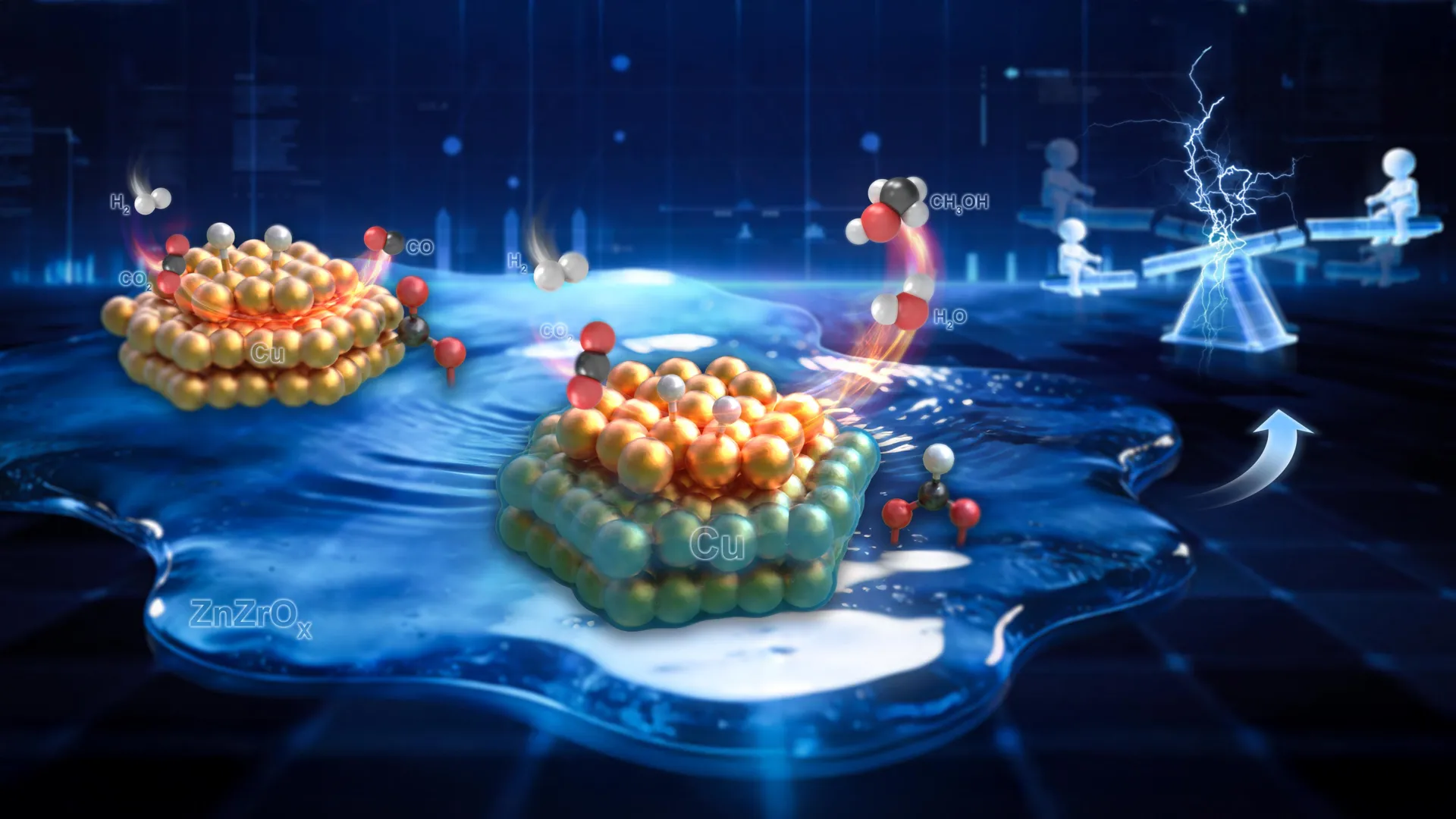
A new catalyst design could significantly improve the conversion of CO2 into methanol, an important fuel and chemical feedstock. Researchers separated
Read Full Story at ScienceDaily →Why This Matters
The breakthrough in CO2-to-methanol catalysis isn’t just another incremental advance—it’s a potential inflection point in the energy transition. By decoupling the reaction’s intermediate steps, researchers have not only tripled efficiency but also made the process more scalable, addressing one of the biggest hurdles in turning waste carbon into a commercially viable fuel source.
Background Context
For decades, converting CO2 into methanol has been a scientific curiosity with limited industrial traction, largely because the process required extreme conditions and offered poor yields. Early attempts in the 1980s and 90s were constrained by catalysts that struggled to balance selectivity and stability, leaving the technology in a niche between academic interest and commercial skepticism.
What Happens Next
Watch for pilot-scale deployments in the next 18–24 months, particularly in regions with strong carbon pricing or renewable energy surpluses. The real test will be whether this catalyst can maintain performance under industrial-grade pressures—something that’s tripped up past innovations. If successful, methanol’s role as a hydrogen carrier or fuel could reshape both energy storage and industrial chemistry.
Bigger Picture
This innovation aligns with a broader pivot toward modular, site-specific catalysis—mimicking nature’s compartmentalized reactions rather than brute-forcing single-step processes. It also underscores how decarbonization is no longer just about capturing emissions but about engineering them into assets, a shift that could redefine waste streams as strategic resources.







