Researchers complete second detailed map of fruit fly brain's neurons
Researchers have completed a second comprehensive mapping of the fruit fly brain, detailing its 100,000 neurons and 1 million synapses. This achievement enhances our understanding of neural circuits …
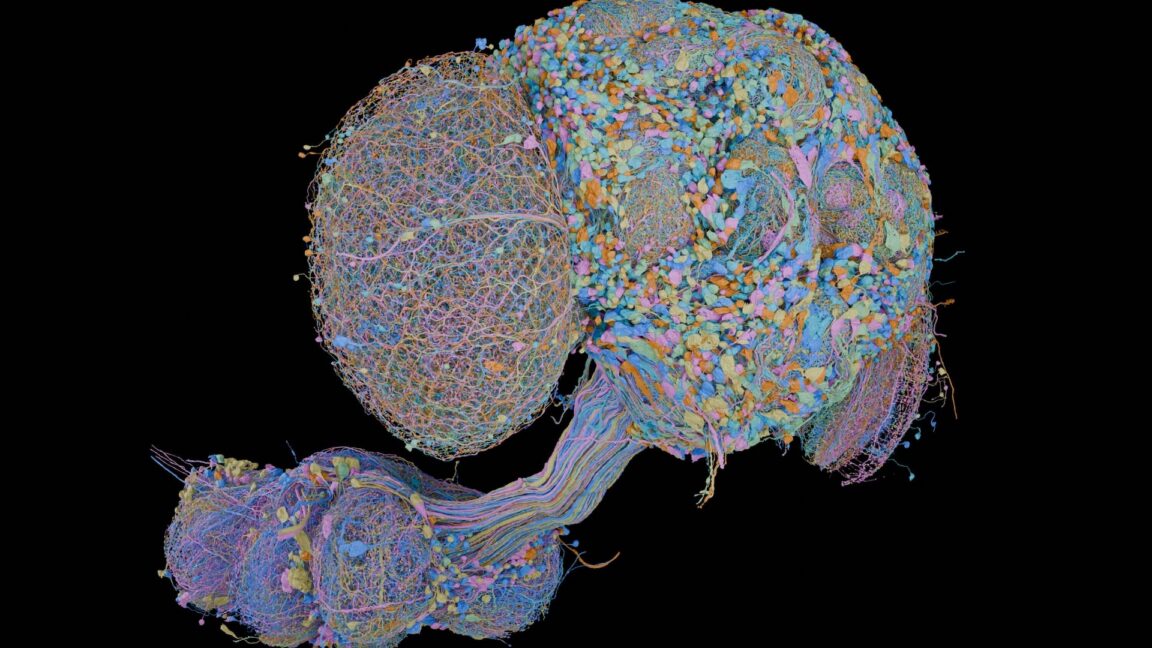
Every neuron and connection in the brain of a fruit fly has been mapped—twice. This significant achievement was announced by a team of researchers who have completed a second comprehensive mapping of the Drosophila melanogaster brain, a project that took several years and involved advanced imaging techniques.
This mapping effort builds on the first complete map released in 2020. The fruit fly is a common model organism in neuroscience due to its simpler brain structure and genetic similarities to humans. Understanding the organization of its brain can provide insights into fundamental neural processes and contribute to research on more complex brains, including our own. The timing of this new mapping is critical as it coincides with growing interest in brain connectivity and function, especially in light of advancements in artificial intelligence and machine learning.
Researchers utilized a combination of electron microscopy and machine learning to achieve this detailed mapping. The latest effort resulted in a wealth of information about the brain’s approximately 100,000 neurons and their 1 million synapses. This level of detail enables scientists to explore how neural circuits operate and interact, opening doors to understanding behavior, learning, and memory in both flies and other animals.
Moving forward, the implications of this research are vast. As scientists continue to analyze the data, they hope to uncover new insights into neurological diseases and disorders. The maps could serve as a foundation for developing new therapies, enhancing our understanding of how brains work, and even guiding the design of artificial neural networks. Ultimately, the knowledge gained from the fruit fly brain could lead to breakthroughs in both biology and technology, illustrating the interconnectedness of research across disciplines.
Read Full Story at Ars Technica →