China’s Tianwen-2 probe snaps first image of Kamo’oalewa
China’s Tianwen-2 probe captured the first image of the quasi-moon Kamo’oalewa, revealing a fast-spinning, uneven asteroid that may be a lunar fragment, delaying its 2025 sample mission to 2027 due to
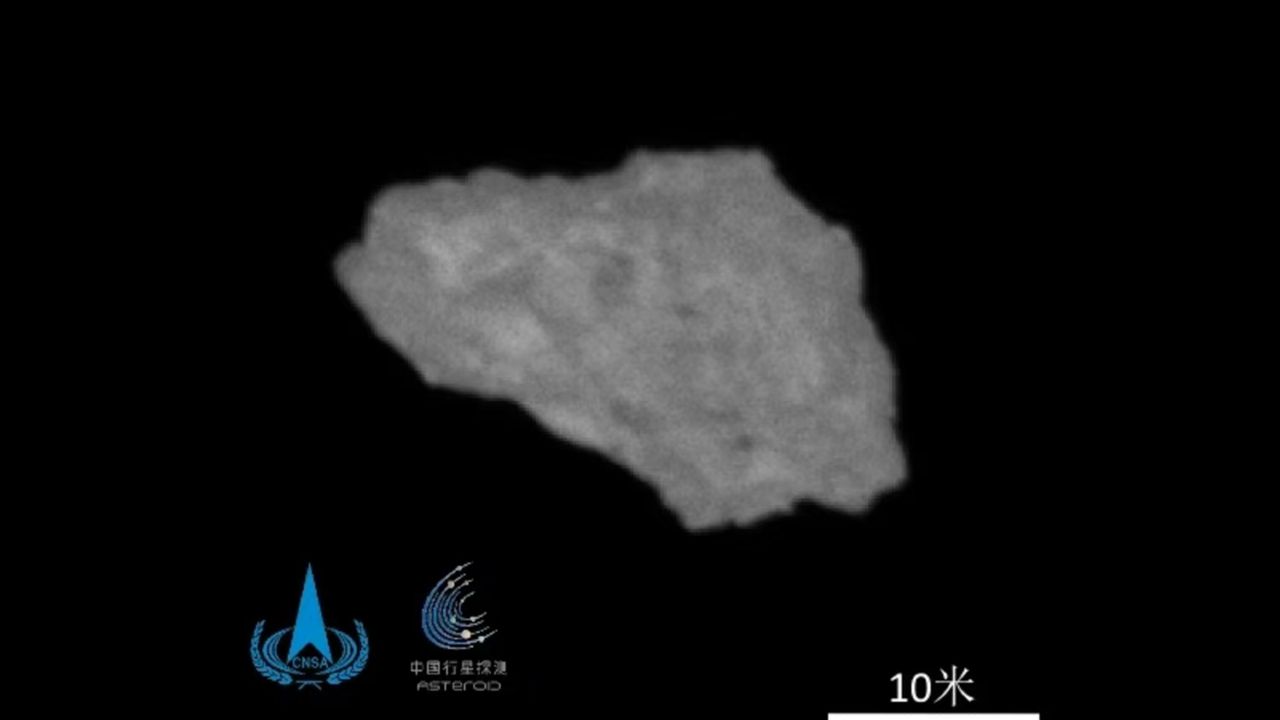
China’s Tianwen-2 spacecraft has snapped the first close-up image of Kamo’oalewa, one of Earth’s mysterious “quasi-moons,” but the photo hints that gr
Read Full Story at Live Science →Why This Matters
The first image of Kamo’oalewa, a quasi-moon that orbits Earth in a corkscrew-like path, offers a rare glimpse into one of our planet’s most enigmatic celestial neighbors. Its unusual composition and rapid rotation challenge long-held assumptions about near-Earth objects, raising questions about their origins and potential hazards. The findings could redefine planetary defense strategies and our understanding of solar system dynamics.
Background Context
Discovered in 2016, Kamo’oalewa is one of just five known quasi-moons—asteroids that dance around Earth but are not bound by gravity like traditional moons. Initial observations suggested it might be a fragment of the Moon, ejected during a past impact. China’s Tianwen program, already a symbol of its rapidly expanding deep-space ambitions, has now positioned itself at the forefront of studying these elusive objects.
What Happens Next
The delay in Tianwen-2’s sample mission to 2027 reflects the technical challenges of navigating to such an unstable target, but it also buys time for additional analysis. Scientists will scrutinize the asteroid’s spin and surface features to determine whether it’s a captured rock, a lunar shard, or something entirely unexpected. Meanwhile, other space agencies may accelerate their own quasi-moon missions to avoid falling behind in this emerging field.
Bigger Picture
Kamo’oalewa’s study exemplifies a growing global shift toward asteroids—not just as scientific curiosities, but as potential resources and future mission targets. As nations and private companies eye space mining and deep-space exploration, quasi-moons like this one could serve as stepping stones for human expansion. The data from Tianwen-2 may also inform debates on planetary protection, especially if such objects pose unforeseen collision risks.