Short on US Patriot missiles, Ukraine looks for alternatives
Russia is increasingly relying on ballistic missiles for its attacks on Ukraine — precisely the weapons that Ukraine 's armed forces depend heavily on Western support to ward off. However, the cruci…
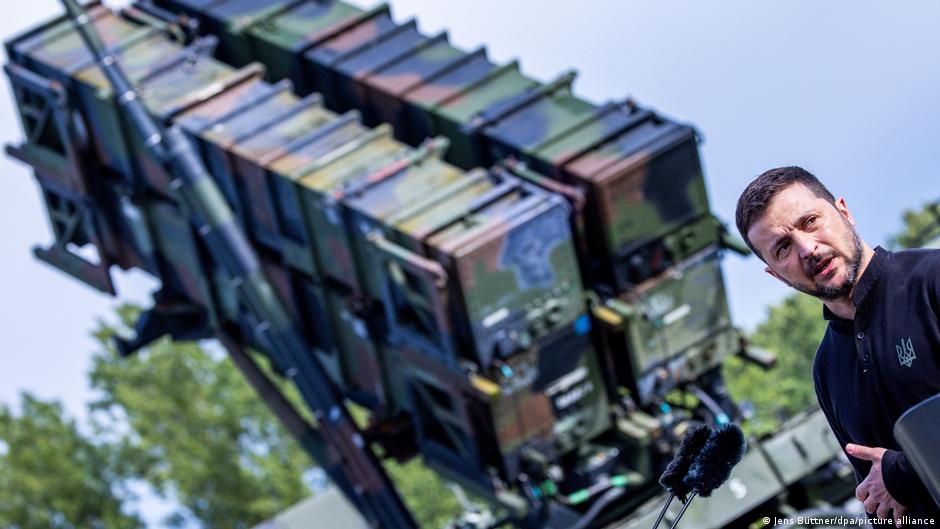
Russia is increasingly relying on ballistic missiles for its attacks on Ukraine — precisely the weapons that Ukraine 's armed forces depend heavily on Western support to ward off.
However, the crucial US -produced Patriot interceptor missiles are often in short supply.
Extremely urgently. While Ukraine has set up a well-functioning defense network against drones , its armed forces are reaching their limits when it comes to fending off Iskander-M ballistic missiles. One of the few weapons capable of countering such missiles is, above all, the Patriot system with its PAC-3 interceptor missiles.
At the beginning of August, it became evident once again how patchy Ukraine's air defense has become. During a Russian attack on August 1, Ukraine could only intercept one of 27 ballistic missiles fired. President Volodymyr Zelenskyy said this was due to the fact that there were practically no more Patriot interceptor missiles left for the eight batteries stationed across Ukraine.
Three days later, according to Ukraine, Russia fired another 24 ballistic missiles as well as four Zircon hypersonic missiles, of which none were intercepted.
To view this video please enable JavaScript, and consider upgrading to a web browser that supports HTML5 video
The French/Italian SAMP/T is considered an alternative to the Patriot system. However, Ukraine owns only a few of those, and the required Aster-30 interceptor missiles are also in short supply. In addition, the more powerful new-generation SAMP/T NG will only gradually become available. Therefore, the system is not a European short-term alternative to Patriot.
At the same time, Patriot deliveries are declining. According to Zelenskyy, Ukraine received only about one-third as many anti-aircraft missiles so far this year as it did in 2025. The war in the Middle East has further exacerbated the global shortage. Unlike at the beginning of the Ukraine war, the problem today lies less with launching facilities and more with Patriot ammunition.
Read Full Story at DW World →