SpaceX IPO valuation depends on Starship and orbital AI data centers
SpaceX’s targeted $1.75-trillion valuation rests on engineering that hasn’t happened yet Reusable rockets and Starlink made Elon Musk’s company dominant in spaceflight. Its record valuation leans on making Starship flights routine and orbital AI data centers real By Chris Stoke
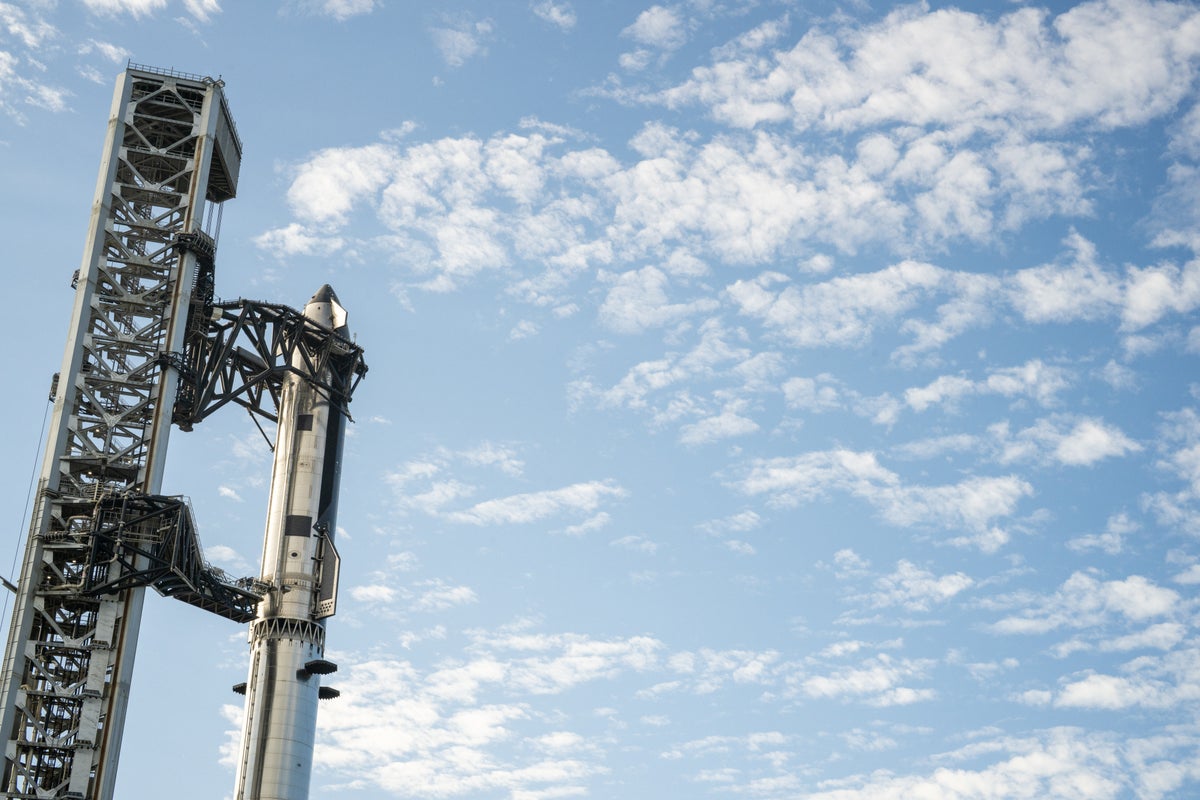
SpaceX’s targeted $1.75-trillion valuation rests on engineering that hasn’t happened yet
Reusable rockets and Starlink made Elon Musk’s company dominant in spaceflight. Its record valuation leans on making Starship flights routine and orbital AI data centers real
SpaceX’s initial public offering (IPO) is shaping up to be the biggest in history—if, that is, the company achieves its targets. On the road show it has taken to investors, its stated mission is nothing less than “to build the systems and technologies necessary to make life multiplanetary, to understand the true nature of the universe, and to extend the light of consciousness to the stars.”
SpaceX has beaten long odds before. But its $1.75-trillion valuation depends far more on what it says it will build next than what it has already built—and that gap is immense.
The company’s pedigree is hard to argue with. SpaceX comes to the road show with its reusable Falcon 9 launch vehicle; the Starlink satellite network , which includes more than 10,000 satellites in orbit and counting; and a record of turning improbable space hardware into working systems. “Falcon 9 has achieved launch rates that, in the past, we only dreamed of,” says George Sowers, a former aerospace industry executive and rocket systems engineer who is now a professor of practice in the Space Resources Program at the Colorado School of Mines. One Falcon 9 first-stage booster, Booster 1067, completed its 35th mission this week, retaining its position as the most-flown member in SpaceX’s fleet. Starlink, too, is a real business, with millions of customers and a satellite network larger than any before it.
If you're enjoying this article, consider supporting our award-winning journalism by subscribing . By purchasing a subscription you are helping to ensure the future of impactful stories about the discoveries and ideas shaping our world today.
That record gives the next part of the pitch its force. SpaceX sorts its pitch to investors into three buckets—space, connectivity and artificial intelligence—but it really rides on two newer, riskier bets: orbital AI data centers and a fully reusable Starship that can carry people to the moon and eventually Mars.
The boldest bet is CEO Elon Musk’s proposal for a system of orbital data centers, including a constellation of up to one million satellites that would run AI workloads on solar power gathered in orbit. Days before the IPO, Musk unveiled the first detailed design of SpaceX’s AI1 satellite, the constellation’s prototype. Caleb Henry, director of research at Quilty Space, sees it as the company’s second great transformation. “They started as a launch company,” he says. “They began the evolution into a satellite Internet provider, which now dwarfs the launch piece of the business, and then this next evolution is to become an AI company enabled by its own data center infrastructure that the company wants to put in space.”