Spotted lanternflies’ love of cities may be the secret to their invasion success
Spotted lanternflies’ love of cities may be the secret to their invasion success These eye-catching insects offer a prime opportunity for scientists to dig deep into invasion ecology and evolutionary biology By Meghan Bartels edited by Sarah Lewin Frasier Cities by their natur
Spotted lanternflies’ love of cities may be the secret to their invasion success
These eye-catching insects offer a prime opportunity for scientists to dig deep into invasion ecology and evolutionary biology
Cities by their nature are hotspots for invasive species: all the coming and going means that countless newbie plants and animals regularly face the gamble of natural selection. Most newcomers fade out or establish only a small population, but every so often a species explodes on the scene and becomes problematic.
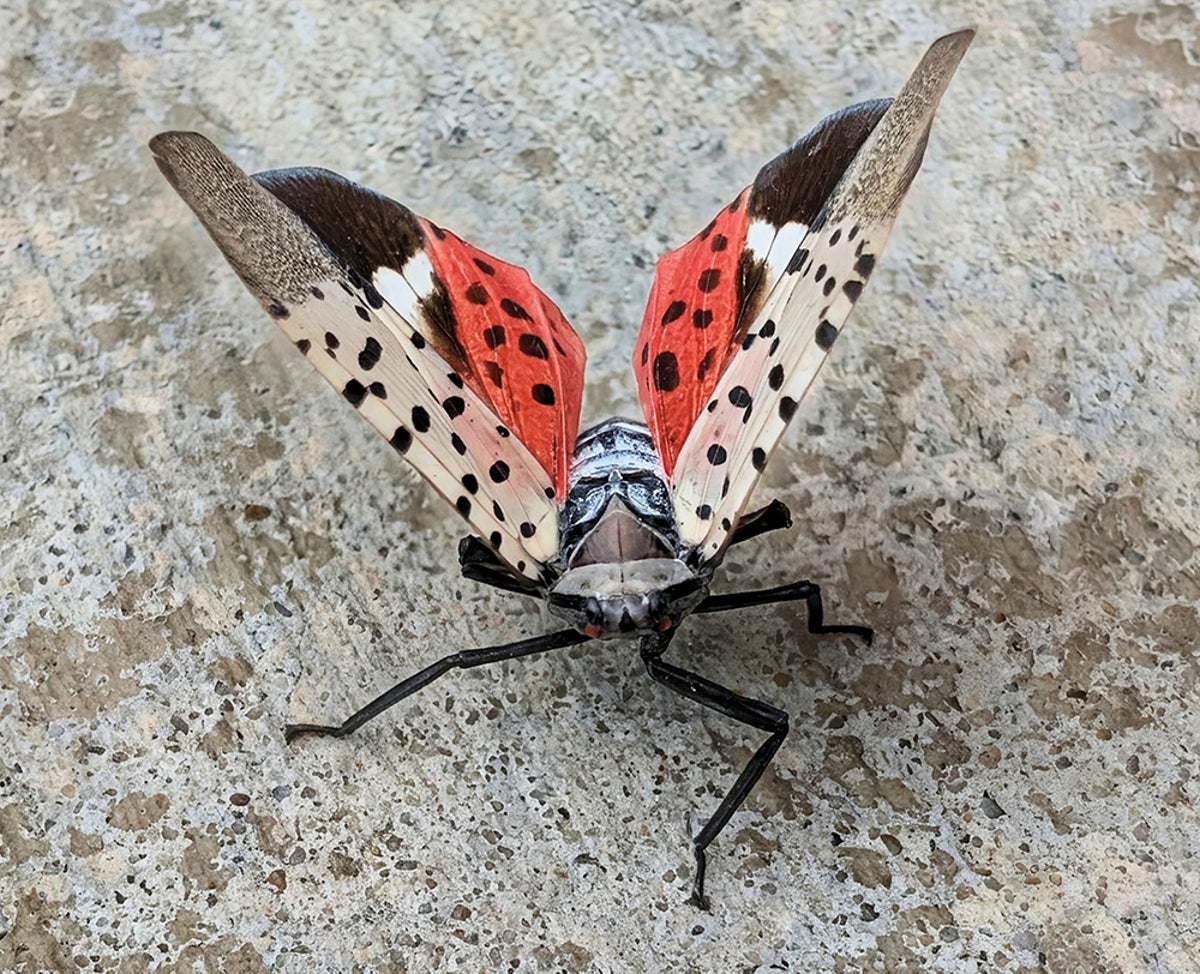
Perhaps no species has made quite as splashy an entrance as the spotted lanternfly ( Lycorma delicatula ), which in the past decade has stormed mid-Atlantic cities in massive flurries of polka-dotted wings. Although they’re more of an economic threat in the countryside, where they’re particularly damaging to grapevines , new research shows it’s likely not a coincidence they’re succeeding at city life, too.
For Kristin Winchell, an evolutionary ecologist at New York University, the spotted lanternfly’s arrival in New York City in July 2020 was serendipitous. She wanted to test a hypothesis called anthropogenically induced adaptation to invade: the idea that landscapes that humans have reshaped worldwide—cities being the most extreme examples—are ecologically more like one another than natural ecosystems are. So species adapted to local urban areas may more easily invade a distant one.
If you're enjoying this article, consider supporting our award-winning journalism by subscribing . By purchasing a subscription you are helping to ensure the future of impactful stories about the discoveries and ideas shaping our world today.
Spotted lanternflies seemed a plausible example; in the U.S., they were first detected about an hour’s drive from downtown Philadelphia in 2014, and today their spread tracks the web of cities from Greensboro, N.C., to as far north as Boston and as far west as Detroit, with sightings scattered as far as Chicago, Cincinnati, Nashville and Atlanta.
Winchell and her colleagues gathered spotted lanternflies from across the invaded territory, as well as from urban and rural locations in their native Shanghai, and dug into the animals’ genes. They confirmed that the U.S. population of the bugs stems from a single introduction, as researchers had suspected, which created a distinctive “bottleneck” in the species’ genetic diversity. The details were reported in the Proceedings of the Royal Society B .