Stages of Star Formation
This image, captured by NASA’s James Webb Space Telescope and released on June 5, 2026, shows just a small portion of one of the Orion Molecular Clouds, a long and massive filament of cold gas and du…
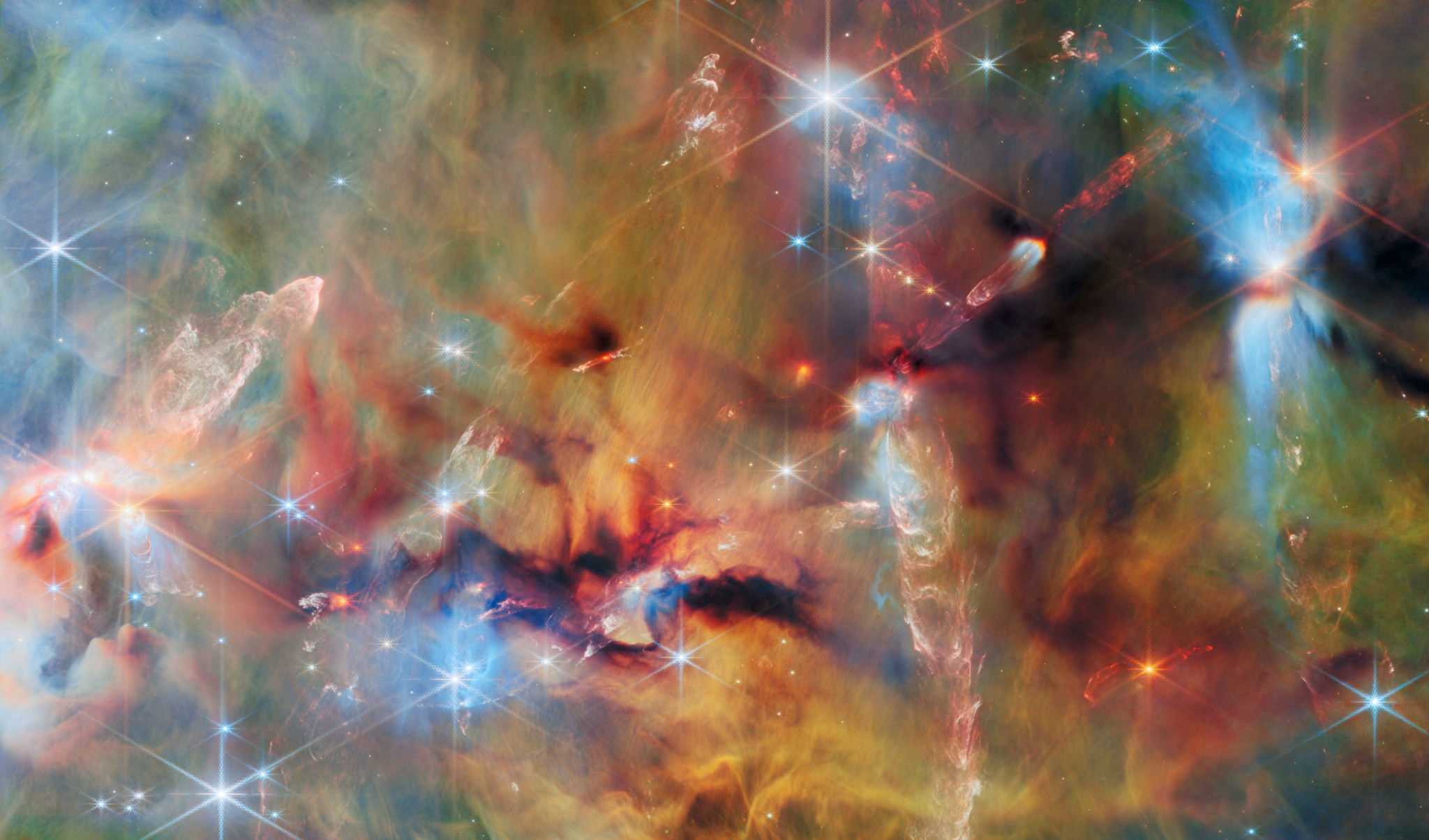
This image, captured by NASA’s James Webb Space Telescope and released on June 5, 2026, shows just a small portion of one of the Orion Molecular Cloud
Read Full Story at NASA →The latest image from NASA’s James Webb Space Telescope, revealing a slice of the Orion Molecular Cloud, offers more than just a stunning glimpse into the cosmos—it provides a window into one of the most fundamental processes in the universe: star formation. These clouds, composed of cold gas and dust, are the cosmic nurseries where new stars are born, and the Webb’s infrared capabilities allow scientists to peer through the dense material that once obscured our view. What makes this image particularly significant is its ability to capture the earliest stages of stellar evolution, from the collapse of gas into protostars to the delicate balance of forces that determine whether a cloud will fragment into multiple stars or condense into a single, massive one. For astronomers, this is akin to watching the universe’s most intricate creation myth unfold in real time. The Orion Molecular Cloud is not just a nearby curiosity—it’s one of the most active star-forming regions in our galactic neighborhood, located a mere 1,300 light-years away. Its proximity makes it an ideal laboratory for studying the conditions that give rise to stars, including the role of magnetic fields, turbulence, and the feedback from already-formed stars that can either trigger or quench further starbirth. Yet, despite decades of observation, key questions remain unanswered: How do the smallest stars, like our Sun, emerge from these turbulent clouds? What determines the mass of a newborn star, and why do some regions produce dozens of stars while others yield only a few? The Webb’s data may help refine models of star formation, but it also raises new puzzles, such as the unexpected prevalence of certain molecules or the presence of what appear to be "failed" stars stalling in their growth. Beyond its immediate implications, this image connects to broader trends in astrophysics, particularly the push to understand the lifecycle of galaxies. Stars are the engines of cosmic evolution, synthesizing the elements that make life possible and shaping the interstellar medium through their radiation and supernovae. By studying these stellar cradles, scientists are piecing together how galaxies recycle material over billions of years, a process that may hold clues to the origins of our own solar system. The next step will likely involve deeper observations of other molecular clouds, as well as comparisons with data from other telescopes to build a more complete picture of the forces at play. For now, the Orion image stands as a reminder that the universe’s most dramatic transformations often begin in the quietest, most unassuming corners of space.







