🏛️ Politics
Live
Starmer remains defiant as leadership challenge inches closer
Sir Keir Starmer's survival strategy has notched up yet again, with further defiant talk aimed at raising the political barrier as high as possible for his potential challengers to clear. I have sat…
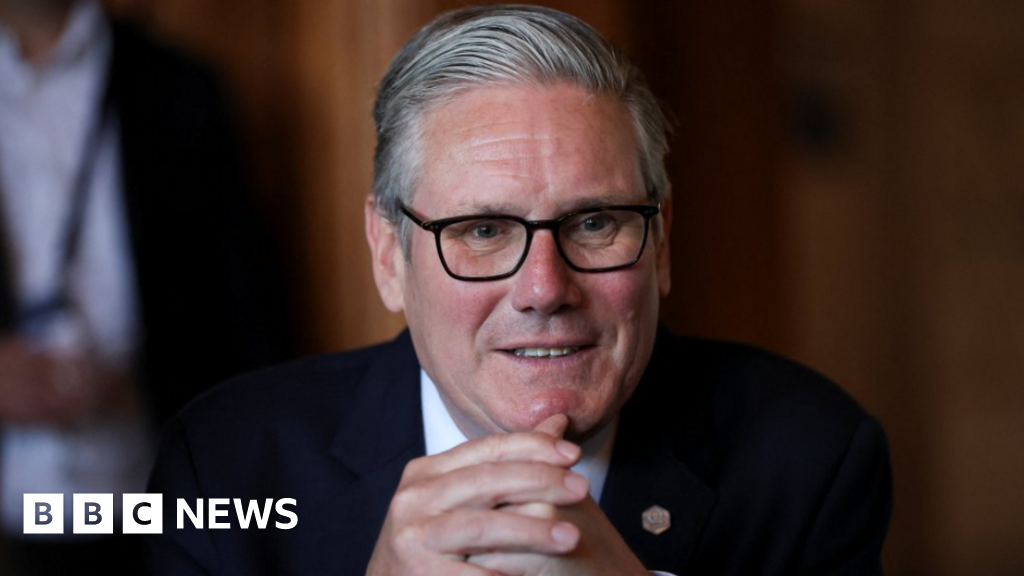
BBC Politics — 17 June 2026
Text:
21
0
0
Sir Keir Starmer's survival strategy has notched up yet again, with further defiant talk aimed at raising the political barrier as high as possible fo
Read Full Story at BBC Politics →
⚡ Quickyla Analysis
Original editorial context — not sourced from the article above
The intensifying pressure on Sir Keir Starmer’s leadership underscores a deeper crisis in British Labour—not just over his political direction, but over the party’s identity in an era where traditional power structures are fraying. Starmer’s defiance isn’t merely about clinging to power; it reflects a calculated gamble that Labour’s base, despite its simmering discontent, lacks a viable alternative capable of uniting the party’s warring factions. His survival hinges on a gamble that his critics will fracture rather than coalesce, leaving him as the least-bad option in a field where no single figure commands broad appeal. This dynamic speaks to a broader erosion of trust in political institutions, where loyalty is increasingly transactional and leadership is judged less on ideology than on perceived competence in an unpredictable electoral landscape.
The backdrop to this standoff is a Labour Party that has spent much of the last decade oscillating between electoral pragmatism and ideological reinvention. Starmer’s tenure has been defined by a cautious centrism, one that prioritizes electoral viability over ideological purity—a strategy that secured Labour’s largest majority since 1997 but has left many traditionalists feeling sidelined. The murmurs of discontent, though not yet a groundswell, reveal a party still grappling with the ghosts of Corbynism and the pressures of governing in an era of economic stagnation and geopolitical volatility. The challenge isn’t just about Starmer’s policies; it’s about whether Labour can reconcile its past with its future without tearing itself apart.
What happens next remains uncertain. The threshold for a leadership challenge is high, but the threshold for disillusionment may be higher still. If Starmer’s critics fail to coalesce around a single figure, the party risks drifting into a prolonged period of instability, one that could weaken it ahead of the next election. Alternatively, a successful challenge—however unlikely—could force Labour into a reckoning with its direction, possibly reopening old wounds. Either way, the episode highlights a troubling trend: the growing difficulty of sustaining unity in a party that must govern while its own members remain deeply divided. In an age where political tribes are hardening, Starmer’s struggle is a microcosm of a larger challenge facing democracies worldwide.
Sources

🏛️ Politics
"Fujimori never again!" Protesters fill streets of Lima ahead of Peru presidential elections

🏛️ Politics
Trump: Reports US, Iran stopped speaking ‘false and erroneous’

🏛️ Politics
Secretary of State Marco Rubio faces questions about Iran war on Capitol Hill

🏛️ Politics
US not 'turning back' on Asia allies, but expects them to boost defence, says Hegseth

🏛️ Politics
Pence: There’s ‘clearly” been an effort to ‘rewrite’ Jan. 6 history

🏛️ Politics
Washington, Silicon Valley brace for AI job losses


